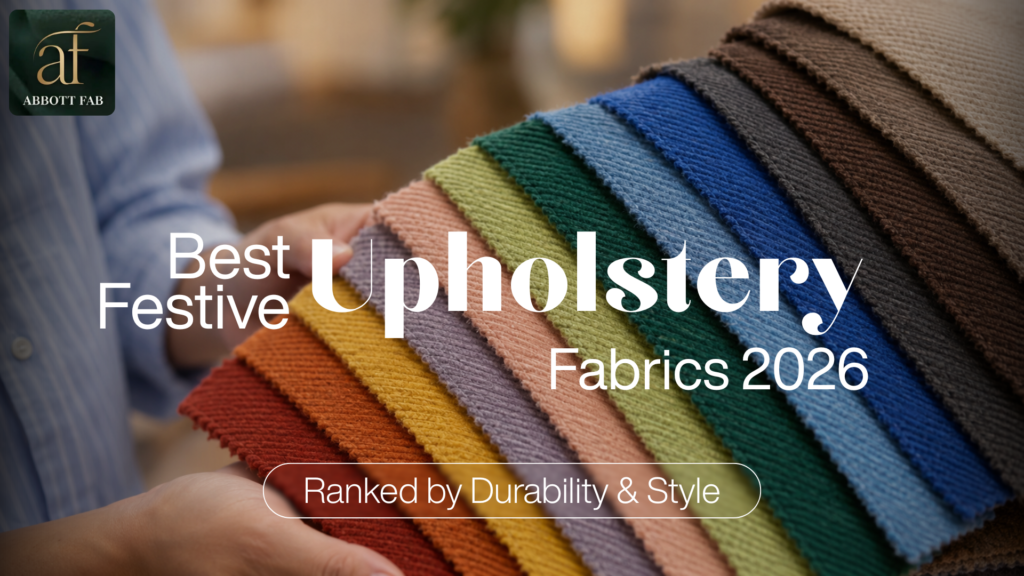
Best Upholstery Fabrics for Festive Home Decor in 2026: Ranked by Durability, Use and Festival
Key Takeaways
- The best upholstery fabrics for festive home Decor are performance velvet for formal seating, chenille or micro-suede for family sofas, and rexine for dining chairs.
- Fibre alone does not decide durability; ask for the abrasion result, its test method, and the cleaning code before you buy.
- Double rubs and Martindale cycles do not convert; for a family sofa, look for at least 20,000 Martindale cycles, or 30,000 for heavy use.
- For dining chairs, PVC (polyvinyl chloride) rexine resists moisture damage; PU (polyurethane) rexine needs a heat-and-humidity hydrolysis test result.
- Keep jacquard, brocade, bouclé and metallic-thread fabrics for cushions, ottomans and accent chairs, where friction stays low, and pattern looks intentional.
- Polyester velvet traps heat, so reserve it for air-conditioned rooms; breathable cotton or linen blends suit non-air-conditioned living rooms in hot cities.
- Diwali falls on 8 November 2026; if you have under six weeks, refresh cushions, slipcovers and dining seats rather than reupholstering sofas.
Why Festive Seating Needs Tougher Upholstery
Festive seating works harder than it looks. A sofa that copes with a normal weekday now hosts relatives for hours, children with plates of sweets, and a steady stream of guests through Diwali week and the wedding season. The fabric has to look rich under warm lights and still survive spills, friction, and dust.
Households take this seriously. In Hansa Research’s Festive Season 2026 analysis, 51% of respondents planned to buy home Decor or furniture, second only to fashion at 69%. The Confederation of All India Traders (CAIT) estimated that home Decor and furniture and furnishing each made up about 5% of Diwali 2025 sales, which reached a record ₹6.05 lakh crore.
This guide ranks the best upholstery fabrics for festive home Decor in 2026 on five criteria: durability, furniture application, maintenance, festive appeal, and practical fit for Indian homes. You will learn which fabric suits each piece of furniture, how guest numbers and festival conditions change the choice, which test results to request, and how to handle festive spills.
Quick answer: Performance velvet ranks first for statement sofas and accent chairs in air-conditioned rooms. Chenille and micro-suede suit family sofas that take heavy use. Jacquard and brocade make the strongest festive accents. PVC rexine is the safest choice for dining chairs. Whatever you pick, ask for the abrasion test result and the fibre composition before you buy.
How We Ranked the Best Upholstery Fabrics for Festive Decor
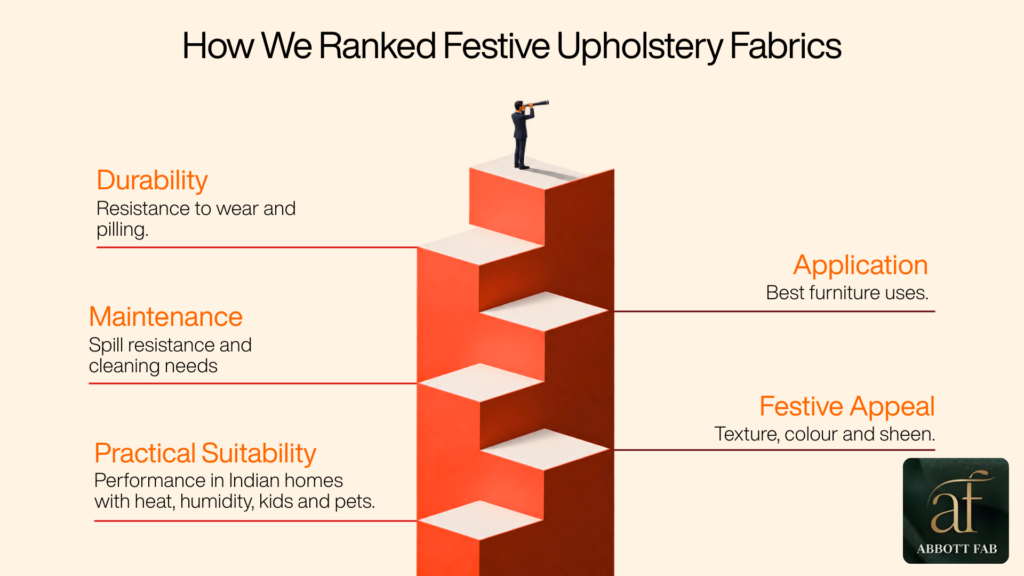
We assessed every fabric against five criteria:
- Durability: How well the fabric resists everyday wear, based on published abrasion and pilling test data where it exists.
- Application: Which furniture it suits, from family sofas to dining chairs, cushions and headboards.
- Maintenance: How it handles spills, dust and cleaning, and whether it needs specialist care.
- Festive appeal: Texture, colour, sheen and how well it suits festive interiors and warm lighting.
- Practical suitability: How well it fits Indian homes, including heat, humidity, children, pets and heavy guest traffic.
Evidence we used: Published test data from fabric makers and furniture brands, guidance from the Association for Contract Textiles (ACT), and the test standards that textile labs use, including ASTM D4157 (Wyzenbeek abrasion, published by ASTM International) and ISO 12947 (Martindale abrasion, published by the International Organization for Standardization).
What we did not do: We did not invent scores or durability percentages. The ratings in the comparison table are editorial, qualitative judgements based on the evidence.
Limitations: Product test data shows what a fabric category can achieve, not what every product sold under that name will achieve. Two fabrics called “velvet” can perform very differently. Rexine uses different test methods from woven fabrics, so its numbers do not line up with the rest of the list. Climate, sunlight, pets, and cleaning habits also change real-world results.
How the order works: The rank reflects how many festive situations a fabric handles well without a major trade-off. A fabric that works on sofas, chairs, and cushions ranks above one that only works as an accent, even if the accent fabric looks more festive. The best fabric for your home still depends on the furniture, the household, and the occasion.
Two durability numbers you will see
Double rubs (Wyzenbeek test, ASTM D4157): A machine rubs a cloth back and forth across the fabric. Each back-and-forth pass counts as one double rub. North American suppliers use this scale.
Martindale cycles (ISO 12947): A machine rubs the fabric in a looping, figure-of-eight motion against a standard wool cloth. European suppliers and many Indian suppliers use this scale.
The two scales are not interchangeable. ACT states in its abrasion guidelines that there is no correlation between Wyzenbeek and Martindale results, so always compare like with like.
The ranking at a glance
Rank | Fabric | Published durability evidence | Ease of care | Festive appeal | Best use |
1 | Performance velvet | High: 100,000 double rubs and 100,000 Martindale cycles in maker data | Medium | High | Statement sofas, accent chairs |
2 | Chenille | Medium to high: 35,000 to 100,000 Martindale cycles in tested products | Medium | Medium to high | Family sofas, cushions |
3 | Jacquard and brocade | Varies by design; request the test report | Medium to low | Very high | Cushions, ottomans, accent chairs |
4 | Micro-suede | High: over 100,000 double rubs in supplier data | High | Medium | Family sofas, headboards |
5 | Rexine and faux leather | Tested by different methods; PVC resists moisture damage | Very high | Medium | Dining chairs, kids’ corners |
6 | Bouclé | Varies: up to 100,000 rubs in one tested bouclé; check the pilling grade | Medium to low | High | Accent chairs, cushions |
7 | Linen blends | Medium: 25,000 to 30,000 Martindale for pure linen; blends up to 100,000 | Medium | Medium | Guest rooms, low-traffic seating |
8 | Cotton blends and cotton duck | Low to medium: 6,000 to 15,000 double rubs for pure cotton; blends higher | High (washable covers) | Low to medium | Slipcovers, breathable everyday sofas |
9 | Silk-look synthetics | Varies; check light fastness | Medium | High | Cushions, accent chairs |
10 | Metallic-thread fabrics | Varies; check rubbing fastness | Medium to low | Very high (occasion-specific) | Piping, cushions, bolsters |
The 10 Best Upholstery Fabrics for Festive Home Decor, Ranked
1. Performance Velvet

Why it ranks first: No other fabric combines this much festive impact with this much published durability across sofas and accent chairs.
What it is: Velvet is a cut-pile fabric. Short, dense fibres stand upright and catch the light, which gives velvet its depth and sheen. “Performance” velvet uses mostly synthetic fibre, a protective finish, or both, to resist crushing and staining. UK retailer Furniture & Choice says velvet, chenille and linen-style fabrics now come with performance fabric treatments.
Durability: Construction matters more than the word “velvet”. Mitchell Gold + Bob Williams lists an 82% polyester, 18% cotton performance velvet at 100,000 double rubs. Linwood rates a polyester-rich velvet blend at 100,000 Martindale cycles. Cotton can perform too: Rose Uniacke rates a heavyweight cotton velvet at 100,000 Martindale cycles, but warns that its pile will crush and crease with use.
Best for: The main sofa or a pair of accent chairs in a formal, air-conditioned living room. Under heavy guest use, a high-rub performance velvet copes well with friction, but it suits rooms where guests sit and talk rather than eat.
Care demands: Medium. The pile needs regular soft-brush vacuuming because it holds dust. Cleaning codes vary even within one maker’s range: Mitchell Gold + Bob Williams lists its performance velvet for water-free solvent cleaning (code S) only, so water can mark it even when the label says “performance”.
Styling suggestion: Emerald, maroon, sapphire and deep gold read well under warm festive lighting, and jacquard cushions add pattern without competing with the sheen.
Limitations and conditions: Polyester velvet traps body heat, which is why our complete sofa fabric guide keeps it out of non-air-conditioned rooms in hot regions. Velvet also has a nap, the direction in which the pile lies. Panels cut in different directions look like two different shades under the same light, so confirm the cutting direction with your upholsterer.
2. Chenille
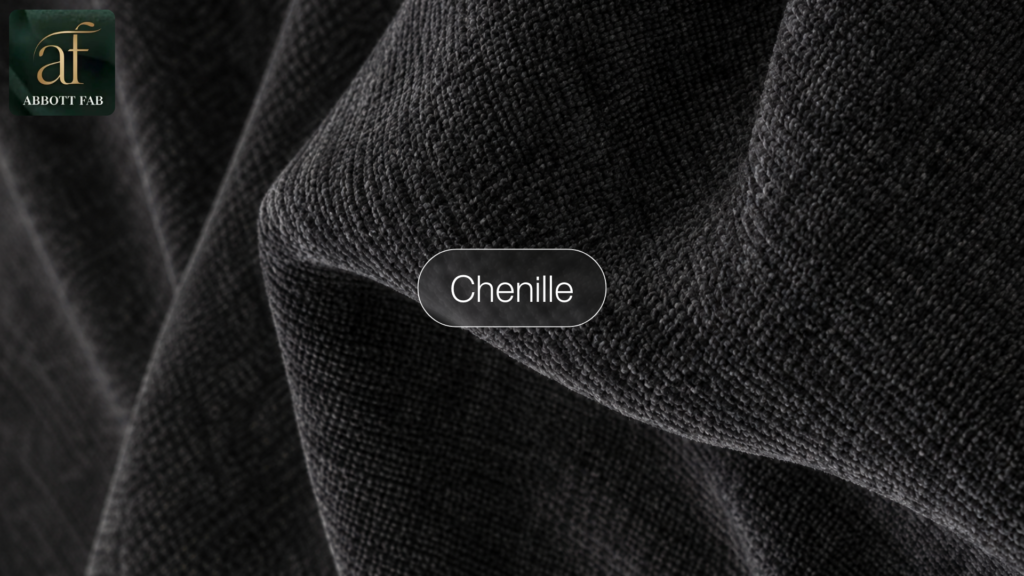
Why it ranks second: Chenille brings soft, festive texture to the furniture that works hardest, the family sofa, with tested durability to match.
What it is: Chenille is woven from a tufted yarn with a soft, fuzzy pile. It feels plush like velvet but looks more relaxed, with more texture and less sheen.
Durability: Tested chenilles cover a wide range. Fargotex rates its Vamos chenille (polyester, polyamide and viscose) at 35,000 Martindale cycles with a pilling grade of 4/5. Micadoni reports 100,000 cycles for the chenille on one of its sofas and notes that specialists recommend more than 35,000 cycles for family sofas.
Best for: Family sofas, sectionals, and cushions that people handle constantly. Under heavy guest use, a tightly woven chenille blend handles long evenings and casual snacking better than a formal velvet.
Care demands: Medium. Regular vacuuming keeps dust out of the pile. Fargotex adds a water-repellent, easy-clean treatment to its chenille, but that treatment is a finish, not a property of every chenille, so check the label before you assume a chenille resists spills.
Styling suggestion: Rust, mustard and terracotta suit a warm Diwali palette; cream and forest green suit Christmas.
Limitations and conditions: Micadoni notes that sharp objects such as claws and excessive sunlight can damage chenille. Keep it away from cats and sun-facing windows, and choose a tight weave if guests often wear embellished clothing.
3. Jacquard and Brocade
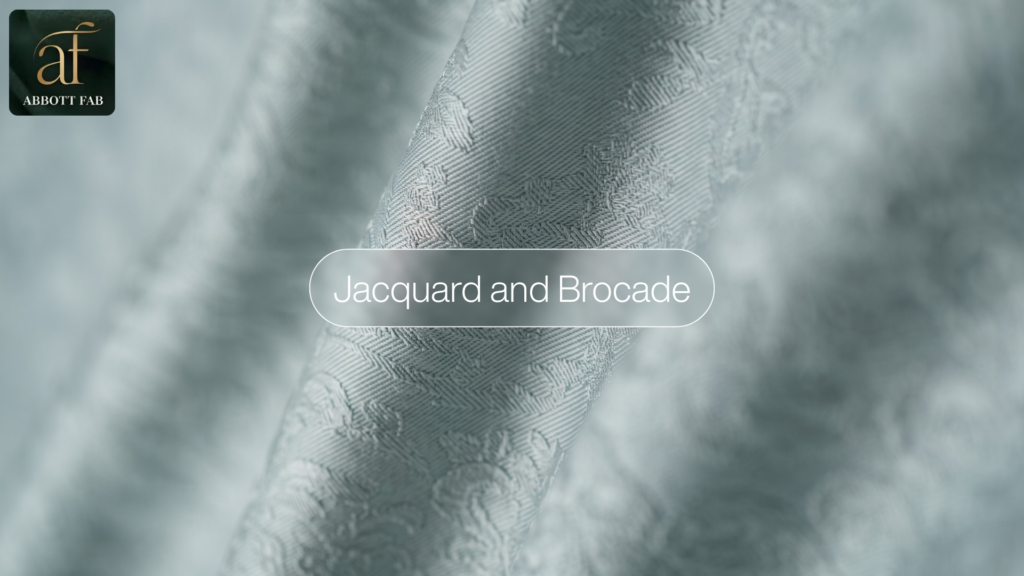
Why it ranks third: Jacquard and brocade carry the most traditional festive look on the list, but their best use is narrower, and durability varies by design.
What it is: Jacquard is a weaving method, not a fibre. A jacquard mechanism controls each warp yarn independently, so the loom weaves the pattern into the cloth instead of printing it on top. Brocade is an ornate jacquard with extra Decorative threads, often metallic, that sit slightly raised on the surface.
Durability: Performance varies with fibre, yarn, and weight, so no single number covers the category. A woven pattern cannot rub off the way a print can, but long loose threads in elaborate brocades can snag. Ask for the abrasion report for the exact design you plan to buy.
Best for: Cushions, bolsters, a statement ottoman or a single accent chair. These pieces see attention rather than friction, which suits a fabric chosen for its pattern. A sturdy, tightly woven jacquard can handle an accent chair that guests use often; an ornate brocade should stay on cushions.
Care demands: Medium to high. Check the cleaning code before buying; if it reads S or X, budget for professional cleaning after the season.
Styling suggestion: UK upholstery supplier JA Milton lists heritage motifs among its 2026 sofa trends. Gold-on-maroon or silver-on-ivory brocade cushions suit a traditional Diwali or wedding-season room.
Limitations and conditions: Large pattern repeats need extra fabric so the motif lines up across the seat, back, and arms. Ask your upholsterer to calculate the quantity from the actual repeat. A full sofa in heavy brocade also costs far more than one brocade accent chair.
4. Micro-Suede
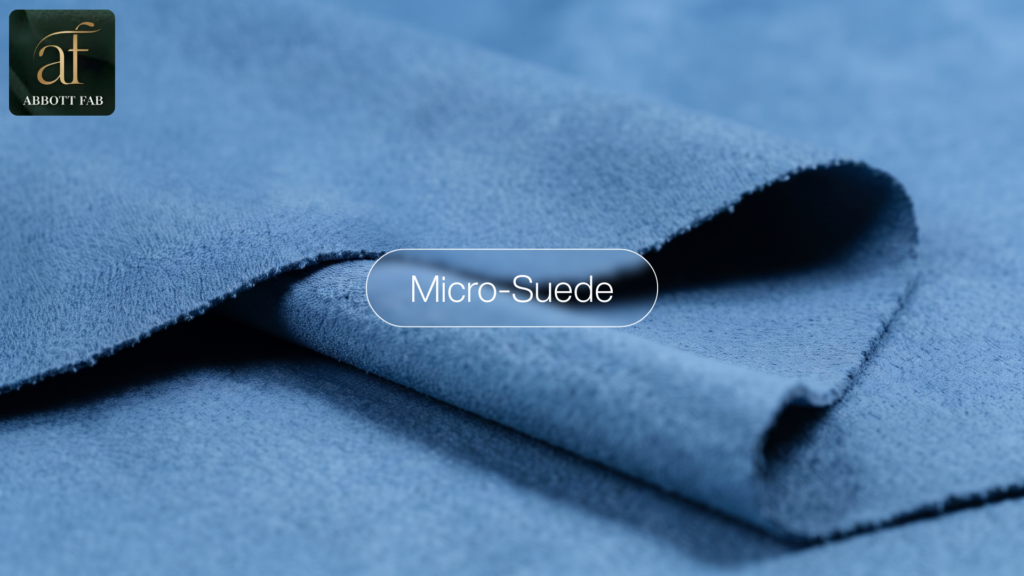
Why it ranks fourth: Micro-suede offers some of the highest published abrasion results on the list and simple care, but less festive sheen than the fabrics above it.
What it is: Micro-suede is a polyester microfibre brushed to feel like suede. It has a soft, matte surface with a short nap.
Durability: Kovi Fabrics rates its 100% polyester microsuede above 100,000 Wyzenbeek double rubs. Another supplier’s Unisuede microfibre also lists more than 100,000 double rubs, with a top pilling class of 5.
Best for: Family sofas, recliners and headboards. Under heavy guest use, its tight surface handles friction and embellished clothing better than looped or long-pile fabrics.
Care demands: Low to medium. Tightly woven microfibre resists stains, and where the cleaning code allows water-based cleaning (W or WS), most marks lift with mild soap and water. Brush the nap gently afterwards to restore an even texture.
Styling suggestion: Micro-suede works as a calm base in teal, wine or charcoal, with cushions bringing the sparkle.
Limitations and conditions: Genuine suede is a different material and marks easily with water, so confirm that you are buying microfibre. In homes with pets, the tight, low-pile surface gives claws less to catch on than looped weaves, though no rub count predicts claw resistance.
5. Rexine and Faux Leather
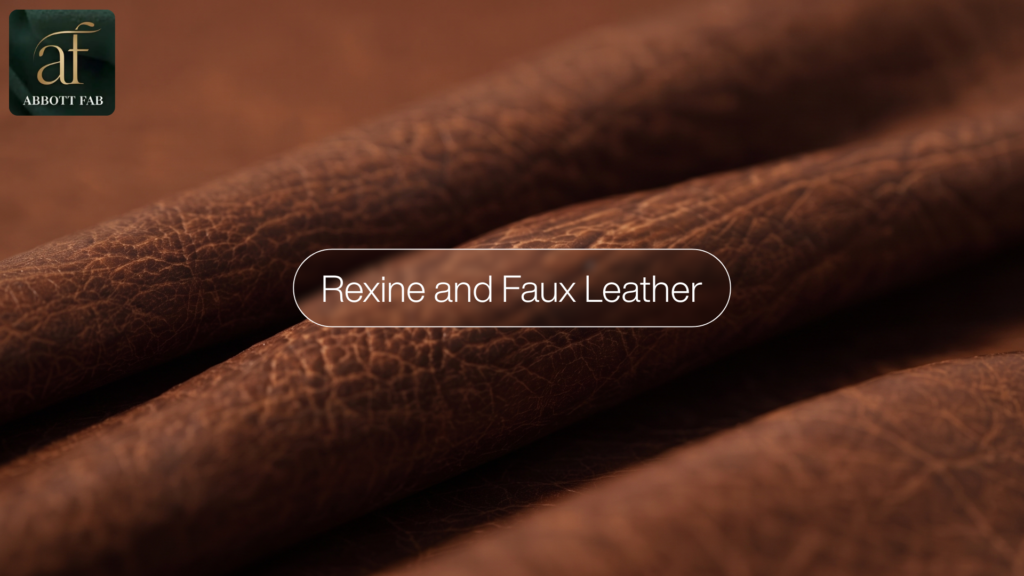
Why it ranks fifth: Rexine is the strongest choice wherever food and drink travel, but it offers less softness and festive texture than woven fabrics.
What it is: Rexine is a coated fabric: a textile base covered with PVC or PU and embossed to look like leather. Our rexine types, grades, and buying guide explain each layer.
Durability: Labs test coated fabrics differently from woven ones. ACT recommends a wire-screen abradant for vinyl and polyurethane-coated upholstery, so a rexine rub count does not line up with woven fabric scores. For PU, the bigger question is hydrolysis: moisture and heat slowly breaking down the coating until it cracks or peels.
PVC rexine | PU rexine | |
Feel | Firmer and more rigid | |
Moisture and heat | Not subject to hydrolysis to any significant degree | Can crack and peel through hydrolysis; resistance depends on the resin grade |
What to ask for | Coating thickness and backing quality | An ISO 1419 hydrolysis result: 3 weeks is the usual residential expectation, and ACT recommends 5 weeks for commercial use |
Suppliers report the ISO 1419 Method C “tropical test” as the number of weeks a PU sample survives heat and humidity without cracking or delaminating. Test weeks do not convert into years of use, so do not read a “7-week” rating as “7 years”.
Best for: Dining chairs, children’s corners, entryway benches and overflow seating. Under heavy guest use, it wipes clean between sittings, which no woven fabric can match. PVC is the safer default in humid Indian cities.
Care demands: Low. A damp cloth and mild soap handle most spills. No coated fabric is immune to repeated chemical cleaners, so rinse with fresh water after any cleaning agent. Our guide to maintaining rexine furniture through the festive season covers the full routine.
Styling suggestion: Deep brown, oxblood or ivory rexine looks smart on dining chairs, with table linen and cushions bringing the festive colour.
Limitations and conditions: Rexine feels warmer than woven fabric on hot days, and claws or sharp objects can leave permanent scratches. Before you buy, run the flex, scratch and water-drop checks in our rexine quality testing guide.
6. Bouclé
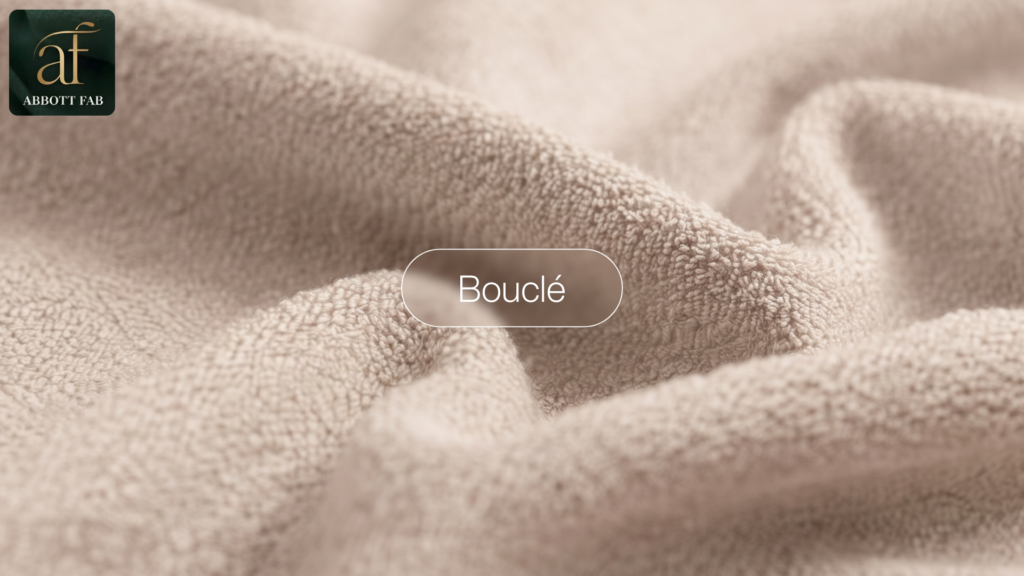
Why it ranks sixth: Bouclé is one of 2026’s most visible textures, but its loops limit it to pieces that avoid heavy friction and snagging.
What it is: Bouclé, French for “curled”, uses looped yarns that create a nubby, tactile surface. Furniture & Choice singles out bouclé as a standout texture in its 2026 sofa trends.
Durability: Loops make pilling the key check. Pilling is the formation of small fibre balls on the surface, graded from 1 (severe) to 5 (no change). Linwood rates its Sienna bouclé at 100,000 rubs, and Kvadrat lists a pilling grade of 5 for its Zero bouclé. Abrasion and pilling are separate tests, and a fabric can reach 80,000 rubs and still pill badly, so ask for both numbers.
Best for: An accent chair, a bench, cushions, or a headboard in an adult household. It does not suit main seating during heavy guest use.
Care demands: Medium to high. Vacuum gently on low suction, and never pull a loose loop; snip it level with the surface instead.
Styling suggestion: Ivory or oatmeal bouclé suits Christmas. Furniture maker Domkapa suggests pairing large textures such as bouclé with finer weaves such as linen or twill.
Limitations and conditions: Loops catch on bangles, rings, sequinned or zari-work outfits, and pet claws, all common at festive gatherings.
7. Linen Blends
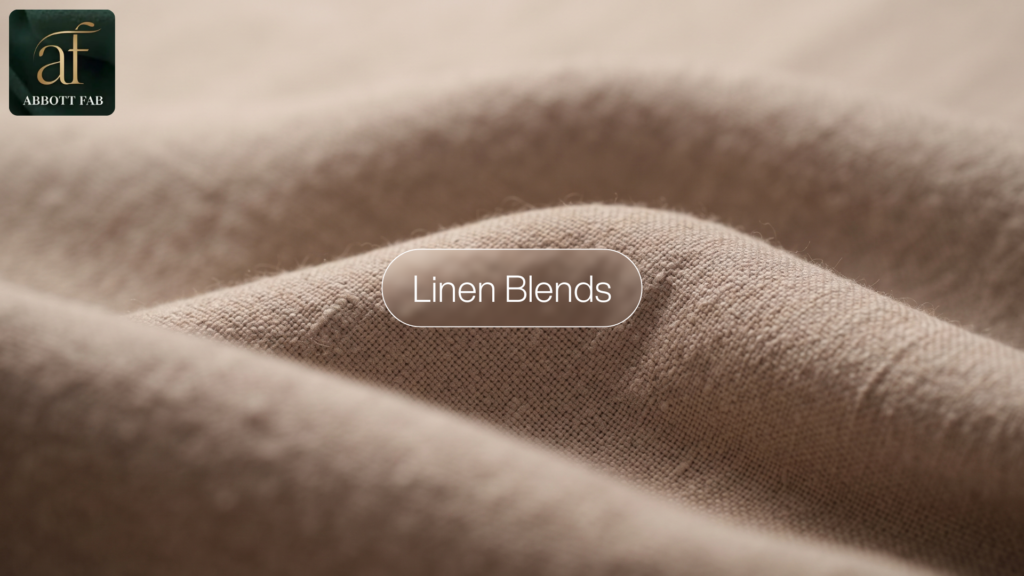
Why it ranks seventh: Linen blends breathe well and test well, but their understated look gives them less festive impact on their own.
What it is: Linen comes from flax. It has a dry, slubbed texture and a matte finish.
Durability: Linwood puts 100% linen at 25,000 to 30,000 Martindale cycles, while linen blends with viscose or polyester reach up to 100,000.
Best for: Guest rooms, formal rooms with light traffic, and breathable seating in hot, humid cities. A high-rub linen blend can handle moderate guest use; pure linen should stay on lighter-use pieces.
Care demands: Medium. Linen resists mildew, which helps in humid cities, but it wrinkles, shrinks in hot water, and weakens under prolonged sun. Wash removable covers cool.
Styling suggestion: A neutral linen sofa lets jacquard, brocade and velvet cushions carry the festive colour, and it looks everyday again once the cushions change.
Limitations and conditions: Avoid pure linen on a heavily used family sofa or next to a south-facing window, and avoid “Decorative” linen sold with no stated rub count.
8. Cotton Blends and Cotton Duck
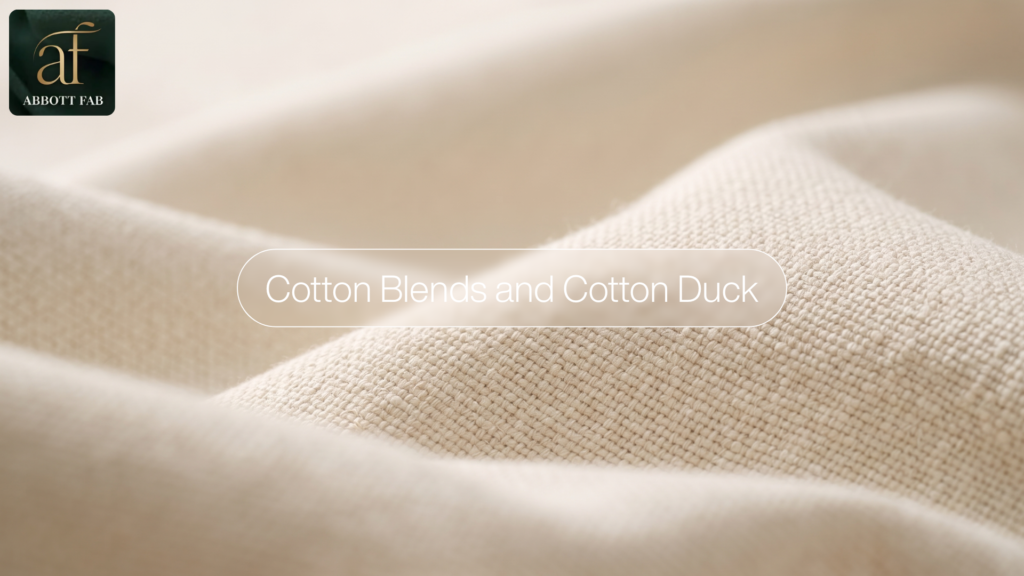
Why it ranks eighth: Cotton blends offer comfort and the cheapest festive refresh through slipcovers, but pure cotton has the lowest published abrasion range on the list.
What it is: Cotton breathes well and takes dye easily. Cotton duck is a heavy, tightly woven plain cotton that holds its shape as a slipcover.
Durability: Wayfair puts 100% cotton upholstery at 6,000 to 15,000 double rubs and cotton blends at 15,000 to 30,000 or more. Mills grade cotton duck by number, and canvas supplier Canvas Etc. lists #12 duck, at about 11.5 oz per square yard (390 g/m²), for furniture slipcovers.
Best for: Removable festive slipcovers over an everyday sofa, and everyday sofas in hot cities, where a cotton-polyester blend balances comfort and wear. Under heavy guest use, a washable slipcover protects the sofa underneath and comes off for laundering afterwards.
Care demands: Low for washable covers. Unless the fabric is sold pre-shrunk, wash it before cutting so the cover keeps its fit after the first wash.
Styling suggestion: Colour does all the work: marigold, saffron, deep red, or a block print. Our affordable home makeover guide compares slipcovers and reupholstery with buying new.
Limitations and conditions: Pure cotton, as fixed upholstery on a heavily used sofa wears faster and stains more easily than blends.
9. Silk-Look Synthetics
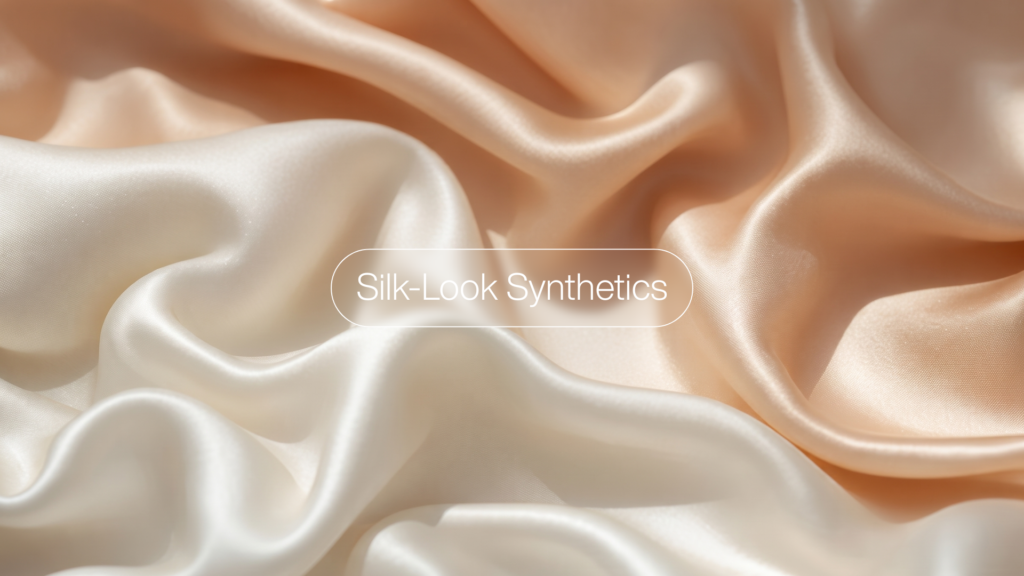
Why it ranks ninth: Silk-look synthetics deliver festive sheen more practically than real silk, but they suit light-use pieces only.
What it is: Polyester satins and faux silks that copy the sheen and drape of real silk.
Durability: Real silk struggles as upholstery. Kothea advises against it because of its low rub count and its sensitivity to abrasion, perspiration, and cleaning, and notes that real silk fades in sunlight. It describes faux silk as more fade-resistant, easier to clean, and more durable. Real silk also water-spots if wet-cleaned incorrectly.
Best for: Cushions, bolsters, headboard panels or a single accent chair in a formal room. Keep it off seating that guests use for long sittings.
Care demands: Medium. Spot-clean according to the cleaning code and keep pieces out of direct sun.
Styling suggestion: Champagne, gold and ivory suit New Year and Diwali, especially beside velvet.
Limitations and conditions: Cheaper satins can look plasticky under direct light, so view a sample in your own room. Ask for the light fastness grade, which shows how well the colour resists fading. The blue wool scale used in ISO 105-B02 runs from 1 (poorest) to 8 (best), and SDC Enterprises, which supplies the blue wool reference cloths, notes that furnishings typically require grade 6.
10. Metallic-Thread Fabrics
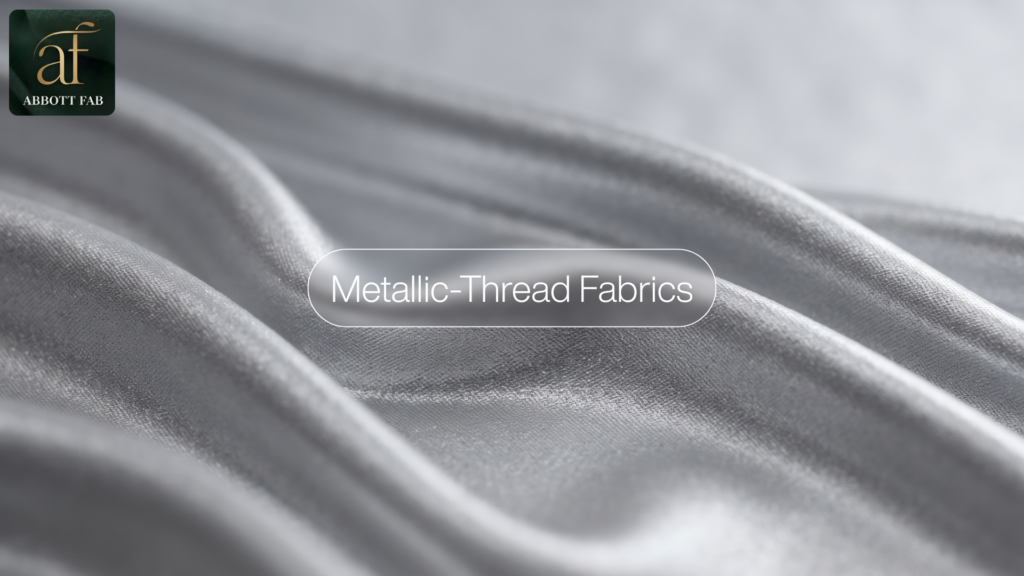
Why it ranks tenth: Metallic fabrics have the narrowest use and the least published durability data, despite their strong festive appeal.
What it is: Fabrics with metallic yarns woven in, either across the ground, inside jacquard motifs, or as piping and trim.
Durability: It depends on the base fabric and the yarn, and no category-wide data exists. Ask for rubbing fastness (ISO 105-X12), which measures how much colour rubs off, and light fastness.
Best for: Piping, cushions, bolsters and pouffes. Metallic piping on a plain performance fabric adds festive shine without exposing the whole seat to friction.
Care demands: Medium to high. Follow the cleaning code and store accent pieces somewhere dry after the season.
Styling suggestion: Warm gold or copper suits Diwali; silver or champagne suits New Year.
Limitations and conditions: One or two metallic accents read as festive, but a room full of them reads busy.
Which Upholstery Fabric Is Best for Each Indian Festival?
The festival matters less than what happens on the furniture during it. Four questions decide the fabric:
- How many guests? More guests means more friction and more chances of a spill.
- How long do they sit? Short visits wear fabric lightly. A card party or a wedding gathering that runs for hours puts sustained friction on seat cushions and arms.
- Do they eat where they sit? Food and drinks on the sofa call for cleanable fabric codes or rexine.
- What conditions come with the festival? Diyas and candles, monsoon humidity, embellished outfits and floor seating each change the risk.
Treat festive colour as a styling choice, not a performance one, and let family or regional traditions guide the palette.
Occasion | Typical seating demand | Performance priorities | Fabric direction | Styling suggestion (optional) |
Ganesh Chaturthi | Many short visits, prasad and sweets, aarti flames; falls in the monsoon months | Humidity tolerance, cleanable surfaces | PVC rexine near food; synthetic-rich blends for sofas | Marigold and red accents through cushions |
Navratri | Nine evenings of gatherings, floor seating, quick turnover | Durable cushions and bolsters; easy-clean floor seating | Cotton blends, chenille, rexine-covered floor cushions | Colourful cushion covers changed through the nine nights |
Durga Puja | Guests dropping in between pandal visits, home meals | Stain tolerance at the dining table; humidity resistance in eastern cities | PVC rexine dining seats; micro-suede or chenille on sofas | Red-and-white accents |
Diwali (Sunday, 8 November 2026) | Longest hosting week: card parties, sweets, diyas | Abrasion resistance on main seating; cleanable dining chairs; distance from flames | Performance velvet in air-conditioned rooms; jacquard accents; PVC rexine for dining | Jewel tones and gold |
Wedding season and family gatherings | Large groups, long sittings, children, embellished outfits | Highest abrasion and snag resistance | Micro-suede, performance velvet, tightly woven chenille | Rich accents kept to cushions |
Christmas and New Year | Smaller evening parties, drinks | Spill tolerance near the bar; comfort for long evenings | Velvet, chenille, rexine near drinks | Green, burgundy, cream; champagne for New Year |
Diwali’s 2026 date follows the central government holiday list.
Diwali
Diwali brings the longest hosting stretch of the year, so the main sofa needs real abrasion resistance, not just sheen. Put velvet and jacquard where guests sit and talk, and rexine where they eat. Keep diyas and candles well away from all upholstery. PU coatings offer limited flame-retardant properties, and a flame-retardant grade reduces flammability rather than making a material fireproof. For seating near a pooja corner, our Jasper leatherette is a flame-retardant grade. Our Diwali home Decor room-by-room guide covers layouts and styling.
Weddings and Family Gatherings
Weddings bring the heaviest seating load: long sittings, children, and guests in sequinned or zari-work clothes. Micro-suede and performance velvet handle the friction without open loops that snag on embellishment. If you prefer chenille, choose a tight, high-rub-count weave, and keep bouclé on accent pieces.
Ganesh Chaturthi, Navratri and Durga Puja
These festivals have passed for 2026, but the same logic helps when you plan for next year. Ganesh Chaturthi falls in the monsoon months, and Navratri and Durga Puja arrive as the monsoon retreats, so humidity matters more than at Diwali. That favours PVC over PU for rexine and synthetic-rich blends over pure natural fibres. Navratri’s garba evenings also shift the load to floor cushions and bolsters, where durable, washable covers matter more than a formal sofa. Our Navratri home Decor and upholstery ideas cover colours and fabrics in detail.
Christmas and New Year
Year-end gatherings tend to be smaller evening events, so comfort and spill tolerance matter more than raw abrasion. Velvet and chenille suit a cosy room, while rexine works near a drinks table.
Which Upholstery Fabric Works Best for Different Furniture Types?
Furniture | How it gets used | Strong choices | Avoid | What to ask for |
Main family sofa | Daily sitting, children, snacks | Chenille, micro-suede, performance velvet (air-conditioned rooms), cotton-polyester blends | Pure linen, real silk, loose bouclé | 20,000 Martindale minimum; 30,000 for heavy use |
Accent chair | Occasional sitting, high visibility | Jacquard, brocade, velvet, bouclé, silk-look synthetics | Nothing, if use stays light | 15,000 Martindale minimum |
Dining chairs | Daily meals, spills, oily hands | PVC rexine, PU rexine with a hydrolysis result | Velvet, silk, bouclé | Coating type; ISO 1419 result for PU |
Cushions and bolsters | Constant handling, little abrasion | Jacquard, brocade, metallic, bouclé, chenille, silk-look synthetics | Very loose weaves | Pilling grade for looped or brushed fabrics |
Ottoman or footstool | Feet, trays, children | Rexine, micro-suede, a durable jacquard | Real silk | Abrasion rating |
Guest room and occasional seating | Light, seasonal use | Linen blends, cotton blends, slipcovers | Nothing specific | Washability and shrinkage |
Headboard | Almost no abrasion | Velvet, micro-suede, bouclé | Nothing specific | Lightfastness if near a window |
These Martindale minimums follow FibreGuard’s domestic bands: 15,000 cycles for light domestic use, 20,000 for general domestic use and 30,000 for severe domestic use. Our cushion fabric guide covers cushion fabrics, fills, and care in more depth.
Why an accent-chair fabric can fail on a family sofa
An accent chair might see a few guests a week. A family sofa sees daily friction from clothing, children climbing on the arms, and food. A fabric rated for light domestic use at 15,000 Martindale cycles reaches only half the 30,000-cycle band that FibreGuard sets for severe domestic use. The accent chair also escapes most spills and claws, while the family sofa takes all of them. The brocade that looks magnificent on a wing chair faces far more friction on the seat of a busy sofa.
How to Choose Durable Upholstery for Festive Home Decor
Fibre, construction and finish are three different things
Fibre is what the yarn is made of: polyester, cotton, linen or a blend. Fibre sets baseline traits. Polyester resists moisture and fading; cotton and linen breathe better.
Construction is how the yarn becomes cloth: weave, pile density, yarn twist and weight. Construction explains why two fabrics with the same fibre perform differently. Linwood rates pure linen at 25,000 to 30,000 Martindale cycles, while linen blends reach up to 100,000.
Finish is a treatment applied after weaving, such as a stain repellent or water repellent. Finishes vary between products and can wear off. Many anti-microbial treatments wash out after a few cleanings, while colour or protection built into the fibre, as in solution-dyed yarns, lasts the life of the fabric.
Claim on the label | Where it comes from | What to check |
Breathable | Mostly fibre (cotton, linen) and an open weave | Fibre composition |
Moisture and fade resistant | Mostly fibre (polyester, solution-dyed yarns) | Fibre composition; light fastness grade |
Abrasion resistant | Construction and fibre together, product by product | Abrasion result and test method |
Stain resistant or water repellent | Usually a topical finish | Whether the finish is topical; cleaning code |
Flame retardant | A treatment or a specific formulation | The product’s own flame-retardancy claim |
How to read an abrasion rating
Use level | Wyzenbeek (double rubs) | Martindale (cycles) |
Light domestic | 3,000 | 15,000 |
General or medium domestic | 9,000 | 20,000 |
Heavy or severe domestic | 15,000 | 30,000 |
Low-traffic contract (ACT) | 15,000 | 20,000 |
High-traffic contract (ACT) | 30,000 | 40,000 |
Domestic bands come from FibreGuard; contract minimums come from ACT’s current guidelines, as published by ACT member Architex. Keep three cautions in mind:
- The scales do not convert. A Martindale number and a double-rub number measure different motions against different cloths.
- Higher is not always better. Architex states that abrasion results above the ACT guidelines are not an indicator of product lifespan.
- Rub counts measure abrasion only. A high rub count does not indicate stain resistance or claw resistance, as Kothea’s Martindale guide points out.
Other tests worth requesting
- Pilling (ISO 12945-2): Graded 1 to 5, with 5 meaning no change. Essential for bouclé, chenille and brushed fabrics.
- Light fastness (ISO 105-B02): Graded 1 to 8 on the blue wool scale. Important for saturated festive colours and seating near windows.
- Rubbing fastness (ISO 105-X12): Measures colour transfer from dry and wet rubbing. Important for dark velvets and deep reds.
- Hydrolysis (ISO 1419): For PU rexine only.
Ignore grade labels
Fabric grades such as A, B, C and D reflect what a fabric costs the manufacturer, not how long it lasts. A Grade A polyester blend can outlast a Grade D designer fabric. Our upholstery fabric selection guide compares types, durability, and cost side by side.
Questions to ask before you order
- What is the fibre composition, in percentages?
- What is the abrasion result, and which test produced it, Wyzenbeek or Martindale?
- What are the pilling and light fastness grades?
- Does the stain resistance come from the fibre or from a topical finish?
- What is the cleaning code: W, S, WS, or X?
- For rexine: is the coating PVC or PU, and what is the ISO 1419 result for PU?
How to Maintain Upholstery During and After Festive Gatherings
Before guests arrive
- Vacuum every seat, seam, and the space under removable cushions, so dust does not grind into the fabric under extra use.
- Check the cleaning code on each piece and keep the right cleaner ready: water-based for W or WS, solvent-based for S.
- Put a washable throw on the sofa seat closest to the snack table, and add trays to ottomans that will hold plates or glasses.
Cleaning codes in plain language
- W: Water-based cleaners are safe.
- S: Use solvent-based (water-free) cleaners only.
- WS: Either type works.
- X: Vacuum or brush only; send it to a professional for anything more.
First aid for common festive stains
Blot, never rub. Rubbing pushes spills deeper and roughs up pile and loops. Test any cleaner on a hidden area first.
Stain | First step | Then |
Candle or diya wax | Let it harden fully, or hold a sealed bag of ice against it | Lift it off gently; on velvet or chenille, work with the pile, not against it |
Sweets and syrup | Lift off solid residue with a blunt edge | Clean the sticky film with the cleaner your code allows |
Ghee, oil and fried snacks | Blot up as much as possible | Use the code-approved cleaner; on S-code fabric, never use water |
Tea, coffee and juice | Blot from the outside in | On rexine, wipe with a damp cloth and mild soap, then dry fully |
Haldi, kumkum and coloured powders | Vacuum or shake off the dry powder before anything touches it | Wetting the powder first can spread the colour into the fabric |
After the season
- Vacuum seams and crevices again, where crumbs and dust settle.
- Air the room once guests leave, especially after weeks of closed windows and diya smoke.
- Wash or dry-clean slipcovers before storing them, and store them dry.
- Book professional cleaning for anything with an S or X code before stains set.
- Rotate seat cushions so the next season’s wear spreads evenly.
Common Mistakes to Avoid When Choosing Festive Upholstery
- Choosing by appearance alone. A swatch that glows under showroom lights tells you nothing about abrasion, pilling, or fading. Check it in daylight and in evening light at home.
- Trusting the fabric name. “Velvet”, “linen” and “chenille” each cover a wide range of performance. Ask for test data on the exact product.
- Ignoring the cleaning code. An S-code velvet on a sofa where children eat creates a problem the first time someone spills juice.
- Buying for one week instead of the whole year. A bold festive colour on the main sofa stays long after Diwali. Put festive colour on cushions and slipcovers, and keep fixed upholstery in a tone you will live with.
- Ordering too little fabric. Fabrics come in dye lots, and a reorder may not match. Order 10 to 15% more than your upholsterer’s estimate and confirm that every roll shares one dye lot.
- Reupholstering a weak frame. New fabric cannot save a cracked frame or sagging springs. Our sofa reupholstery guide explains the frame checks and costs to review first.
- Leaving it too late. Upholsterers and cleaners get booked up in the weeks before Diwali. With less than six weeks to go, focus on cushions, slipcovers and dining-chair seats.
Festive Upholstery Fabric and Rexine from Abbott Fab
Abbott Fab has manufactured and supplied upholstery fabric and rexine since 1990, from 1/91, Basement, Timber Market, Kirti Nagar, New Delhi. Our range covers several fabrics on this list:
- Velvet, suede, jacquard and Molfino sofa fabrics for festive sofas, accent chairs, cushions and headboards
- Polyester and cotton sofa fabrics (plain and printed) and jute sofa fabric for everyday seating and slipcovers
- Upholstery leather, PVC, and PU rexine for dining chairs and high-spill seating
- Jasper, a flame-retardant leatherette, for seating near pooja corners and diya displays
- Blackout fabric for guest rooms
We provide physical samples before bulk orders, so you can test a swatch in your own room’s lighting before you commit. Browse our fabric range and rexine range. If you are buying rexine in bulk for a café, hall, or several homes, our guide to choosing wholesale rexine suppliers in India covers batch and backing checks.
The Bottom Line on Festive Upholstery Fabrics
No single fabric wins every festive job. Performance velvet earns the top spot for statement seating, chenille and micro-suede carry family sofas through long gatherings, and jacquard, brocade, bouclé and metallic fabrics do their best work as accents. Rexine handles the dining table, with PVC the safer pick in humid cities.
Choose by the furniture and the guest load first, then by the festival’s look. Ask for the abrasion result, the fibre composition, and the cleaning code, and judge a sample in your own room before you order. To compare swatches for a Diwali, wedding-season or year-end refresh, request samples from Abbott Fab and test them where the furniture actually lives.
Frequently Asked Questions
Tightly constructed polyester fabrics, such as micro-suede and performance velvet, show the highest published abrasion results, with some products exceeding 100,000 double rubs. In hot, humid cities without air conditioning, a cotton-polyester or linen blend breathes better. Aim for at least 20,000 Martindale cycles on a family sofa and 30,000 for heavy use.
Yes, if it is a performance velvet with a high rub count and the room has air conditioning. Polyester velvet traps heat in non-air-conditioned rooms, and all velvet collects dust in its pile. Check whether its cleaning code allows water before children use it daily.
PVC rexine is the easiest: a damp cloth and mild soap handle most spills. Micro-suede comes next, because tightly woven microfibre resists stains and most marks lift with mild soap and water when the cleaning code allows it. Washable cotton or cotton-blend slipcovers are also easy, because you can remove and launder them after the season.
Use performance velvet on the main sofa in an air-conditioned room, jacquard or brocade on cushions and accent chairs, and PVC rexine on dining chairs. Keep diyas and candles away from all upholstery, and consider a flame-retardant leatherette for seating near a pooja corner.
Choose tight, low-pile fabrics with a high rub count, such as micro-suede, and avoid bouclé and chenille, which claws can catch and damage. No rub count predicts claw resistance, so test a swatch with your household in mind. Pick W or WS cleaning codes so you can clean spills at home.
PVC rexine works best because it wipes clean and does not break down through hydrolysis to any significant degree. PU rexine feels softer and more like leather, but ask for an ISO 1419 hydrolysis result before buying: 3 weeks is the usual expectation for residential upholstery, and 5 weeks is the commercial benchmark.
Fabric suits formal seating where guests sit for long conversations, because it feels softer and warmer. Rexine suits spill-heavy zones such as dining nooks and children’s corners. Many homes use both, and our fabric vs rexine sofa comparison breaks down cost, comfort, and climate performance.
Our festive home Decor planning guide recommends placing fabric or rexine orders and booking reupholstery about six weeks before the festival. With less time, refresh cushions, slipcovers and dining-chair seats instead, and plan full reupholstery for the wedding season or year-end.