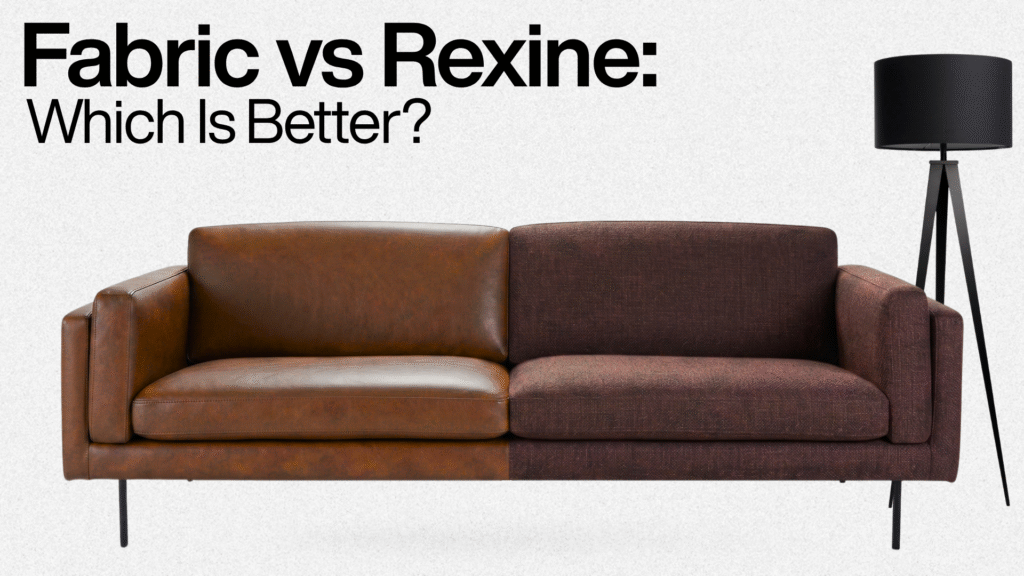
Fabric vs Rexine Sofa: Which Upholstery Should You Choose?
Key Takeaways
- Fabric wins on comfort, breathability, and long-term visual richness; rexine wins on cleaning speed, water resistance, and upfront cost.
- Durability isn’t decided by “fabric vs rexine” as a category; check the Martindale rub count (15,000+ is the baseline for a daily-use sofa) or the PVC-vs-PU grade before buying.
- PU rexine outperforms PVC rexine on comfort and crack resistance; PVC rexine is cheaper and marginally more water- and abrasion-resistant.
- For Indian summers, fabric stays cooler. For fast monsoon cleanup, rexine is quicker to wipe down, though it can still feel clammy in humid, unventilated rooms.
- Homes with young kids or heavily shedding pets often do best with rexine or a stain-resistant performance fabric, rather than either material at its most basic grade.
A sofa’s frame and foam rarely fail first. The upholstery does it absorbs every spill, nap, and Sunday afternoon of wear, which is why the fabric-or-rexine decision matters more than most buyers realise while they’re standing in a showroom looking at silhouettes and cushion shapes.
Fabric and rexine are the two upholstery options you’ll be offered on almost every sofa sold in India, from a budget three-seater to a designer sectional. They behave very differently once they’re actually in your living room. One breathes and feels warm to the touch. The other wipes clean in seconds and shrugs off a spilled cup of chai. Neither is objectively “better”; the right pick depends on your climate, your household, and how much maintenance you’re genuinely willing to do.
This guide breaks the decision down by cost, comfort, durability, maintenance, and climate performance, and goes a level deeper than most buying guides on the technical side including how abrasion ratings actually work and what “rexine” is chemically made of. It draws on how AbbottFab, a Delhi-based fabric and rexine manufacturer, sees these materials hold up across thousands of real households and commercial fit-outs, not just on a showroom swatch.
Quick answer: Fabric is the better choice for comfort, breathability, and a warm, high-end look, making it ideal for living rooms and sofas that get long daily use. Rexine is the better choice for fast cleaning, water resistance, and lower upfront cost, making it ideal for homes with young kids, rental properties, and commercial spaces like offices and cafés. Within each category, quality matters more than the material label; a well-made fabric or a premium PU rexine will consistently outperform a cheap version of either.
Quick Comparison: Fabric vs Rexine Sofa
| Feature | Fabric Sofa | Rexine Sofa |
|---|---|---|
| Comfort | Excellent | Good |
| Breathability | Excellent | Low |
| Maintenance effort | Moderate | Very easy |
| Durability | High, with a quality fabric | Moderate, depends on PVC vs PU grade |
| Water resistance | Low | Excellent |
| Pet-friendliness | Moderate | Moderate |
| Look and feel | Warm, textured, premium | Sleek, leather-like |
| Design variety | Extensive | Moderate |
| Behaviour in heat | Stays cool | Can feel warm and sticky |
| Typical cost | Budget to premium | Mostly budget to mid-range |
What Is Fabric Upholstery?
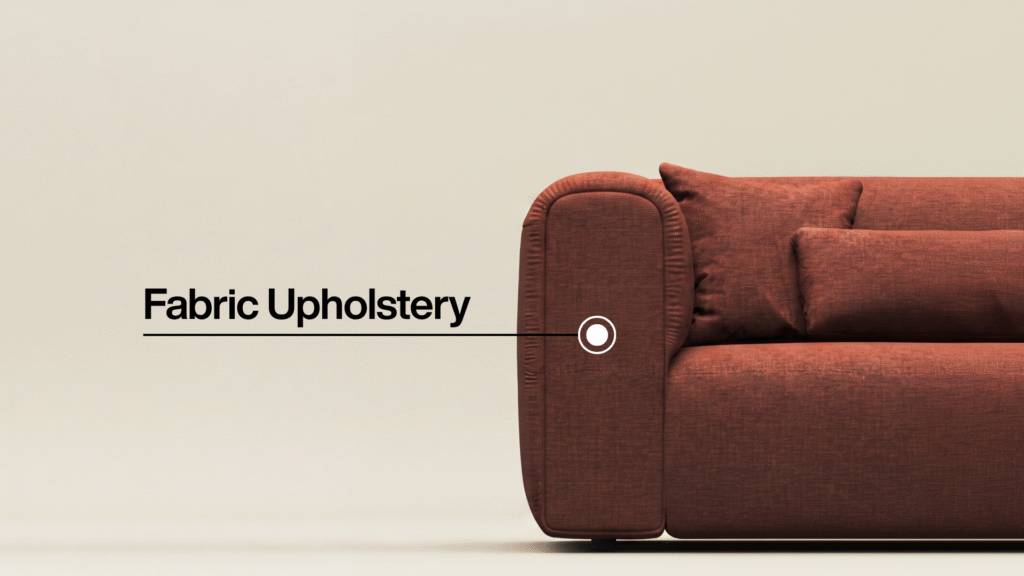
Fabric upholstery is any sofa covering that’s woven or knitted from natural fibres, synthetic fibres, or a blend of the two. The most common choices are cotton, linen, polyester, velvet, chenille, jacquard, bouclé, microfiber, and various blended weaves including specialty options like Molfino, a textured woven fabric that’s become a popular mid-range choice in the Indian furniture trade.
Modern upholstery fabrics are engineered well beyond what “fabric” meant a decade ago. Performance finishes now add stain resistance, fade resistance, and abrasion resistance without sacrificing the soft handle that makes fabric comfortable in the first place. That’s what lets a fabric sofa work equally well in a minimalist Scandinavian-style living room and a maximalist, pattern-heavy interior.
At AbbottFab, the fabric range spans budget polyester blends through to premium velvets and jacquards, which is the main reason this comparison matters: most buyers aren’t choosing between “a fabric” and “a rexine,” they’re choosing between dozens of grades within each category.
What Is Rexine Upholstery?
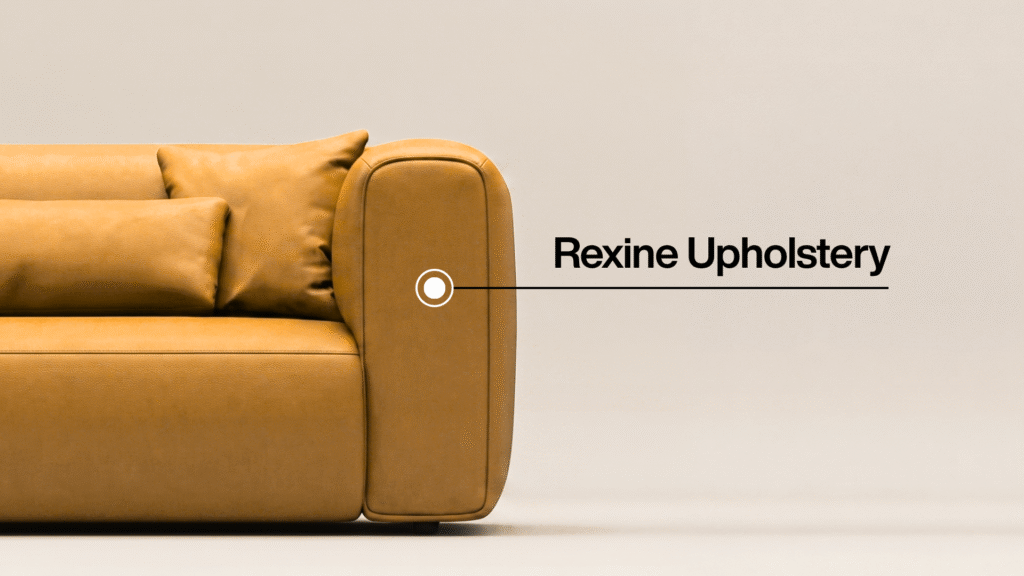
Rexine is synthetic leather: a woven or knitted fabric base coated with polyvinyl chloride (PVC) or polyurethane (PU) and embossed to mimic the grain of real leather. In India, “rexine” functions the way “pleather” or “faux leather” does elsewhere: it’s a catch-all term for PU/PVC-coated upholstery, not one specific product. You’ll also see the same category sold as “leatherite” or “leather cloth” by different suppliers, same basic construction.
The name has an unusual history worth knowing, because it explains why “rexine” doesn’t mean one fixed thing. Rexine was originally a British trademark, registered in 1915 by a leathercloth manufacturer near Manchester. The original product was made by coating cotton cloth with cellulose nitrate, camphor oil, and pigment, not PVC or PU, and was used everywhere from book covers to 1920s car interiors. That specific product was discontinued in 2005, but by then the name had already gone generic across India and the UK for any leather-look coated fabric. Today’s “rexine” sofa is chemically a PVC or PU product, with no cellulose nitrate involved.
Because it’s water-resistant and easy to wipe down, rexine remains a default choice for:
- Office and boardroom furniture
- Restaurants and cafés
- Clinics and waiting areas
- Budget and rental residential furniture
Modern rexine comes in matte, textured, embossed, suede-look, and leather-grain finishes. It delivers a sleek, consistent appearance, but it behaves very differently from fabric once you actually sit on it for a few hours which is where most of this guide’s comparisons come from.
Fabric vs Rexine: Cost Comparison
For most buyers, price is the first filter. Rexine generally has a lower sticker price, but long-term value depends on durability, replacement frequency, and how the sofa is actually used.
| Aspect | Fabric Sofa | Rexine Sofa |
|---|---|---|
| Price range | Spans budget, mid-range, and premium | Generally more affordable overall |
| Budget options | Polyester, cotton blends | Standard PVC rexine |
| Mid-range options | Chenille, jacquard, microfiber | Premium PVC or entry-level PU rexine |
| Premium options | Velvet, performance fabrics, designer weaves | High-quality PU rexine with a leather-like finish |
| Long-term value | Strong for quality fabrics better comfort and lifespan | Cost-effective upfront; lower-grade PVC may need replacing sooner |
| Key advantages | Wide material and price range; superior comfort; long-lasting when well-made | Lower purchase cost; cheaper repairs; economical for commercial or rental use |
| Watch-outs | Premium fabrics carry a real upfront cost | Lower-grade rexine can peel, crack, or fade in heat and direct sun |
Comfort Comparison
Comfort is where fabric consistently outperforms rexine, and the reason is physical rather than a matter of taste: woven fabric allows air to pass through it, so heat and moisture from your body don’t build up against the surface. Rexine’s PVC or PU coating is essentially a thin plastic film it blocks that airflow, which is why sitting on a rexine sofa in a closed room during summer can feel warm within minutes.
| Comfort factor | Fabric | Rexine |
|---|---|---|
| Breathability | Excellent | Low |
| Softness | Excellent | Moderate |
| Comfort during long sitting | Excellent | Moderate |
| Summer comfort | Excellent | Poor without a fan or AC |
| Winter comfort | Good; feels warmer to the touch | Moderate cold until it adjusts to body heat |
| Temperature regulation | Excellent | Poor |
Durability Comparison: Which Sofa Material Lasts Longer?
A sofa is a long-term purchase, and its lifespan depends on far more than whether it’s covered in fabric or rexine. Fibre or coating quality, daily usage, sunlight exposure, and manufacturing standards all matter often more than the material category itself.
What the Martindale Rub Test Actually Measures
Furniture showrooms use the word “durable” a lot, but in upholstery fabric, durability is actually a measurable lab number: the Martindale rub count. A Martindale machine rubs a fabric sample against a standardised abrasive surface in a figure-eight motion, under constant pressure that approximates a seated adult, and counts how many rubs it takes before the fabric visibly wears, pilling, fraying, or a yarn. The test follows international standards (ISO 12947 and ASTM D4966), so a certified rub count from one supplier is genuinely comparable to another’s.
As a practical buying guide, most of the industry converges on these bands:
- Under 10,000 rubs: decorative use only (cushions, low-contact accents); not suitable for a sofa seat
- 10,000–15,000 rubs: light domestic use (occasional chairs, guest rooms)
- 15,000–25,000 rubs: general domestic use, where most everyday sofas fall
- 25,000–35,000 rubs: heavy domestic use (recliners, family sofas with daily traffic)
- 35,000–40,000+ rubs: light-to-heavy contract use (home offices, hospitality, restaurants)
Beyond roughly 50,000 rubs, most textile testers agree the real-world difference becomes negligible for a home sofa; you’re paying for a bigger number, not meaningfully more years of use. It’s worth asking a fabric supplier for the Martindale rating on the swatch or spec sheet before you buy; reputable ranges, including AbbottFab’s, list it for exactly this reason.
Remember that Martindale measures abrasion only. It says nothing about how a fabric handles sunlight, stains, or humidity; those depend on fibre type, weave, and any protective finish applied.
Rexine Durability: PVC vs PU
Rexine isn’t rated on the Martindale scale, because it doesn’t wear by fraying the way a woven fabric does it wears by cracking, peeling, or hardening as the coating ages. Here, the PVC-vs-PU distinction matters more than any single number:
- PU rexine stays more flexible over time and resists cracking better, because polyurethane coatings retain elasticity longer than PVC film.
- PVC rexine is more rigid to begin with and depends heavily on plasticiser content; as that plasticiser breaks down (accelerated by heat and UV), the surface stiffens and eventually cracks.
Keeping any rexine sofa out of direct, prolonged sunlight and away from radiator-level heat will meaningfully extend its life, regardless of grade.
Best Choice Based on Your Lifestyle
| Your situation | Better fit | Why |
|---|---|---|
| Living room with low daily traffic | Fabric | Comfort and appearance matter more than heavy-wear resistance |
| Family with young children | Rexine, or a stain-resistant performance fabric | Spills wipe away before they set in |
| Home with dogs or cats | Either, with care | Tightly woven fabric resists snagging; rexine sheds hair easily, but claws can puncture it |
| Rental property, PG, or hostel furnishing | PVC rexine | Lowest cost and fastest cleanup between tenants |
| Home office or study | PU rexine or a performance fabric | Professional look with minimal upkeep |
| Café, clinic, or reception area | Rexine | Fast wipe-down between visitors, consistent appearance |
| Humid, non-AC room in a coastal city | Fabric with good ventilation | Avoid PVC where there’s no airflow it traps heat and feels clammy |
| Hot, dry summers with strong sun exposure | Fabric | Breathability matters most when indoor temperatures peak |
Maintenance Comparison
Many buyers assume rexine is always the lower-maintenance option. Day-to-day cleaning, yes, but the full picture is more balanced than that.
| Maintenance factor | Fabric Sofa | Rexine Sofa |
|---|---|---|
| Cleaning requirement | Regular care needed; dust, pet hair, and spills settle into the weave | Minimal smooth, non-porous surface |
| Routine care | Weekly vacuuming, prompt stain treatment, occasional deep cleaning, cushion rotation, limited sun exposure | Wipe with a damp cloth, mild soap for marks, avoid harsh chemicals, keep out of direct sun |
| Spill handling | Liquids can soak in if not cleaned quickly | Most spills sit on the surface and wipe away easily |
| Long-term challenges | Can hold odours if spills aren’t addressed promptly; needs occasional deep cleaning | Can crack or peel with age; surface damage is hard to repair invisibly |
| Best suited to | Homeowners comfortable with routine upkeep | Buyers who want low daily effort and strong spill resistance |
Which Material Is Better for Indian Weather?
India’s climate range dry heat, monsoon humidity, and cold winters depending on the region makes this one of the more practical parts of the decision.
| Season | Fabric | Rexine | Better fit |
|---|---|---|---|
| Summer | Breathable, stays noticeably cooler against skin | Traps heat; can feel sticky without a fan or AC running | Fabric |
| Monsoon | Comfortable in humid rooms with good airflow, but can hold moisture and odour if it stays damp | Wipes dry almost instantly, but the same non-porous surface can still feel clammy in high humidity | Rexine, for practicality fabric, for comfort |
| Winter | Naturally warmer to sit on | Cold to the touch until it adjusts to room temperature | Fabric |
Rexine’s monsoon advantage is really a maintenance advantage, not a comfort one. A damp cloth removes humidity residue or tracked-in mud in seconds, which matters if your home doesn’t have covered parking or a mudroom. But the same coating that repels water also blocks airflow, so in a closed, humid room a rexine sofa can feel just as sticky as one sitting in a heatwave. A ceiling fan or AC changes this equation considerably.
Fabric vs Rexine for Families with Kids and Pets
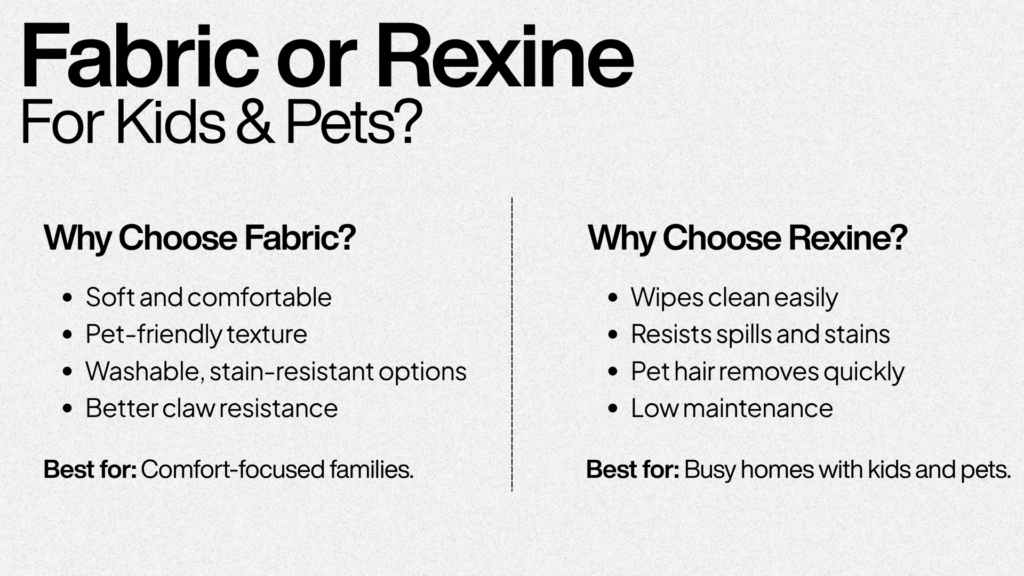
Whether you’re dealing with toddlers, shedding dogs, or both, a sofa needs to survive daily spills, scratches, and constant use without looking worn out within a year.
Why Families Choose Fabric
- Soft, warm surface that’s comfortable for kids during play and lounging
- Non-slippery texture that pets tend to settle on comfortably
- Available in washable, stain-resistant performance weaves
- Tightly woven fabrics resist snagging from claws better than loose weaves
Best for: families who prioritise comfort, homes with calmer pets, and anyone choosing a performance or stain-resistant fabric.
Why Families Choose Rexine
- Most food and drink spills wipe away in seconds
- Doesn’t absorb liquid, so stains rarely set in
- Pet hair lifts off easily with a cloth
- Fast, low-effort daily maintenance
Best for: homes with young children, busy households that want hassle-free cleaning, and owners of heavily shedding pets.
Quick Recommendation
Choose fabric if:
- Comfort is your top priority
- Your family spends long hours on the sofa
- You have calm pets and are comfortable with occasional vacuuming
- You’re choosing a performance or stain-resistant fabric
Choose rexine if:
- Kids frequently spill food or drinks
- You want a surface that wipes clean in seconds
- Low maintenance is non-negotiable
- You have shedding pets, especially dogs
Expert tip: If you have both young children and pets, a high-performance upholstery fabric is often the better middle ground. These weaves combine fabric’s comfort with stain-resistant, easy-clean finishes, so you’re not choosing between comfort and practicality.
Which Material Looks More Premium?
Appearance is genuinely subjective, but fabric and rexine create different visual impressions by design.
| Aspect | Fabric | Rexine |
|---|---|---|
| Overall impression | Rich texture, warm and inviting | Sleek, modern, leather-inspired |
| Design flexibility | Wide range of colours, weaves, and patterns | Multiple colours and finishes, fewer textures |
| Best-suited interiors | Scandinavian, contemporary, Japandi, modern luxury, traditional Indian homes | Modern offices, minimalist interiors, industrial spaces |
| Ideal applications | Living rooms, family homes, boutique hotels | Corporate offices, clinics, reception areas, cafés |
Fabric Types for Sofas: Which One Is Best?
Not all upholstery fabrics behave the same way. Comfort, durability, maintenance, and appearance all depend heavily on the specific fabric type, which is why AbbottFab’s fabric range is organised by these categories rather than treated as one undifferentiated block.
| Fabric type | Overview | Pros | Cons | Best for |
|---|---|---|---|---|
| Cotton | Soft, breathable natural fibre, good for warmer climates | Comfortable, breathable, natural | Wrinkles easily, can stain without treatment, may fade in sun | Family homes, casual interiors, budget buyers |
| Linen | Premium natural fibre with an airy, sophisticated look | Elegant, excellent airflow, lightweight | Wrinkles more than most fabrics, needs careful cleaning | Premium and designer interiors |
| Polyester | Durable, affordable synthetic with good fade resistance | Shrink-resistant, affordable, easy to clean | Less breathable than natural fibres | Everyday family use, rentals |
| Velvet | Luxurious weave with rich colour depth | Soft, elegant, visually rich | Shows dust, needs regular brushing | Statement furniture, luxury homes |
| Chenille | Soft, textured, thick weave built for regular use | Durable, warm appearance | Attracts pet hair, needs vacuuming to keep its texture | Homes with frequent daily use |
| Microfiber | Engineered synthetic built for stain resistance | Easy to clean, soft touch, pet-friendly | Can attract lint and static in dry weather | Families, homes with children and pets |
Understanding Rexine Types: PVC vs PU
Not all rexine is the same product wearing different names. Quality varies significantly depending on the coating used.
| Feature | PVC Rexine | PU Rexine |
|---|---|---|
| Material | Fabric base coated with polyvinyl chloride | Fabric base coated with polyurethane |
| Texture | Firmer, slightly plastic-feeling | Softer, smoother, closer to real leather |
| Breathability | Lower: the coating largely blocks airflow | Slightly better, though still less breathable than fabric |
| Durability | Strong for everyday use, but the coating can harden and crack as plasticiser breaks down | More flexible over time and generally more crack-resistant |
| Water resistance | Excellent | Excellent |
| Maintenance | Wipes clean easily | Wipes clean easily |
| Cost | Budget-friendly | Premium, typically priced above PVC |
| Best for | Budget buyers, rentals, offices, cafés, high-traffic commercial use | Premium residential sofas, executive offices, buyers wanting a leather-like feel |
In short: PVC wins on price and raw water/abrasion resistance; PU wins on comfort, breathability, and how it ages on furniture that gets sat on daily.
Sustainability: Which Material Is More Eco-Friendly?
Natural fabrics like cotton and linen are renewable and biodegradable, and many mills now also offer recycled-polyester and other recycled-fibre options, a genuine improvement over virgin synthetic fabric.
Rexine sits on shakier environmental ground. PVC is petroleum-derived and generally harder to recycle at end of life. Polyurethane-based rexine tends to break down somewhat more readily than PVC once discarded, and its production typically avoids some of the chlorine-based chemistry involved in PVC manufacturing, but it remains a synthetic material overall, not a sustainable one by default.
For buyers who weigh environmental impact heavily, natural or recycled fabric is generally the more conscious choice.
Why Choose AbbottFab for Sofa Upholstery?
Choosing the right upholstery is about more than appearanceit’s about finding a material that suits your lifestyle, design preferences, and long-term needs. At AbbottFab, we help homeowners, interior designers, furniture manufacturers, and commercial buyers select upholstery solutions that balance comfort, durability, and style.
Our extensive collection includes premium upholstery fabrics in a wide range of textures, colors, patterns, and performance finishes, making it easy to find the perfect fit for any residential or commercial space.
For homes, premium fabrics offer exceptional comfort, breathability, and timeless aesthetics. For offices, cafés, clinics, and other high-traffic environments, quality rexine provides a practical, low-maintenance alternative with a sleek, professional look.
At AbbottFab, we believe the best upholstery isn’t simply fabric or refine it’s the material that best matches your space, usage, and expectations. Explore our upholstery collections to find the ideal solution for your next sofa or furniture project.
Final Verdict: Fabric vs Rexine
Both materials have earned a permanent place in furniture design, but they serve different needs; there’s no single winner, only a better fit for your household, budget, and climate.
If comfort, breathability, and a warm, textured look matter most, fabric is the stronger choice, particularly for living rooms and sofas that see long daily use. If your priority is fast cleaning, spill resistance, and a lower upfront cost, rexine is the practical pick, especially for offices, cafés, clinics, rental properties, and other high-traffic settings where quick maintenance matters more than plush comfort.
Before deciding, remember that quality within a category usually matters more than the category itself. A premium fabric with a strong Martindale rating and a stain-resistant finish will comfortably outlast a bargain-bin rexine, while a well-made PU rexine can perform reliably for years. Choose based on how the sofa will actually be used and maintained, not just the price tag on day one.
Frequently Asked Questions
There’s no universal winner. Fabric is the better choice if comfort, breathability, and aesthetics are your priorities. Rexine is better suited to buyers who want easy maintenance, water resistance, and a lower upfront cost.
A premium fabric with a strong Martindale rating can outlast low-grade rexine in a home setting, and commercial-grade rexine can also last for years when properly maintained. Rather than judging by material alone, check the Martindale rub count for fabric, or the PVC-vs-PU grade and build quality for rexine.
Rexine is water-resistant, not fully waterproof. Most spills sit on the surface and wipe away cleanly if you clean them promptly, but prolonged soaking can still work its way through seams.
Lower-grade rexine, especially PVC with lower-quality plasticiser, can crack, harden, or peel after prolonged sun and heat exposure. Choosing premium PU rexine and keeping it out of direct sunlight significantly extends its usable life.
Rexine generally requires less routine effort, since its non-porous surface wipes clean with a damp cloth. Fabric needs regular vacuuming and occasional deep cleaning to stay fresh.
Yes. Many modern performance fabrics are engineered specifically to resist stains, spills, and everyday wear, making them a practical option for family homes rather than a purely decorative one.
Both have real advantages. Tightly woven fabric resists snagging better than a loose weave, and rexine doesn’t trap pet hair the way fabric can. That said, sharp claws can permanently puncture or scratch rexine in a way they generally won’t damage a well-woven fabric.
Fabric, generally. Its breathable weave allows air to circulate against your skin, while rexine’s non-porous coating traps heat and can feel warm or sticky without a fan or AC running.
For most residential furniture, PU rexine offers a softer feel, better flexibility, and a more realistic leather-like look. PVC rexine is usually the better pick where maximum water resistance and heavy-duty, budget-conscious performance matter more than comfort.
Modern rexine is a fabric or knit base coated with either polyvinyl chloride (PVC) or polyurethane (PU), then embossed to mimic a leather grain. This is different from the original 1915 British product the name comes from, which used a cellulose-nitrate coating rather than PVC or PU.
Functionally, yes, “rexine,” “leatherite,” “leatherette,” and “faux leather” all describe the same basic category: a fabric base coated with PVC or PU to imitate real leather. The terms are largely regional and brand-driven rather than describing different products.
Look past colour and texture alone. Check the Martindale abrasion rating (aim for at least 15,000–25,000 rubs for daily-use seating), the fibre composition, pilling resistance, and any UV or stain-resistant finish. These technical details predict long-term performance far better than how a fabric looks on the showroom floor.
Pingback: Affordable Home Makeover Ideas India | 2026 Guide
Pingback: Navratri Home Decor: Fabric & Upholstery Ideas (2026)