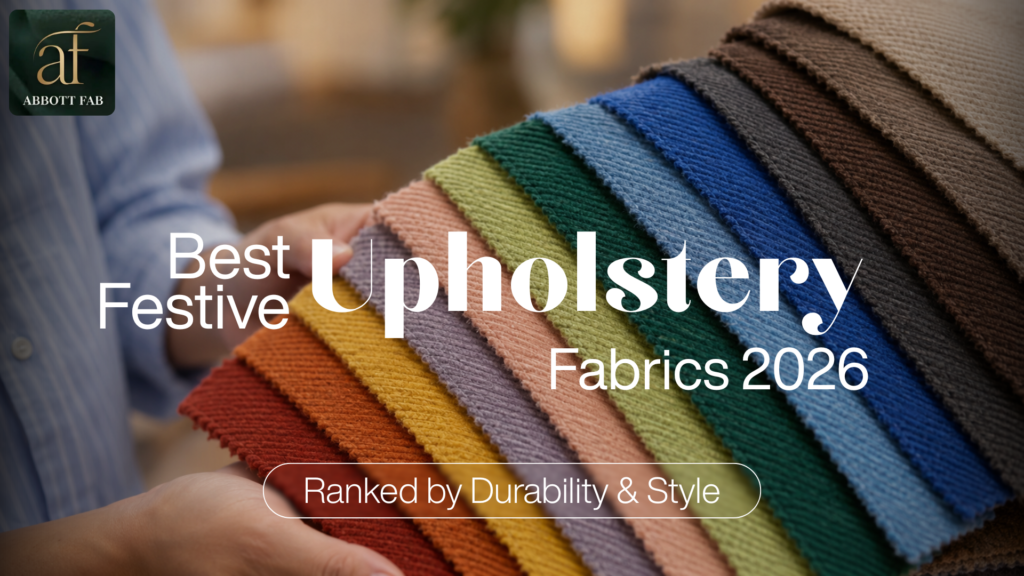
Best Upholstery Fabrics for Festive Home Decor in 2026: Ranked by Durability, Use and Festival
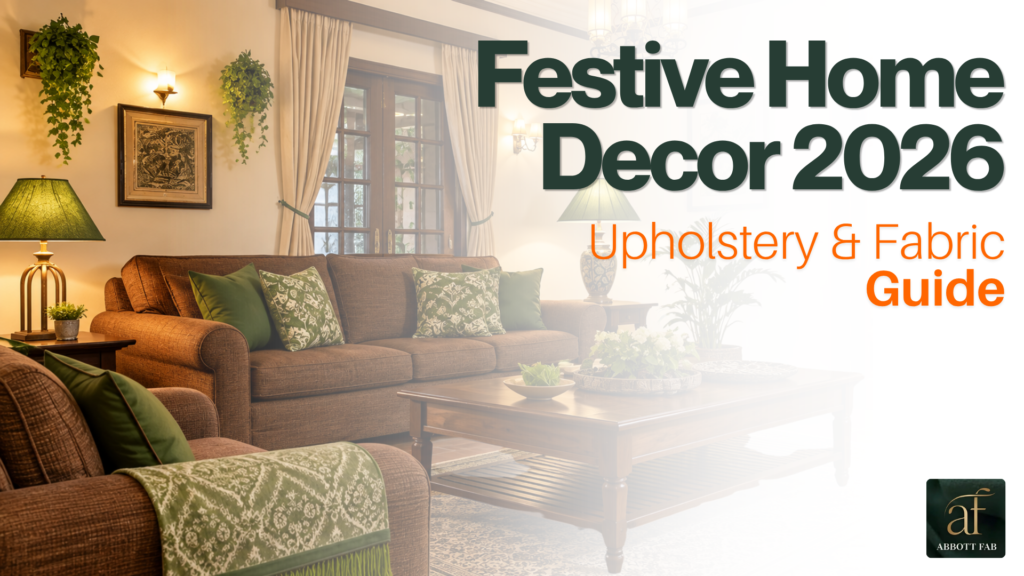
Best Upholstery Fabrics for Festive Home Decor in 2026: Ranked by Durability, Use and Festival Key Takeaways The best upholstery fabrics for festive home Decor are performance velvet for formal seating, chenille or micro-suede for family sofas, and rexine for dining chairs. Fibre alone does not decide durability; ask for the abrasion result, its test method, and the cleaning code before you buy. Double rubs and Martindale cycles do not convert; for a family sofa, look for at least 20,000 Martindale cycles, or 30,000 for heavy use. For dining chairs, PVC (polyvinyl chloride) rexine resists moisture damage; PU (polyurethane) rexine needs a heat-and-humidity hydrolysis test result. Keep jacquard, brocade, bouclé and metallic-thread fabrics for cushions, ottomans and accent chairs, where friction stays low, and pattern looks intentional. Polyester velvet traps heat, so reserve it for air-conditioned rooms; breathable cotton or linen blends suit non-air-conditioned living rooms in hot cities. Diwali falls on 8 November 2026; if you have under six weeks, refresh cushions, slipcovers and dining seats rather than reupholstering sofas. Why Festive Seating Needs Tougher Upholstery Festive seating works harder than it looks. A sofa that copes with a normal weekday now hosts relatives for hours, children with plates of sweets, and a steady stream of guests through Diwali week and the wedding season. The fabric has to look rich under warm lights and still survive spills, friction, and dust. Households take this seriously. In Hansa Research’s Festive Season 2026 analysis, 51% of respondents planned to buy home Decor or furniture, second only to fashion at 69%. The Confederation of All India Traders (CAIT) estimated that home Decor and furniture and furnishing each made up about 5% of Diwali 2025 sales, which reached a record ₹6.05 lakh crore. This guide ranks the best upholstery fabrics for festive home Decor in 2026 on five criteria: durability, furniture application, maintenance, festive appeal, and practical fit for Indian homes. You will learn which fabric suits each piece of furniture, how guest numbers and festival conditions change the choice, which test results to request, and how to handle festive spills. Quick answer: Performance velvet ranks first for statement sofas and accent chairs in air-conditioned rooms. Chenille and micro-suede suit family sofas that take heavy use. Jacquard and brocade make the strongest festive accents. PVC rexine is the safest choice for dining chairs. Whatever you pick, ask for the abrasion test result and the fibre composition before you buy. How We Ranked the Best Upholstery Fabrics for Festive Decor We assessed every fabric against five criteria: Durability: How well the fabric resists everyday wear, based on published abrasion and pilling test data where it exists. Application: Which furniture it suits, from family sofas to dining chairs, cushions and headboards. Maintenance: How it handles spills, dust and cleaning, and whether it needs specialist care. Festive appeal: Texture, colour, sheen and how well it suits festive interiors and warm lighting. Practical suitability: How well it fits Indian homes, including heat, humidity, children, pets and heavy guest traffic. Evidence we used: Published test data from fabric makers and furniture brands, guidance from the Association for Contract Textiles (ACT), and the test standards that textile labs use, including ASTM D4157 (Wyzenbeek abrasion, published by ASTM International) and ISO 12947 (Martindale abrasion, published by the International Organization for Standardization). What we did not do: We did not invent scores or durability percentages. The ratings in the comparison table are editorial, qualitative judgements based on the evidence. Limitations: Product test data shows what a fabric category can achieve, not what every product sold under that name will achieve. Two fabrics called “velvet” can perform very differently. Rexine uses different test methods from woven fabrics, so its numbers do not line up with the rest of the list. Climate, sunlight, pets, and cleaning habits also change real-world results. How the order works: The rank reflects how many festive situations a fabric handles well without a major trade-off. A fabric that works on sofas, chairs, and cushions ranks above one that only works as an accent, even if the accent fabric looks more festive. The best fabric for your home still depends on the furniture, the household, and the occasion. Two durability numbers you will see Double rubs (Wyzenbeek test, ASTM D4157): A machine rubs a cloth back and forth across the fabric. Each back-and-forth pass counts as one double rub. North American suppliers use this scale. Martindale cycles (ISO 12947): A machine rubs the fabric in a looping, figure-of-eight motion against a standard wool cloth. European suppliers and many Indian suppliers use this scale. The two scales are not interchangeable. ACT states in its abrasion guidelines that there is no correlation between Wyzenbeek and Martindale results, so always compare like with like. The ranking at a glance Rank Fabric Published durability evidence Ease of care Festive appeal Best use 1 Performance velvet High: 100,000 double rubs and 100,000 Martindale cycles in maker data Medium High Statement sofas, accent chairs 2 Chenille Medium to high: 35,000 to 100,000 Martindale cycles in tested products Medium Medium to high Family sofas, cushions 3 Jacquard and brocade Varies by design; request the test report Medium to low Very high Cushions, ottomans, accent chairs 4 Micro-suede High: over 100,000 double rubs in supplier data High Medium Family sofas, headboards 5 Rexine and faux leather Tested by different methods; PVC resists moisture damage Very high Medium Dining chairs, kids’ corners 6 Bouclé Varies: up to 100,000 rubs in one tested bouclé; check the pilling grade Medium to low High Accent chairs, cushions 7 Linen blends Medium: 25,000 to 30,000 Martindale for pure linen; blends up to 100,000 Medium Medium Guest rooms, low-traffic seating 8 Cotton blends and cotton duck Low to medium: 6,000 to 15,000 double rubs for pure cotton; blends higher High (washable covers) Low to medium Slipcovers, breathable everyday sofas 9 Silk-look synthetics Varies; check light fastness Medium High Cushions, accent chairs 10 Metallic-thread fabrics Varies; check rubbing fastness Medium to low Very high