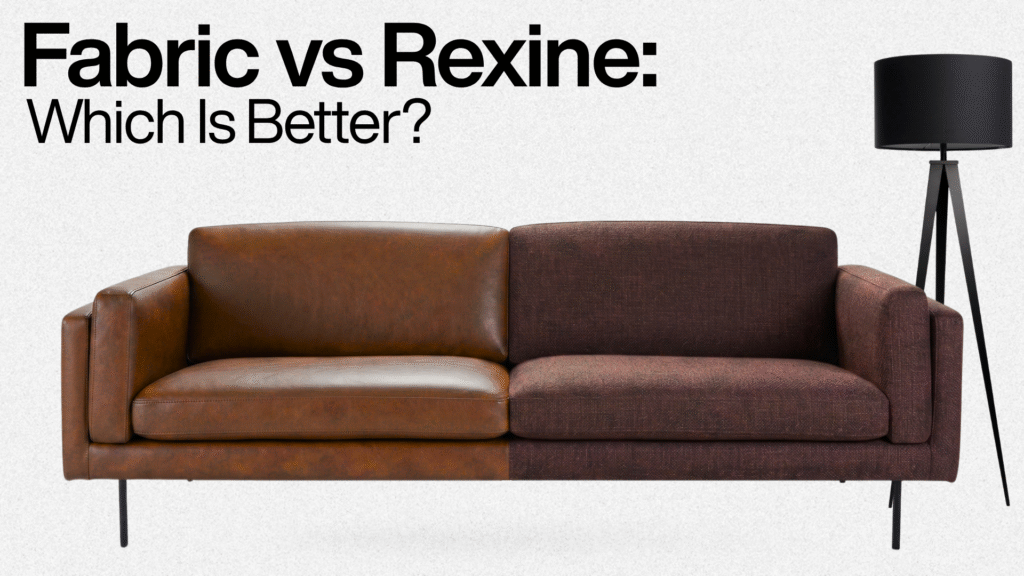
Fabric vs Rexine Sofa: Which Upholstery Should You Choose?
Fabric vs Rexine Sofa: Which Upholstery Should You Choose? Key Takeaways Fabric wins on comfort, breathability, and long-term visual richness; rexine wins on cleaning speed, water resistance, and upfront cost. Durability isn’t decided by “fabric vs rexine” as a category; check the Martindale rub count (15,000+ is the baseline for a daily-use sofa) or the PVC-vs-PU grade before buying. PU rexine outperforms PVC rexine on comfort and crack resistance; PVC rexine is cheaper and marginally more water- and abrasion-resistant. For Indian summers, fabric stays cooler. For fast monsoon cleanup, rexine is quicker to wipe down, though it can still feel clammy in humid, unventilated rooms. Homes with young kids or heavily shedding pets often do best with rexine or a stain-resistant performance fabric, rather than either material at its most basic grade. A sofa’s frame and foam rarely fail first. The upholstery does it absorbs every spill, nap, and Sunday afternoon of wear, which is why the fabric-or-rexine decision matters more than most buyers realise while they’re standing in a showroom looking at silhouettes and cushion shapes. Fabric and rexine are the two upholstery options you’ll be offered on almost every sofa sold in India, from a budget three-seater to a designer sectional. They behave very differently once they’re actually in your living room. One breathes and feels warm to the touch. The other wipes clean in seconds and shrugs off a spilled cup of chai. Neither is objectively “better”; the right pick depends on your climate, your household, and how much maintenance you’re genuinely willing to do. This guide breaks the decision down by cost, comfort, durability, maintenance, and climate performance, and goes a level deeper than most buying guides on the technical side including how abrasion ratings actually work and what “rexine” is chemically made of. It draws on how AbbottFab, a Delhi-based fabric and rexine manufacturer, sees these materials hold up across thousands of real households and commercial fit-outs, not just on a showroom swatch. Quick answer: Fabric is the better choice for comfort, breathability, and a warm, high-end look, making it ideal for living rooms and sofas that get long daily use. Rexine is the better choice for fast cleaning, water resistance, and lower upfront cost, making it ideal for homes with young kids, rental properties, and commercial spaces like offices and cafés. Within each category, quality matters more than the material label; a well-made fabric or a premium PU rexine will consistently outperform a cheap version of either. Quick Comparison: Fabric vs Rexine Sofa Feature Fabric Sofa Rexine Sofa Comfort Excellent Good Breathability Excellent Low Maintenance effort Moderate Very easy Durability High, with a quality fabric Moderate, depends on PVC vs PU grade Water resistance Low Excellent Pet-friendliness Moderate Moderate Look and feel Warm, textured, premium Sleek, leather-like Design variety Extensive Moderate Behaviour in heat Stays cool Can feel warm and sticky Typical cost Budget to premium Mostly budget to mid-range What Is Fabric Upholstery? Fabric upholstery is any sofa covering that’s woven or knitted from natural fibres, synthetic fibres, or a blend of the two. The most common choices are cotton, linen, polyester, velvet, chenille, jacquard, bouclé, microfiber, and various blended weaves including specialty options like Molfino, a textured woven fabric that’s become a popular mid-range choice in the Indian furniture trade. Modern upholstery fabrics are engineered well beyond what “fabric” meant a decade ago. Performance finishes now add stain resistance, fade resistance, and abrasion resistance without sacrificing the soft handle that makes fabric comfortable in the first place. That’s what lets a fabric sofa work equally well in a minimalist Scandinavian-style living room and a maximalist, pattern-heavy interior. At AbbottFab, the fabric range spans budget polyester blends through to premium velvets and jacquards, which is the main reason this comparison matters: most buyers aren’t choosing between “a fabric” and “a rexine,” they’re choosing between dozens of grades within each category. What Is Rexine Upholstery? Rexine is synthetic leather: a woven or knitted fabric base coated with polyvinyl chloride (PVC) or polyurethane (PU) and embossed to mimic the grain of real leather. In India, “rexine” functions the way “pleather” or “faux leather” does elsewhere: it’s a catch-all term for PU/PVC-coated upholstery, not one specific product. You’ll also see the same category sold as “leatherite” or “leather cloth” by different suppliers, same basic construction. The name has an unusual history worth knowing, because it explains why “rexine” doesn’t mean one fixed thing. Rexine was originally a British trademark, registered in 1915 by a leathercloth manufacturer near Manchester. The original product was made by coating cotton cloth with cellulose nitrate, camphor oil, and pigment, not PVC or PU, and was used everywhere from book covers to 1920s car interiors. That specific product was discontinued in 2005, but by then the name had already gone generic across India and the UK for any leather-look coated fabric. Today’s “rexine” sofa is chemically a PVC or PU product, with no cellulose nitrate involved. Because it’s water-resistant and easy to wipe down, rexine remains a default choice for: Office and boardroom furniture Restaurants and cafés Clinics and waiting areas Budget and rental residential furniture Modern rexine comes in matte, textured, embossed, suede-look, and leather-grain finishes. It delivers a sleek, consistent appearance, but it behaves very differently from fabric once you actually sit on it for a few hours which is where most of this guide’s comparisons come from. Fabric vs Rexine: Cost Comparison For most buyers, price is the first filter. Rexine generally has a lower sticker price, but long-term value depends on durability, replacement frequency, and how the sofa is actually used. Aspect Fabric Sofa Rexine Sofa Price range Spans budget, mid-range, and premium Generally more affordable overall Budget options Polyester, cotton blends Standard PVC rexine Mid-range options Chenille, jacquard, microfiber Premium PVC or entry-level PU rexine Premium options Velvet, performance fabrics, designer weaves High-quality PU rexine with a leather-like finish Long-term value Strong for quality fabrics better comfort and lifespan Cost-effective upfront; lower-grade PVC may need replacing