Cushion Fabric Guide

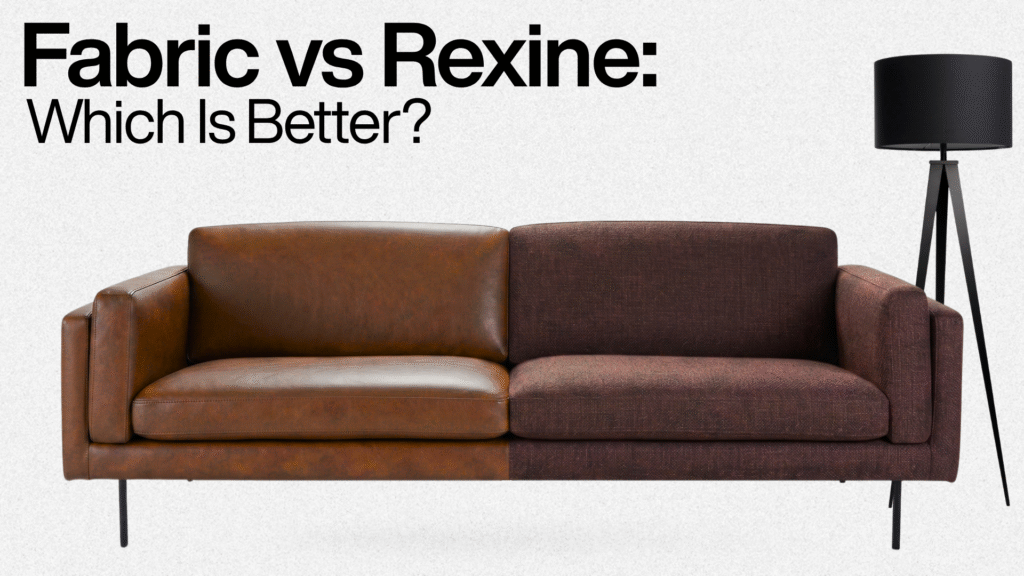
Split sofa showing brown rexine on the left and brown fabric on the right, with the heading "Fabric vs Rexine: Which Is Better?
Cushion Fabric Guide

Fabric vs Rexine Sofa: Which Upholstery Should You Choose?

Fabric vs Rexine Sofa: Which Upholstery Should You Choose? Key Takeaways Fabric wins on comfort, breathability, and long-term visual richness; rexine wins on cleaning speed, water resistance, and upfront cost. Durability isn’t decided by “fabric vs rexine” as a category; check the Martindale rub count (15,000+ is the baseline for a daily-use sofa) or the PVC-vs-PU grade before buying. PU rexine outperforms PVC rexine on comfort and crack resistance; PVC rexine is cheaper and marginally more water- and abrasion-resistant. For Indian summers, fabric stays cooler. For fast monsoon cleanup, rexine is quicker to wipe down, though it can still feel clammy in humid, unventilated rooms. Homes with young kids or heavily shedding pets often do best with rexine or a stain-resistant performance fabric, rather than either material at its most basic grade. A sofa’s frame and foam rarely fail first. The upholstery does it absorbs every spill, nap, and Sunday afternoon of wear, which is why the fabric-or-rexine decision matters more than most buyers realise while they’re standing in a showroom looking at silhouettes and cushion shapes. Fabric and rexine are the two upholstery options you’ll be offered on almost every sofa sold in India, from a budget three-seater to a designer sectional. They behave very differently once they’re actually in your living room. One breathes and feels warm to the touch. The other wipes clean in seconds and shrugs off a spilled cup of chai. Neither is objectively “better”; the right pick depends on your climate, your household, and how much maintenance you’re genuinely willing to do. This guide breaks the decision down by cost, comfort, durability, maintenance, and climate performance, and goes a level deeper than most buying guides on the technical side including how abrasion ratings actually work and what “rexine” is chemically made of. It draws on how AbbottFab, a Delhi-based fabric and rexine manufacturer, sees these materials hold up across thousands of real households and commercial fit-outs, not just on a showroom swatch. Quick answer: Fabric is the better choice for comfort, breathability, and a warm, high-end look, making it ideal for living rooms and sofas that get long daily use. Rexine is the better choice for fast cleaning, water resistance, and lower upfront cost, making it ideal for homes with young kids, rental properties, and commercial spaces like offices and cafés. Within each category, quality matters more than the material label; a well-made fabric or a premium PU rexine will consistently outperform a cheap version of either. Quick Comparison: Fabric vs Rexine Sofa Feature Fabric Sofa Rexine Sofa Comfort Excellent Good Breathability Excellent Low Maintenance effort Moderate Very easy Durability High, with a quality fabric Moderate, depends on PVC vs PU grade Water resistance Low Excellent Pet-friendliness Moderate Moderate Look and feel Warm, textured, premium Sleek, leather-like Design variety Extensive Moderate Behaviour in heat Stays cool Can feel warm and sticky Typical cost Budget to premium Mostly budget to mid-range What Is Fabric Upholstery? Fabric upholstery is any sofa covering that’s woven or knitted from natural fibres, synthetic fibres, or a blend of the two. The most common choices are cotton, linen, polyester, velvet, chenille, jacquard, bouclé, microfiber, and various blended weaves including specialty options like Molfino, a textured woven fabric that’s become a popular mid-range choice in the Indian furniture trade. Modern upholstery fabrics are engineered well beyond what “fabric” meant a decade ago. Performance finishes now add stain resistance, fade resistance, and abrasion resistance without sacrificing the soft handle that makes fabric comfortable in the first place. That’s what lets a fabric sofa work equally well in a minimalist Scandinavian-style living room and a maximalist, pattern-heavy interior. At AbbottFab, the fabric range spans budget polyester blends through to premium velvets and jacquards, which is the main reason this comparison matters: most buyers aren’t choosing between “a fabric” and “a rexine,” they’re choosing between dozens of grades within each category. What Is Rexine Upholstery? Rexine is synthetic leather: a woven or knitted fabric base coated with polyvinyl chloride (PVC) or polyurethane (PU) and embossed to mimic the grain of real leather. In India, “rexine” functions the way “pleather” or “faux leather” does elsewhere: it’s a catch-all term for PU/PVC-coated upholstery, not one specific product. You’ll also see the same category sold as “leatherite” or “leather cloth” by different suppliers, same basic construction. The name has an unusual history worth knowing, because it explains why “rexine” doesn’t mean one fixed thing. Rexine was originally a British trademark, registered in 1915 by a leathercloth manufacturer near Manchester. The original product was made by coating cotton cloth with cellulose nitrate, camphor oil, and pigment, not PVC or PU, and was used everywhere from book covers to 1920s car interiors. That specific product was discontinued in 2005, but by then the name had already gone generic across India and the UK for any leather-look coated fabric. Today’s “rexine” sofa is chemically a PVC or PU product, with no cellulose nitrate involved. Because it’s water-resistant and easy to wipe down, rexine remains a default choice for: Office and boardroom furniture Restaurants and cafés Clinics and waiting areas Budget and rental residential furniture Modern rexine comes in matte, textured, embossed, suede-look, and leather-grain finishes. It delivers a sleek, consistent appearance, but it behaves very differently from fabric once you actually sit on it for a few hours which is where most of this guide’s comparisons come from. Fabric vs Rexine: Cost Comparison For most buyers, price is the first filter. Rexine generally has a lower sticker price, but long-term value depends on durability, replacement frequency, and how the sofa is actually used. Aspect Fabric Sofa Rexine Sofa Price range Spans budget, mid-range, and premium Generally more affordable overall Budget options Polyester, cotton blends Standard PVC rexine Mid-range options Chenille, jacquard, microfiber Premium PVC or entry-level PU rexine Premium options Velvet, performance fabrics, designer weaves High-quality PU rexine with a leather-like finish Long-term value Strong for quality fabrics better comfort and lifespan Cost-effective upfront; lower-grade PVC may need replacing

Wholesale rexine warehouse in India featuring organized storage racks, a forklift handling inventory, and the title "Choosing the Best Wholesale Rexine Supplier in India," highlighting bulk rexine sourcing and distribution.
Cushion Fabric Guide

How to Choose Wholesale Rexine Suppliers in India: The Complete Buyer’s Guide (2025)

How to Choose Wholesale Rexine Suppliers in India: The Complete Buyer’s Guide (2025) Key Takeaways Rexine quality is determined by hidden variables: base fabric GSM, coating type, and surface treatment, not appearance alone. PVC and PU rexine are not interchangeable; choosing the wrong type for your application is one of the most expensive sourcing errors in bulk procurement. Always request a Technical Datasheet (TDS) and perform physical field tests before committing to any wholesale order. Batch consistency matters more than sample quality. Verify dye-lot controls and reorder guarantees before signing a purchase order. A supplier who cannot answer basic technical questions about their own product is a liability, not a partner. What Is Rexine? A Technical Definition Rexine is a coated synthetic fabric designed to replicate the appearance, texture, and feel of natural leather. It consists of a base textile, typically woven or knitted polyester, cotton, or a blend, layered with a synthetic coating of either PVC (polyvinyl chloride) or PU (polyurethane). The surface is then embossed with grain patterns to achieve a leather-like finish. In the Indian market, the term “rexine” is used broadly and interchangeably with “leatherette,” “synthetic leather,” and “faux leather.” This loose terminology creates real confusion at the sourcing stage: two products called “rexine” can differ dramatically in construction, durability, and intended application. For wholesale buyers, this ambiguity is a risk that needs to be managed before, not after, a purchase order is issued. Why Wholesale Rexine Quality Varies So Dramatically Walk through any textile hub in Delhi, Mumbai, or Surat, and you will hear the same claims from every vendor: premium quality, competitive pricing, massive stock, and fast dispatch. These assurances are easy to make and impossible to verify at a glance. The reality is that rexine quality is shaped by several independent technical variables, none of which are visible to the naked eye: Variable Effect on Performance Base Fabric Determines tensile strength, tear resistance, and structural integrity Coating (PVC or PU) Governs flexibility, thickness, and environmental durability Surface Treatment Affects UV resistance, abrasion performance, and stain repellency Embossing Depth Influences aesthetic finish and how the material handles tension during upholstery Two rolls of rexine from different suppliers can appear, feel, and even weigh the same and still perform entirely differently in the field. A lower-grade coating may begin to delaminate within a year. A poorly formulated PVC compound may crack during India’s summer heat. A weak base fabric will cause finished upholstery to sag under daily load. When you are purchasing at wholesale volumes, these hidden differences are amplified across every unit of your finished product. A small compromise in material quality at the sourcing stage can generate high costs through product returns, warranty claims, and brand damage. The solution is not to trust the supplier’s word. It is to know what to ask and how to test. This is the discipline this guide is built around, and the same discipline we apply on our own floor before a batch ships. Everything below is written so you can run it against any supplier, Abbott Fab included. PVC vs. PU Rexine: Which One Do You Actually Need? The single most critical question to answer before you contact any supplier is whether your application requires PVC or PU rexine. These materials have different physical properties and perform differently across climates, use cases, and durability requirements. Treating them as interchangeable is one of the most common and costly errors in wholesale procurement. Material Comparison at a Glance Feature PVC Rexine PU Rexine Texture & Feel Stiffer, heavier, plastic-adjacent Soft, supple, closer to real leather Breathability Low, can cause discomfort in skin-contact applications Higher, significantly more comfortable over extended use Durability Excellent abrasion resistance Superior flexibility and ageing characteristics Temperature Sensitivity Can stiffen in cold, crack under prolonged UV and heat More resilient across temperature variation Environmental Profile Contains chlorine; faces growing regulatory scrutiny in export markets Generally considered more environmentally benign Cost Lower Higher Best Applications Economy furniture, commercial vehicle interiors, utility items Premium upholstery, automotive interiors, fashion accessories When PVC Makes Sense PVC rexine has dominated the Indian market for decades, and for good reason. It offers excellent abrasion resistance and a very low price point, making it well-suited for budget furniture, commercial transport seating, and economy-segment accessories. If the product is not in direct skin contact for extended periods and will not face extreme heat cycles, PVC is a reasonable and economical choice. Its weakness is environmental: PVC stiffens in cold temperatures and becomes brittle under prolonged UV exposure. For outdoor furniture, automotive interiors in extreme climates, or export products bound for regions with strict material regulations, PVC’s limitations become operational risks. When PU Is the Right Call PU rexine commands a higher price because it genuinely performs better across the variables that matter for premium applications. It ages more gracefully, remains flexible in varying climates, and provides a noticeably more comfortable surface for seating that sees regular skin contact. If you are manufacturing for export markets with material compliance requirements (common in Europe and parts of Southeast Asia), PU is often not optional; it is a regulatory necessity. How to Get a Clear Answer from a Supplier When you make first contact with a potential wholesale supplier, ask two questions immediately: “Is this material PVC-based or PU-based?” “What is the base fabric composition?” A credible supplier will answer both without hesitation. If you receive vague marketing language  “high-quality synthetic leather,” “premium grade”  in response to a direct technical question, treat it as a red flag. Evasion on basic specifications typically signals either a lack of product knowledge or a deliberate unwillingness to be held to a verifiable standard. How to Evaluate Coating Thickness and Base Fabric Weight Once you have confirmed the material type, you need to assess the physical construction of the rexine. Two metrics matter most: coating thickness and base fabric GSM (grams per square meter). Why These Numbers Matter Coating Thickness directly determines how the surface will perform over time:

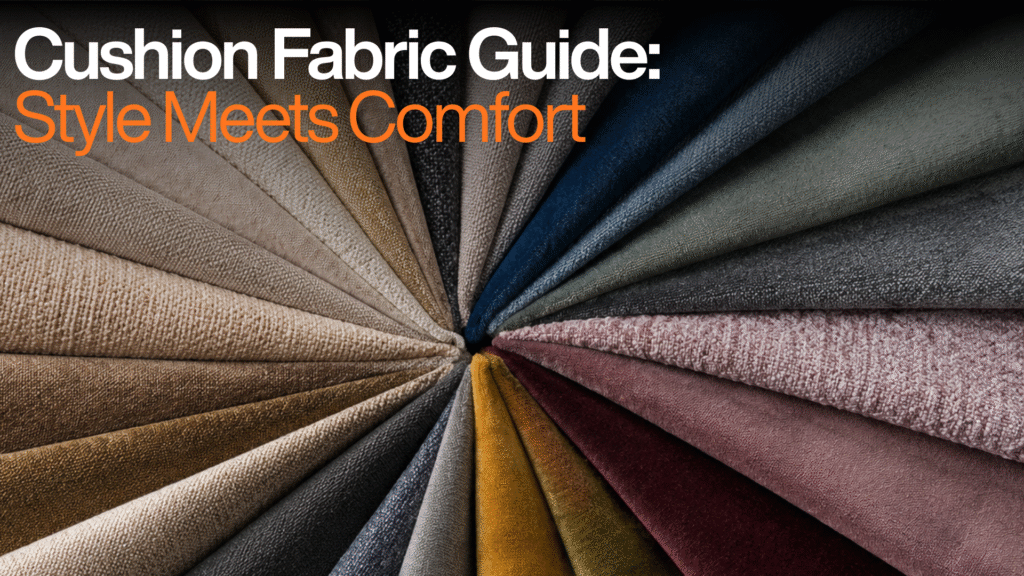
Cushion Fabric Guide Style Meets Comfort – A radial fan display of premium cushion fabric swatches in diverse colors including beige, taupe, charcoal, navy blue, sage green, mustard yellow, burgundy, mauve, and blush pink, showcasing texture variety for sofa cushions, decorative pillows, and upholstery fabric selection
Cushion Fabric Guide

Cushion Fabric Guide: How to Choose the Right Material for Comfort & Style

Cushion Fabric Guide: How to Choose the Right Material for Comfort & Style The fabric on your cushion does more work than almost any other surface in your home. It absorbs sunlight, body oils, food spills, pet claws, and the daily friction of being sat on, leaned on, and tossed across the room. Get the choice right, and your cushions stay beautiful for a decade. Get it wrong,, and you’ll see pilling, fading, and sagging within months. This cushion fabric guide is built to prevent that second outcome. We’ll cover the ten most important cushion material types, how to read durability ratings, which fabrics survive kids and pets, what works outdoors versus indoors, and how to match fabric to room, budget, and aesthetic. Every recommendation here is grounded in textile properties weave structure, fibre composition, abrasion ratings rather than vague style talk. By the end, you’ll know exactly how to choose cushion fabric that fits your life, not just your mood board. Quick Answer: What Is the Best Fabric for Cushions? The best fabric for cushions is performance polyester or microfiber for everyday indoor use, solution-dyed acrylic for outdoor cushions, and cotton or linen for low-traffic decorative pieces. Choose based on durability (Martindale 20,000+ rubs for daily use), maintenance needs, and the room’s traffic level. Velvet adds luxury, while wool and silk suit decorative-only settings. Cushion Fabric Comparison Table Fabric Type Softness Durability Maintenance Best For Cotton High Medium–High Easy (machine wash) Living rooms, kids’ rooms Linen High Medium Moderate (often dry clean) Bedrooms, decorative cushions Velvet Very High Medium–High Moderate (brush, spot-clean) Formal rooms, accent pieces Polyester / Microfiber High Very High Easy (machine wash) Family rooms, pet households Chenille Very High High Moderate Cozy living rooms, reading nooks Faux Suede Very High High Easy Contemporary interiors Wool Very High High Low (dry clean) Bedrooms, cool climates Silk Very High Low Low (dry clean only) Decorative display only Leather / Faux Leather Medium Very High Easy (wipe clean) Modern rooms, pet households Canvas Medium Very High Easy (scrub clean) Outdoor, heavy-use areas Solution-Dyed Acrylic High Very High Easy Premium outdoor cushions Olefin (Polypropylene) Medium High Easy Budget outdoor cushions How to Read a Fabric’s Durability Rating: The Martindale Test Before we get into specific fabrics, you need one number on your radar: the Martindale rub count. It’s the international standard for measuring how much abrasion a fabric can withstand before it breaks down. In the test, a swatch of fabric is rubbed in a circular motion under controlled pressure (typically 12 kPa, mimicking the weight of a person sitting). The machine counts cycles until the fabric pills, thins, or breaks. That final number is the durability rating. Martindale rating guide Rub Count Recommended Application Under 10,000 Decorative only accent cushions, headboards, drapery 10,000 – 15,000 Light domestic guest rooms, occasional seating 15,000 – 25,000 General domestic everyday living room cushions 25,000 – 30,000 Heavy domestic daily-use sofas in busy households 30,000+ Extra heavy duty homes with pets, children, or commercial settings Rule of thumb: If a salesperson can’t tell you the Martindale rating, treat the fabric as decorative-only until proven otherwise. Cushion Material Types: A Complete Breakdown 1. Cotton: The Everyday Workhorse Cotton is the default cushion fabric for a reason. It’s a natural fibre that breathes well, feels soft against skin, takes dye beautifully, and is generally machine washable. Tightly woven cotton (think duck canvas or sateen) with a stain-resistant finish can comfortably handle daily living room use. The catch is that untreated cotton stains easily and can fade in direct sun. Weave quality matters enormously a loose plain weave will pill far faster than a tight twill. Pros: Breathable, soft, hypoallergenic, washable, affordable, takes prints well Cons: Stains without treatment, fades in UV, can shrink if washed hot Best for: Living rooms, children’s bedrooms, casual interiors, hot climates Maintenance: Cool gentle wash, line dry in shade. Apply fabric protector for high-traffic use. Decor styles: Farmhouse, coastal, Scandinavian, transitional, eclectic 2. Linen: Relaxed Elegance with Real Substance Linen is woven from flax fibres and has a distinctive textured, slightly nubby surface that softens with every wash. It’s exceptionally breathable, naturally moisture-wicking (it can absorb up to 20% of its weight in moisture before feeling damp), and resists mildew and pilling. Linen wrinkles there’s no avoiding it which is part of its lived-in charm but also why it’s better suited to decorative cushions than hard-used seat cushions. It tends to soften with age and use, which is unusual for a cushion fabric. Pros: Breathable, naturally textured, mildew-resistant, gets softer over time, eco-friendly Cons: Wrinkles readily, can shrink, often requires dry cleaning, mid-range durability Best for: Bedroom cushions, decorative arrangements, sunrooms, coastal interiors Maintenance: Hand wash or dry clean. Iron on the reverse while slightly damp if you need a crisper look. Decor styles: Scandinavian, Japandi, farmhouse, modern coastal, French country Cotton vs linen cushions which wins? Cotton is more durable and easier to wash, making it the better everyday choice. Linen has a more refined texture and natural drape, making it ideal for decorative cushions and bedrooms. For high-traffic seating, choose cotton. For style-forward accent pieces, choose linen. 3. Velvet: Luxury You Can Feel Velvet’s signature pile catches light like no other fabric, creating depth and drama. Modern velvet cushion covers are typically made from cotton, polyester, or a cotton-polyester blend rather than silk. Performance velvet a polyester-based version with added stain resistance is the practical choice for living rooms, while cotton velvet feels softer underfoot but stains more readily. The two main downsides are crushing (heavy items flatten the pile permanently) and dust attraction. Both are manageable with regular brushing and a soft-attachment vacuum. Pros: Rich appearance, exceptional colour depth, soft hand-feel, performance versions are durable Cons: Pile flattens under pressure, attracts pet hair, shows water marks Best for: Formal living rooms, primary bedrooms, accent chairs, statement cushions Maintenance: Brush gently in the direction of the pile. Blot never rub spills immediately. Steam to lift crushed areas.

Scroll to Top