How to Choose the Best Curtain Fabric for Every Room: A 2026 Textile Guide
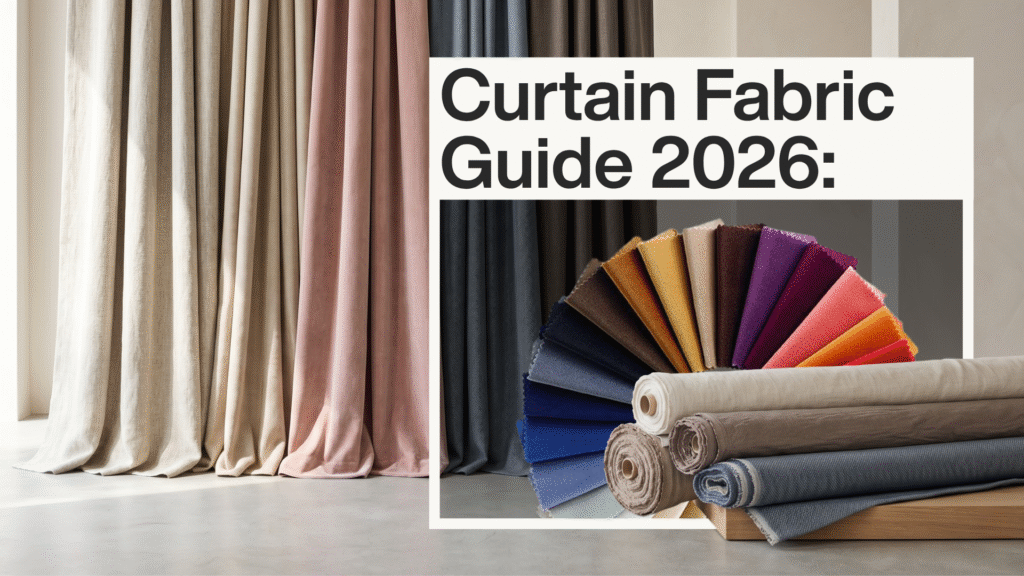
3 Factors for Choosing Curtain Fabric: Light, Privacy, and Maintenance
Before choosing any curtain fabric, answer three questions in order. Every downstream decision, colour, weave, and pleat style follows from these answers.
- How much light do I want to block? None (sheer), some (medium-weight weave), or all (blackout lining).
- How much privacy do I need at night? Sheers go transparent once the interior lights turn on. Plan for a second layer if the window faces a street or shared space.
- How often will the fabric be cleaned? Kitchens and children’s rooms need machine-washable materials. Formal spaces can handle dry-clean-only silk or velvet.
Room-by-Room Curtain Fabric Guide
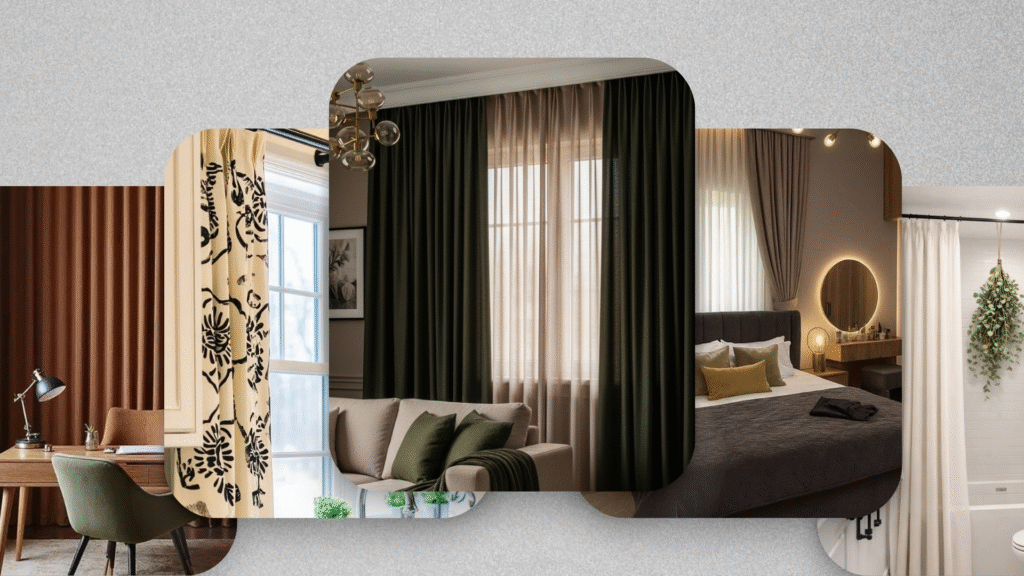
Best Curtain Fabric for the Living Room
The living room is the most forgiving space. Fabric choice here is driven by natural light quality and aesthetic, not performance.
- Linen (200–280 GSM): Filters daylight with a soft, irregular texture. Wrinkles under humidity and fades in UV light for any window getting more than four hours of direct sun.
- Cotton and cotton blends (150–250 GSM): The default. Machine-washable, widely available, and colourfast through multiple seasons.
- Velvet (400–550 GSM): Adds visual weight, blocks drafts, improves acoustics. Best in formal rooms and cooler climates, velvet traps heat in humid summers.
- Silk dupioni (120–180 GSM): Distinct sheen and crisp hand. Always line it; unlined silk fades visibly within six to twelve months of direct sun.
Best Bedroom Curtain Fabrics for Better Sleep and Light Control
Bedroom curtain fabric should prioritise sleep quality: light blocking, thermal insulation, and sound dampening.
- Triple-Layered Blackout Polyester: Our signature blackout curtain fabric (available at Abbott Fab in a smooth 54-inch finish) uses a triple-layered construction to block out 70%+ of heat and intense sunlight, making it the most practical choice for bedrooms.
- Velvet: Dense pile naturally dampens ambient sound and blocks roughly 95% of light. Excellent for light sleepers and cold rooms.Heavy cotton twill with thermal lining (300+ GSM combined): Balanced option for temperate climates where full blackout isn’t needed but insulation matters.
Curtain Fabrics to Avoid in Bedrooms:
- Unlined linen: Fails to block early morning light and offers poor thermal insulation.
- Open-weave sheers: Provide zero nighttime privacy and no light control unless paired with a functional, heavier second panel.
Best Kitchen Curtain Fabric
Kitchens expose fabric to grease particles, steam, moisture, and cooking odours. Material performance matters more than style here.
- Polyester and poly-cotton blends (60/40 or 65/35): Resist staining, wash at 40°C, and retain shape after repeated laundering.
- Café-style cotton panels: Short, inexpensive, and easy to replace every one to two years.
Curtain Fabrics to Avoid in Bedrooms:
- Linen: The porous natural fibres absorb cooking odors permanently.
- Silk: Highly susceptible to immediate, set-in water and grease stains.
- Heavy Velvet: The dense pile traps airborne grease particles, steam, and moisture, making it incredibly difficult to clean.
Best Bathroom Curtain Fabric
If the bathroom window faces outside, moisture resistance is non-negotiable.
- Polyester or nylon: Dry within hours and resist mildew.
- Treated cotton with a water-repellent finish: Acceptable only in bathrooms with strong ventilation.
- Untreated natural fibres develop visible mildew within two to four months in typical bathroom humidity.
Best Home Office Curtain Fabric
Home offices need glare control for screens without losing daylight.
- Light-filtering linen or cotton sheers: Diffuse harsh direct light without darkening the room.
- Dual-layer systems: A sheer behind a heavier drape lets you adjust for glare across the day.
- Skip pure white panels; they reflect screen glare. Warm neutrals (bone, oat, putty) work better.
Best Curtain Fabrics for Dining Rooms and Nurseries
Dining rooms tolerate formal fabrics, such as silk, jacquard cotton, and lined velvet, which work well because the space sees daily wear. Nurseries need washable, non-toxic fabrics with blackout capability: look for OEKO-TEX certified cotton and cordless hardware for child safety.
Room-by-Room Curtain Fabric Guide
| Fabric | Weight (GSM) | Best Room | Light Control | Maintenance | Climate Fit |
|---|---|---|---|---|---|
| Linen | 200–280 | Living room | Filtered | Dry clean or gentle wash | Dry, temperate |
| Cotton | 150–250 | Most rooms | Medium | Machine washable | Any |
| Velvet | 400–550 | Bedroom, formal | High (≈95%) | Dry clean | Cold, dry |
| Polyester | 100–250 | Kitchen, bathroom | Varies | Machine washable | Humid, high-use |
| Silk dupioni | 120–180 | Formal living | Low (needs lining) | Dry clean only | Dry, shaded |
| Sheer voile | 40–90 | Layering | Minimal | Gentle wash | Any |
| Blackout polyester | 300–450 | Bedroom, media | Full block (≈100%) | Spot or gentle wash | Any |
| Jacquard | 250–400 | Dining, forma | Medium–high | Dry clean | Temperate |
Expert Tip from Abbott Fab: Curtains are just one half of the room’s aesthetic. To create a truly cohesive space, match the texture of your window treatments with premium upholstery. A smooth polyester curtain pairs beautifully with our heavy-duty Suede Velvet (400 GSM) or premium Rexine sofa fabrics. In regions with intense summers like Delhi, our Triple-Layered Blackout Polyester is essential for keeping rooms cool.
Key Factors to Consider When Choosing Curtain Fabric
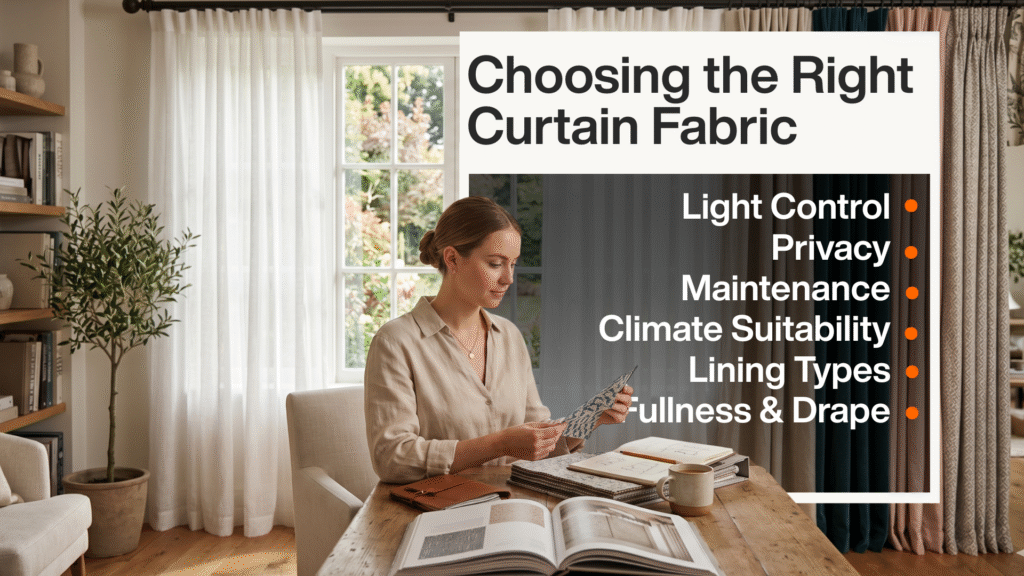
Light control: Sheers diffuse, mid-weight weaves filter, blackout linings eliminated. Layering a sheer behind a heavier drape gives full flexibility from a single window, standard practice in hotels for exactly this reason.
Privacy: Daytime privacy works with opaque or lined fabric. Sheers become transparent at night once the interior lights turn on. Street-facing windows need two layers.
Maintenance: Inspect the weave before reading the care label. Loose weaves snag, velvet crushes at contact points, and silk watermarks permanently. Tightly woven polyester and cotton handle household wear with the least effort.
Climate suitability:
- Humid regions: Synthetics and treated cottons resist mildew and humidity-driven sag.
- Cold or dry regions: Velvet, wool blends, and thermal linings add R-value at windows, typically the weakest point in a room’s thermal envelope.
- Hot or sunny regions: UV-stable polyester and lined cotton prevent rapid fading. Unlined silk fades in 6–12 months, unlined linen in 12–18 months under direct exposure.
Lining types.
- Standard cotton lining: protects face fabric, adds body.
- Thermal lining: insulates, blocks roughly 50% of light.
- Blackout lining: blocks 90–100% of light.
- Interlining: a third inner layer that adds fullness, insulation, and premium drape.
Fullness and drape: Panel width should be 2x to 2.5x the rod length for pleated drapes and 3x for sheers. Less fullness reads cheap regardless of fabric quality. Rods should also extend 4–6 inches beyond the window frame on each side so panels clear the glass when open.
Common Curtain Fabric Mistakes to Avoid
- Choosing fabric by colour before checking weight and weave.
- Using linen or silk in direct sunlight without lining.
- Relying on sheer alone for street-facing bedroom windows.
- Installing rods only at the window-frame width, which crowds the glass.
- Hanging panels too short should touch the floor or break slightly against it.
Conclusion:
The right curtain fabric disappears into a room; you only notice it when it’s wrong. Match weight to climate, weave to privacy needs, and care requirements to how your household actually lives. Get those three right, and the fabric works for years without thought.
If you’re ready to choose with confidence, Visit Abbott FabDelhi’s trusted name in premium fabrics and rexine since 1990. Whether you are looking for triple-layered blackout curtains or premium sofa upholstery, explore our collection online or visit our warehouse at 1/91, Basement, Timber Market, Kirti Nagar, Delhi. Explore the fabric collection →
Not sure which weight or weave suits your space? Reach out for a fabric consultation, we’ll match material to your room’s light, climate, and function before you commit.
FAQs
Polyester and polyester blends are the most durable curtain fabrics. They resist fading, shrinking, and wrinkling better than any natural fibre. If you prefer natural materials, tightly woven cotton canvas and wool blends last the longest, typically offering 8–10 years of daily use before showing visible wear.
The best curtain fabrics for south- or west-facing windows are UV-stable polyester, lined cotton, or lined linen. These materials withstand intense sunlight without degrading quickly. You should avoid unlined silk, which fades in 6–12 months under direct sun, and unlined linen, which fades in 12–18 months.
No, blackout curtains are highly versatile and useful far beyond the bedroom. They work exceptionally well in nurseries, home theatres, and any room experiencing strong afternoon glare. Additionally, thermal-backed blackout fabrics cut heat gain in summer and heat loss in winter by reducing conductive exchange at the window.
Tightly woven polyester, poly-cotton blends, and treated cotton work best in hot, humid climates. These synthetics and treated fabrics resist moisture buildup. In these climates, you should avoid heavy velvet, which traps heat, and untreated linen, which can develop mildew in sustained humidity.
You generally need 2x to 3x the rod length in fabric per window, depending on your desired fullness. Specifically, multiply the rod length by 2x for standard pleats, 2.5x for fuller pleats, and 3x for sheers. Finally, add 8–10 inches for the top and bottom hems.
Yes, mixing different curtain fabrics in the same room is a standard interior design practice. The most common method is layering a lightweight sheer under a heavier drape. To keep the room cohesive, stick to one colour family and vary the texture rather than combining competing patterns.
The main difference is that thermal lining prioritises temperature insulation, while blackout lining prioritises blocking light. Thermal lining insulates the room and blocks roughly half of the incoming light. Blackout lining uses a coated backing to block 90–100% of light, though it offers slightly less insulation than a true thermal layer. Premium drapes often combine both in a three-layer construction.
Pingback: Diwali Home Decor 2026: A Room-by-Room Styling Guide.
Pingback: Diwali Home Decor 2026: A Room-by-Room Styling Guide.