Affordable Home Makeover Ideas Without Renovation: The 2026 India Guide

Key Takeaways
- A full home refresh costs a fraction of a renovation. In 2026, renovation runs roughly ₹1,500–4,000 per square foot, ₹12–20 lakh for a 1,000 sq ft flat, while a cosmetic makeover using paint, fabric, lighting and décor lands around ₹200–500 per square foot, or ₹40,000–1.8 lakh total. Interior painting alone is just ₹30–100 per square foot including labour.
- Reupholstery is the single highest-return move; start there. Recovering a sound-framed three-seater costs ₹8,000–15,000 in fabric (₹20,000–40,000 for full leather) versus ₹35,000–80,000 for a comparable new sofa, a saving of roughly 60–80% on furniture you already like the shape of.
- Fabric covers the most visible surface, so it moves a room the most. Curtains and sofa upholstery are consistently the highest-impact, lowest-cost upgrades in any room, which is why the two changes that transform a space fastest are both fabric.
- Fabric quality decides whether the makeover lasts years or needs redoing in months. The most-skipped step is checking the Martindale rub count, the same lab metric furniture makers grade by. Aim for 15,000+ rubs for a daily-use sofa; anything below is decorative-only.
- No dust, no labour contracts, no moving out. Most makeovers finish in a single weekend per room, against a renovation’s realistic 4–10 week timeline, and every change is reversible, so nothing rules out renovating later.
- The trend is already here. In the 2026 U.S. Houzz & Home Study of 20,000+ homeowners, 52% took on decorating projects, nearly level with the 54% who renovated and 41% planned to decorate in the year ahead. Furnishings, not gut jobs, are where a growing share of home spending now goes.
A mid-range renovation of a 1,000 sq ft flat in India crosses ₹12–20 lakh and takes four to ten weeks. A makeover that leaves the room feeling just as fresh can be done for under ₹1.8 lakh, over a weekend, without moving out. Same felt result. Roughly a tenth of the cost. That gap is the entire reason this guide exists.
The reason it’s possible comes down to one fact most homeowners get backwards: a room rarely feels tired because of its structure. The floor is fine. The walls are fine. What’s aged is the surfaces you actually see and touch every day: the sofa fabric gone shiny at the armrests, the curtains that swallow the afternoon light, the single hard tube light flattening everything under it. Renovation rebuilds the parts that were never the problem. A makeover fixes the parts that were.
This guide is written from the fabric side of that work. Abbott Fab has manufactured and supplied upholstery fabric and rexine to Indian homes, interior designers, and furniture makers since 1990, which means we’ve watched which cosmetic changes still look right after three years and which pill, fade, or crack within a single monsoon. That vantage point produces one clear, and slightly uncomfortable, conclusion: fabric-led changes deliver the biggest visible transformation per rupee of anything you can do to a room, but only if the fabric itself is chosen properly. Both halves of that sentence carry equal weight, and nearly every “budget makeover” article online skips the second one entirely. This one doesn’t.
Quick answer: You can refresh a full 1,000 sq ft Indian home for roughly ₹40,000–1.8 lakh using paint, fabric, lighting and decor against ₹12–20 lakh for a renovation. The highest-return single move is reupholstering or slipcovering a sound-framed sofa (₹3,000–15,000 vs ₹35,000–80,000 for a new one). The most common costly mistake is buying upholstery fabric on looks alone, without checking its durability rating, so we cover exactly how to check it below.
Renovation vs. Makeover: Why the Distinction Is Financial, Not Cosmetic

Renovation” and “makeover” get used interchangeably, but they belong to two different budgets and two different timelines.
A renovation changes the structure: it breaks floors, shifts plumbing, rewires circuits, rebuilds kitchens. According to 2026 estimates, a full home renovation in India runs ₹1,500 to ₹4,000 per square foot depending on scope, city, and material grade. A 1,000 sq ft flat undergoing even a mid-range renovation therefore crosses ₹12–20 lakh, and that figure tends to climb once hidden costs like waterproofing or structural repair surface mid-project. A renovation realistically takes four to ten weeks and usually forces a household to move out temporarily.
A makeover works with what already exists. It changes what the eye meets first: walls, fabric, light, layout without touching a single structural element. This is why cosmetic work is priced in an entirely different bracket: industry estimates put purely cosmetic updates (paint, fabric, fixtures, décor) at roughly ₹200–500 per square foot, and interior wall painting alone at just ₹30–100 per square foot including labour. A makeover can be done room by room over a weekend, with no mason or electrician on site.
The behavioural shift is already visible in the data. In the 2026 U.S. Houzz & Home Study, the largest annual survey of home improvement activity, drawn from more than 20,000 respondents, 52% of homeowners undertook decorating projects, only marginally behind the 54% who renovated. Looking ahead, 41% specifically planned to decorate in the coming year. Furniture and furnishings, not gut renovations, are where a large share of home spending now goes.
At a Glance: Full Renovation vs. No-Renovation Makeover
What it really takes to refresh a 1,000 sq ft Indian home in 2026
Factor | Full Renovation | No-Renovation Makeover |
Cost per sq ft | ₹1,500 – 4,000 | ₹200 – 500 |
Total (1,000 sq ft) | ₹12 – 20 lakh+ | ₹40,000 – 1.8 lakh |
Timeline | 4 – 10 weeks | 1 – 3 days per room |
Dust, debris, labour | Yes | None |
Can you live at home? | Usually not | Yes, throughout |
What’s involved | Civil work, plumbing, electrical | Paint, fabric, lighting, décor |
Reversible? | No | Yes |
Cost ranges: Poonawalla Fincorp, AECORD, Tata Capital.
Start Here: Give Furniture a New Life Instead of Buying New

Buying a new sofa is one of the most expensive line items in any home update, and it’s rarely necessary if the frame underneath is still sound. This is the single highest-return move in the entire guide, so it goes first.
The economics: Reupholstering a standard three-seater costs ₹8,000–15,000 for fabric or ₹20,000–40,000 for full leather. A comparable mid-range new sofa runs ₹35,000–80,000. Even at the top of the reupholstery range, you’re spending well under half the cost of replacement and keeping a frame and silhouette you already chose.
The one test that decides it: Reupholstery only makes financial sense on a solid-wood frame. Press down firmly on the seat and arms: a solid teak or hardwood frame won’t creak or flex noticeably, while a particle-board or MDF frame feels spongy or shows sag. This isn’t fussiness in Indian conditions; humidity above 70% during monsoon and temperatures above 40°C in summer warp weaker frames and crack them under the tension of fresh upholstery. A budget frame is usually not worth reupholstering; a good one almost always is.
The faster route: slipcovers: No upholsterer, no waiting period; a well-fitted fabric cover changes a sofa or armchair’s entire personality in minutes. In Delhi NCR, a straightforward fabric change or recovery runs from around ₹3,000, depending on fabric and seating size, which makes it one of the cheapest transformations available.
Where fabric quality quietly decides the outcome: A stiff or thin fabric looks cheap on day one and wears out fast; a proper upholstery-grade fabric holds its shape and colour for years. Before buying yardage, it’s worth reading Abbott Fab’s Complete Sofa Fabric Guide (2026), which walks through which weaves suit daily-use homes versus formal rooms, and a standard three-seater typically needs 12–15 metres of 54-inch-wide fabric (more if the pattern has a repeat to align).
Expert tip: Ignore the A/B/C/D “grade” label on a sofa’s price tag. As we explain in the sofa fabric guide, those grades reflect cost to the manufacturer, not durability to you; a cheaper “Grade A” fabric can outlast a pricier “Grade D” one. Ask for the Martindale rub count instead (more on that below).
Don’t stop at the sofa. Dining chairs, headboards and old wooden stools respond just as well to a fabric or rexine wrap. A worn dining-chair seat can be re-covered in under 20 minutes with a staple gun and half a metre of fabric, the highest-return, lowest-effort project on this entire list.
The Fabric-Quality Test Most People Skip And Why It Decides Everything
Every fabric project in this guide slipcovers, curtains, reupholstery, wall panels is only as good as the material underneath. A fabric that looks great on the roll can pill, fade, or crack within months if it’s the wrong grade. This is the step almost everyone skips, and it’s the one that separates a makeover that lasts from one you redo next year.
Here’s the thing the showroom won’t tell you: “durable” is a measurable number, not an opinion. For woven upholstery fabric, that number is the Martindale rub count, an international lab test (ISO 12947 / ASTM D4966) that rubs a fabric sample against a standard abrasive until it visibly wears. Because it’s standardised, a rub count from one supplier is genuinely comparable to another’s.
The bands worth memorising before you buy:
Martindale rub count | Suitable for |
Under 10,000 | Decorative only: cushions, low-contact accents. Not a sofa seat. |
10,000 – 15,000 | Light domestic use: occasional chairs, guest rooms |
15,000 – 25,000 | General domestic use where most everyday sofas fall |
25,000 – 35,000 | Heavy domestic use: recliners, daily-traffic family sofas |
35,000 – 40,000+ | Light contract use: home offices, hospitality |
The practical rule: for a sofa or chair that gets daily use, 15,000 rubs is the safe baseline. At that rating, a seat can take repeated daily use for roughly a decade before showing wear. Beyond about 50,000 rubs, the real-world difference for a home sofa becomes negligible; you’re paying for a bigger number, not more years. Any reputable supplier, Abbott Fab included, lists the Martindale rating on the swatch or spec sheet for exactly this reason. If a seller can’t give you one, that’s your answer.
Rexine is rated differently. Synthetic leather doesn’t fray; it ages by cracking or peeling as the coating hardens. Here the PVC-vs-PU distinction matters more than any single number: PU rexine stays flexible and resists cracking longer, while cheaper PVC stiffens as its plasticiser breaks down under heat and UV. For guidance on separating quality rexine from the cheap stuff, our buyer’s guide to rexine covers what to check at the point of purchase.
A five-minute check: Martindale rating for fabric, PVC-vs-PU grade for rexine, plus a quick flex-and-smell test on the swatch protects every rupee you’re about to spend on the fabric-led ideas below.
Curtains and Soft Furnishings: The Fastest Room Transformation
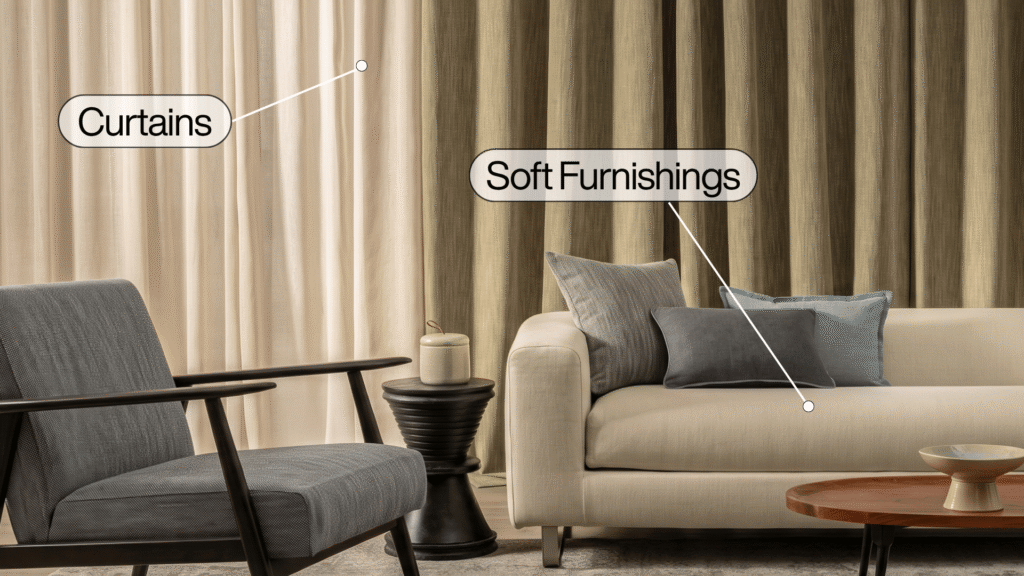
If there’s one swap that changes a room’s mood instantly, it’s curtains. Heavy, dated drapes make a room feel smaller and older; the right fabric, weight and length can make the same window look taller and the room noticeably brighter.
Curtain choice isn’t only aesthetic. Sheer linen blends suit rooms that need light; blackout or heavier weaves suit bedrooms facing a busy street or west-facing rooms taking the afternoon sun. In hot-summer regions, a triple-layered blackout weave meaningfully cuts heat gain and keeps rooms cooler. Our curtain fabric guide for every room breaks this down by room type, and for coastal and monsoon-prone homes, the best curtain fabric for humidity guide is worth reading before you buy yardage for multiple windows at once.
Beyond curtains, soft furnishings bedspreads, table runners, throws, cushion covers are the fastest way to shift a room’s colour story without repainting anything. The trick is to change three or four textile elements at once (curtains, cushion covers, a throw, a rug) so they reinforce a single palette. A single new item in an otherwise unchanged room reads as random; four coordinated ones read as a redesign.
Cohesion tip from our design desk: Match the texture of window treatments to your upholstery. A smooth polyester curtain pairs well with a heavier textured sofa fabric; a linen drape wants a linen or cotton cushion nearby. Texture agreement is what makes a room look styled rather than assembled.
Refresh Your Walls Without Touching Structure
Walls set a room’s tone before any furniture enters the conversation, and they’re the cheapest large surface to change.
Paint smart, not everywhere: A single accent wall one wall in a bold or contrasting shade while the rest stay neutral adds depth for a fraction of the cost of repainting the whole room. Textured finishes, limewash, or a soft ombré add character flat white never will, and all of it stays inside the ₹30–100 per square foot painting bracket (decorative and textured finishes sit at the upper end).
Renting, or want it reversible? Peel-and-stick wallpaper and removable panels go up in an afternoon and, applied and removed correctly, come off cleanly without damaging paint, which is why they’re a rental favourite.
The fabric move: A yard of rich rexine or textured fabric stretched over a wooden frame makes a striking headboard-style wall panel for a fraction of the cost of framed art, and it’s a natural use for leftover upholstery fabric. Wall decals and framed textile art work the same way: turning a blank wall into a focal point without a drop of paint.
Lighting Tricks That Change How a Room Feels

Most Indian homes run on a single harsh ceiling tube light, and it’s one of the biggest reasons rooms feel flat and clinical rather than warm.
Layer the light. A floor lamp in one corner, a table lamp near the sofa, and dimmable warm-white bulbs do more for a room’s atmosphere than most furniture purchases at a fraction of the cost. Switch to warm bulbs (2700K–3000K) and a space instantly feels more lived-in and less like a showroom.
Every one of these plugs into an existing socket no electrician, no rewiring. Pendant lights over a dining table, string lights along a balcony railing, a single statement floor lamp beside a reading chair. And if a room has a dark, unused corner, adding one lamp there is often enough to make the whole space feel more functional and pulled together.
Rugs, Cushions and Textural Layering
Bare hard flooring makes even a well-decorated room feel unfinished. A rug anchors a seating area, defines where the “living zone” begins in an open-plan space, and adds warmth underfoot without touching the floor. Layering a smaller patterned rug over a larger plain one adds depth a single rug can’t.
Cushions are the cheapest high-frequency update on this list. A set of four to six covers in a fresh pattern can be swapped seasonally for a few hundred rupees each, letting a sofa look different every few months with zero structural change. The styling secret is deliberate texture mixing: a velvet cushion beside a woven jute one, a smooth throw over a nubby rug. That contrast is what separates a decorated room from one that merely has furniture in it.
Smart Storage and Decluttering
Clutter is the single most common reason a room looks tired when nothing is objectively wrong with it. Storage and organisation have become a décor category in their own right. In the 2023 Houzz study, purchases of artwork, storage and organisation solutions rose to 45%, a double-digit jump, and it remains one of the highest-leverage, lowest-cost interventions available.
Practical wins: open shelving to display a curated few items instead of hiding everything behind closed doors; under-bed boxes for off-season storage; wall-mounted hooks and racks that clear surfaces without adding furniture. Professional stagers follow one rule that keeps a makeover from becoming visual noise: for every new décor item you bring in, remove one that no longer earns its place.
Statement Walls, Gallery Arrangements and Mirrors
A gallery wall a curated cluster of framed art, photos, and small objects is one of the most personal high-impact changes you can make, needing nothing more than a hammer, a few nails, and an afternoon. Mix frame sizes and finishes (a few gold, a few black, one wood) so it doesn’t look too matchy, but keep the spacing between frames consistent (roughly two to three inches) so it doesn’t look chaotic.
Mirrors deserve a specific mention. A large mirror placed opposite a window is a staging staple precisely because it costs one purchase and zero labour: by reflecting daylight back across the room, it makes a small space feel brighter and larger. There’s no fixed “it doubles the light” figure worth quoting; the effect depends on window size and placement, but the principle is reliable, which is why interior stagers reach for it so often.
Bring in Greenery and Natural Elements
Plants are among the lowest-cost, highest-return additions to any room. A cluster of pots near a window, a trailing vine on a shelf, or a single large floor plant in an empty corner adds colour and softens the hard lines of furniture. Low-maintenance options like snake plants, pothos, and ZZ plants survive low light and irregular watering, making them realistic even for households that travel often.
Natural materials extend the effect: a jute rug, a rattan basket, a wooden tray on a coffee table all bring warmth that purely synthetic décor lacks, and none of them require installation.
Upcycling and DIY Projects
Before buying anything new, look at what’s already in storage. An old wooden ladder becomes a blanket rack; a chipped side table gets fresh paint and new hardware; a plain wooden trunk becomes a coffee table with a glass top. These cost the price of paint, sandpaper, and a weekend, and they give a room genuinely one-of-a-kind pieces that can’t be bought off a shelf.
Fabric scraps left over from curtain or upholstery projects are especially useful here: a strip of leftover material becomes a lampshade cover, a drawer liner, or a set of coasters, so nothing bought for one project goes fully to waste.
Room-by-Room Quick Wins
Living room: Slipcover or reupholster the sofa, swap the curtains, add a floor lamp, layer two rugs. This one combination touches every major surface in the room without permanently moving a single piece of furniture.
Bedroom: A new bedspread and cushion set, warm bedside lighting, and a statement headboard wall (even a fabric-wrapped panel) can make a bedroom feel like an entirely different space.
Kitchen: New cabinet handles, a coat of paint on cabinet fronts (not full replacement), and open shelving for everyday items are the closest a kitchen gets to a “makeover, not renovation.”
Bathroom: Coordinated new towels, a fresh shower curtain, a small plant, and better lighting around the mirror change how a bathroom feels far more than the low cost would suggest.
The 8 Highest-Impact Upgrades, Ranked
Cost, time, and visual payoff for each idea are prioritised by your own budget and timeline.
# | Upgrade | Cost | Time | Impact |
1 | Sofa slipcovers or new upholstery fabric | ₹3,000 – 15,000 | 1 day | Very High |
2 | Curtain & drape swap | ₹1,500 – 8,000 | Few hours | Very High |
3 | Accent wall paint or wallpaper | ₹2,000 – 6,000 | 1 day | High |
4 | Layered lighting (floor + table lamps) | ₹1,500 – 5,000 | Few hours | High |
5 | Rugs & cushion-cover refresh | ₹1,200 – 4,500 | 1 hour | High |
6 | Declutter & smart storage | ₹500 – 3,000 | 1 day | Medium-High |
7 | Wall art/gallery arrangement | ₹800 – 4,000 | Few hours | Medium |
8 | Indoor plants & greenery corner | ₹500 – 2,500 | 1 hour | Medium |
The pattern is hard to miss: the two highest-impact changes are both fabric. That’s not a coincidence; curtains and sofa upholstery cover the largest visible surface area in almost any room.
Your Weekend Makeover Checklist
- Decide a palette first. Two or three colours, maximum. Every purchase gets checked against it. This one step prevents the most common budget-makeover mistake: a room full of individually nice items that don’t talk to each other.
- Press-test your sofa frame. Solid and firm → reupholster. Spongy or creaking → slipcover instead, or budget for replacement.
- Measure your windows and sofa before buying fabric. A three-seater needs 12–15 m of 54-inch fabric; add 15–20% for a patterned repeat.
- Ask every fabric seller for the Martindale rating (15,000+ for daily-use seating) or the PVC-vs-PU grade for rexine. No number, walk away.
- Buy in one trip where you can. Bulk fabric for a sofa, dining chairs and cushions together usually beats the per-metre cost of separate small purchases.
- Apply the one-in-one-out rule as you decorate, so the refresh doesn’t turn into clutter.
The Bottom Line
A renovation rebuilds a house. A makeover changes how it feels, and for most homes, feel is what’s actually gone stale. The surfaces you see and touch every day (the sofa fabric, the curtains, the light) do more for a room’s mood than any structural change, and they cost a fraction as much to refresh.
The one caveat worth repeating: fabric-led changes are only as good as the fabric. Choose the right weave, a sound frame, and a Martindale rating that matches how the piece is actually used; a reupholstered sofa or a new set of curtains looks right for years. Chosen carelessly, it looks tired within months, and the saving evaporates.
If you’re starting with the highest-impact move, browse Abbott Fab’s upholstery fabric range and rexine collection, or read the Complete Sofa Fabric Guide (2026) before you buy a single metre.
Frequently Asked Questions
A single-room refresh curtains, cushions, a lamp, and a slipcover or rug typically falls between ₹8,000 and ₹25,000 depending on room size and fabric quality. That sits comfortably inside the ₹40,000–1.8 lakh range for a full-home makeover.
Start with the living room, since it sees the most daily use and the most guests. Then the bedroom, then high-traffic areas, leaving the kitchen and bathroom for last; those often need coordinated fixtures (handles, towels) bought together.
Press down firmly on the seat and arms. A solid-wood frame won’t creak or flex noticeably; a particle-board frame feels spongy or shows sag. If it passes that test, reupholstery is almost always worth it; you’re spending well under half the cost of a comparable new sofa. More on this in our sofa fabric guide.
The Martindale rub count. For a sofa or chair in daily use, aim for at least 15,000 rubs; heavy family use wants 25,000+. It’s the same lab metric furniture manufacturers grade by, and it predicts real-world lifespan far better than how a fabric looks on the roll. For rexine, check whether it’s PVC or PU. PU ages better.
Yes. Buying fabric or rexine in bulk for a sofa, dining chairs and cushion covers together usually reduces the per-metre cost compared with buying small quantities for each separately.
Cosmetic updates fresh paint, new curtains, decluttering reliably improve a home’s first impression during viewings, which can help it show and sell better. They don’t add measurable resale value the way structural kitchen or bathroom renovations can, so treat them as presentation, not investment.
Yes, a makeover doesn’t lock you out of future renovation. Paint, curtains and slipcovers are all easy to work around or replace if you later redo flooring or plumbing, so there’s no wasted cost in refreshing first and renovating down the line.
Every 6–12 months is a reasonable cycle. They’re the cheapest way to keep a room feeling current without touching furniture, walls or curtains.
No, when applied and removed correctly, peel-and-stick wallpaper and panels are designed to come off cleanly without paint damage, which is exactly why they’re popular in rented homes.
Buying décor one item at a time with no shared colour or texture plan, which leaves a room looking cluttered rather than styled. Deciding a palette before you shop avoids it entirely.