How to Choose Upholstery Fabrics for Wedding Venues and Banquet Seating
Key Takeaways
- To choose upholstery fabrics for wedding venues and banquet seating, match abrasion rating, cleanability, and fire compliance to real usage, not appearance.
- Target at least 30,000 Wyzenbeek double rubs, or 40,000 Martindale cycles, for banquet chairs in frequent, heavy daily use.
- Faux leather and rexine wipe clean the fastest, making them the practical choice for spill-prone dining chairs and high-turnover banquet seating.
- Reserve velvet and chenille for accent and lounge seating. They crush and mark under pressure and are harder to clean than dining fabrics.
- A fabric’s cleaning code, W, S, WS, or X, decides how fast staff can treat spills between functions, so confirm it before buying.
- In India, banquet and marriage halls are assembly buildings under NBC 2016, so furnishings should be flame-retardant and backed by supplier documentation.
- Judge total cost over time, not sticker price, and confirm every choice with physical swatches and written test documentation before bulk ordering.
A banquet chair at a busy wedding venue does more work in one season than a living-room sofa does in five years. Guests sit, stand, and shift through long ceremonies. Plates of biryani, glasses of red wine, mehndi, and makeup all find the seat fabric eventually. Staff flip the same chairs two or three times a day during peak season, often with only a quick wipe-down between functions.
This is the real test any upholstery fabric has to pass, and it is very different from the test a retail showroom sets up. A fabric that looks rich under warm lighting can pill within months, bruise where guests lean, or hold a curry stain that no amount of scrubbing removes. Choosing well means matching the fabric’s specifications to your venue’s actual use, then balancing that against cleaning time, fire compliance, and the cost of replacing it in two years instead of eight.
This guide walks commercial buyers through that decision. It covers how to assess your venue’s demands, the factors that separate a contract-grade fabric from a decorative one, a side-by-side comparison of the materials worth considering, and the fire-safety and documentation checks that protect both your guests and your licence. The goal is a material decision you can defend on paper, not just a fabric that looks good on the floor.
How to Assess the Requirements of a Wedding Venue
Before you compare fabrics, map how your furniture is actually used. Two venues can buy the same chairs and need completely different upholstery because their usage patterns differ. Four inputs drive the decision.
Turnover: A hall that hosts one function a day puts far less stress on a seat than a banquet venue running a morning haldi, an afternoon reception, and an evening sangeet on the same chairs. Higher turnover means more abrasion from bodies moving across the seat, more cleaning cycles, and less time for a fabric to dry between events.
Zone: Dining and banquet chairs sit directly in the line of fire for food and drink. Lounge sofas and accent chairs in a pre-function area see lighter, slower use and fewer spills. Stage and mandap seating is often photographed in close-up, so appearance carries more weight there. Each zone justifies a different fabric, and buying one material for the whole venue usually overpays in some zones and underperforms in others.
Cleaning capacity: Ask honestly how much time staff have between functions, whether you clean in-house or outsource, and how quickly a chair needs to be dry and back in service. A fabric that technically cleans well but needs professional solvent treatment is impractical if your team has twenty minutes and a cloth.
Compliance: A licensed banquet hall in India is a public assembly space, which brings fire-safety expectations that a home never faces. This belongs in your requirements list from the start, because it can rule out materials before aesthetics even enter the conversation.
Write these four inputs down before you shortlist anything. They convert a vague wish for a “durable, good-looking fabric” into a specification a supplier can actually meet.
Key Factors to Check Before Choosing Upholstery Fabric
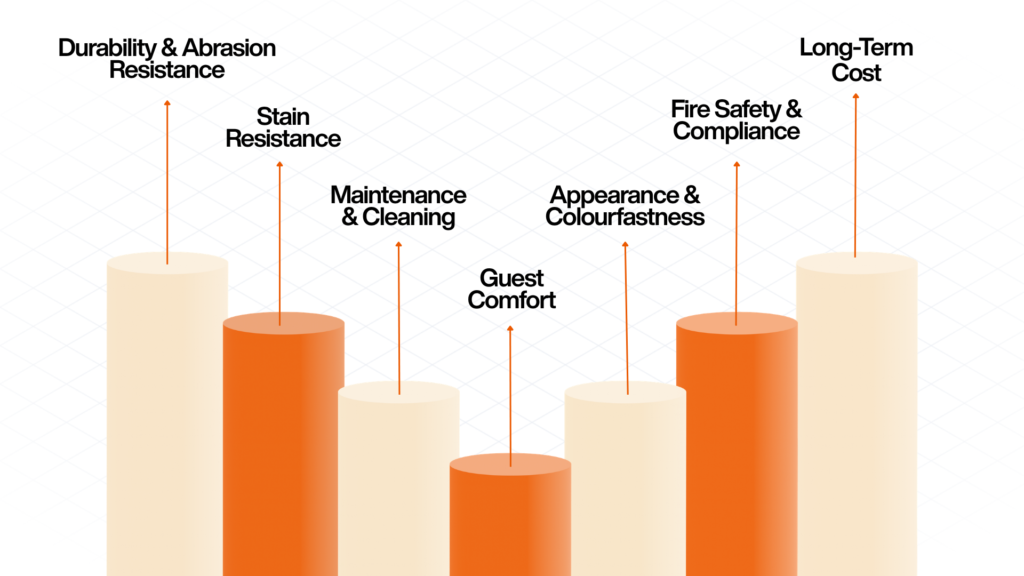
Once you know how your venue uses its furniture, evaluate every candidate fabric against these seven factors. Appearance is only one of them, and on its own it predicts almost nothing about how a fabric survives commercial use.
1. Durability and Abrasion Resistance
Abrasion resistance measures how well a fabric withstands the rubbing it gets from everyday use, and it is the single most useful durability number on a spec sheet. The industry measures it two ways. The Wyzenbeek test (ASTM D4157) reports results in double rubs, and the Martindale test (ASTM D4966) reports results in cycles. The two methods use different machines and are not directly interchangeable, so always check which test a number comes from.
The Association for Contract Textiles (ACT) publishes widely used thresholds for commercial upholstery. A general contract fabric should reach 15,000 double rubs on the Wyzenbeek scale, or 20,000 Martindale cycles. A heavy-duty fabric should reach 30,000 double rubs, or 40,000 Martindale cycles. Coated fabrics such as vinyl and faux leather intended for high-traffic public spaces are held to a higher bar of 50,000 double rubs.
For wedding and banquet seating in frequent use, aim for the heavy-duty band. ACT itself lists hotel rooms, conference rooms, and dining areas as the kind of installations where 30,000 double rubs is appropriate. One caution worth knowing: ACT has advised that Wyzenbeek results above 100,000 double rubs do not reliably indicate a longer fabric life, so treat very high rub counts as marketing rather than proof of extra years.
Abrasion is not the whole story. Durability is a combination of properties, including seam slippage, pilling resistance, and tensile strength. A fabric can pass the rub test and still pill or pull at the seams, so read the full specification rather than one headline figure.
2. Stain Management
Stain exposure at a wedding venue is constant and varied: oil-based food, turmeric, wine, soft drinks, cosmetics, and hair products. How a fabric handles that exposure depends on its fibre, its weave, and any finish applied to it.
Tightly woven synthetics and coated materials resist staining better than loose, absorbent weaves. Solution-dyed polyester and acrylic, where the colour is locked into the fibre, resist both staining and fading better than surface-dyed fabrics. Stain-resistant finishes help, but they have limits. A finish slows absorption and buys staff time to blot a spill, yet it does not make a fabric stain-proof, and some substances still mark the surface despite protection. Treat “stain-resistant” as “easier to clean quickly,” not “indestructible.”
3. Maintenance and Cleaning
A fabric’s cleaning code tells your team how it can be cleaned, and it should be a deciding factor for high-turnover seating. The four standard codes are simple:
Code | Meaning |
W | Clean with a water-based cleaner |
S | Clean with a solvent-based (dry) cleaner only |
WS | Either water-based or solvent-based cleaners are safe |
X | Vacuum or professional cleaning only, no liquid cleaners |
For banquet and dining seating, W or WS fabrics are the most practical, because staff can treat a spill on-site with water-based products. An S-code fabric needs solvent and often a professional, which is hard to manage between back-to-back functions. An X-code material cannot be spot-cleaned with liquid at all. Alongside the code, consider drying time, how easily minor damage can be repaired, and whether a worn seat can be re-covered rather than discarded.
4. Comfort
Comfort shapes how guests experience a long ceremony or a multi-hour reception. Texture, breathability, and surface temperature all matter. Coated materials such as faux leather clean easily but can feel warm and less breathable during a long summer function, especially in a packed hall. Woven fabrics generally feel cooler and softer against skin. Match the fabric to how long guests actually sit and to your venue’s climate control, not just to how the seat feels for the few seconds of a showroom test.
5. Appearance
Appearance covers colour retention, texture, and how the fabric reads under your venue’s lighting and in photographs. Wedding seating is photographed constantly, so the way a fabric catches light is a genuine commercial factor, not vanity. Check colour-fastness to light so your seating does not fade unevenly after a season near windows, and view swatches under the actual lighting you use, since warm banquet lighting changes how a colour and texture appear.
6. Safety and Compliance
Fire safety is a requirement for commercial venues, not an optional extra. In India, banquet and marriage halls fall under assembly occupancy in the National Building Code of India (NBC) 2016, and furnishings in these spaces are expected to be flame-retardant. Ask suppliers for fire-test documentation and keep it on file. The dedicated fire-safety section below covers the specifics, including the certifications you may encounter.
7. Cost Over Time
The purchase price is only the first cost. The real figure is total cost of ownership, which adds cleaning, repairs, and the replacement cycle to the initial spend. A cheaper fabric that needs replacing in two years, and professional cleaning in between, often costs more over five years than a contract-grade fabric with a higher upfront price. Always compare fabrics on this whole-life basis.
Upholstery Fabric Types Compared for Wedding and Banquet Venues
No single fabric wins on every factor. The table below compares the materials most relevant to wedding and banquet environments, so you can match strengths to each zone of your venue. Use it as a shortlist tool, then confirm the exact specification of any product with the supplier before buying.
Material | Strengths | Limitations | Typical cleaning code | Best applications |
Polyester and polyester blends | Durable, versatile, affordable, wide range of looks | Can pill over time if low quality | W or WS | Banquet chairs, dining chairs, general-purpose seating |
Microfibre (tightly woven polyester) | Strong wear and stain resistance, forgiving, soft | Sensitive to heat, quality varies widely | W | High-use dining and banquet chairs |
Faux leather and rexine | Wipes clean instantly, water and stain resistant, easy upkeep | Can feel warm and less breathable, quality varies | W | Dining chairs, kids’ tables, high-turnover and spill-prone seating |
Velvet | Rich colour, luxurious texture, photographs beautifully | Pile crushes and marks under pressure, harder to clean | Often S | Lounge and accent seating, stage and mandap furniture |
Chenille | Soft, warm, inviting feel | Pile can mat and show wear, less suited to heavy spills | W or WS | Lounge seating, pre-function areas |
Jacquard | Woven-in pattern, formal and decorative, durable construction | Textured surface can trap spills in the weave | Varies by fibre | Accent chairs, decorative and feature seating |
Performance and solution-dyed fabrics | Engineered stain and fade resistance, built for high use | Higher upfront cost, still not stain-proof | Often W or WS | Heavy-use seating where appearance must last |
A note on reading this table: the cleaning codes and performance ranges are typical for each material, but the exact figures depend on the specific product. A high-quality microfibre and a cheap one behave very differently even though both are “microfibre.” This is why the written specification of the individual fabric always beats the fibre name.
Best Upholstery Fabric for Banquet Chairs, Dining Chairs, Sofas, and Lounge Seating
Different furniture in the same venue earns different fabric. Here is how the materials above map onto the main seating types.
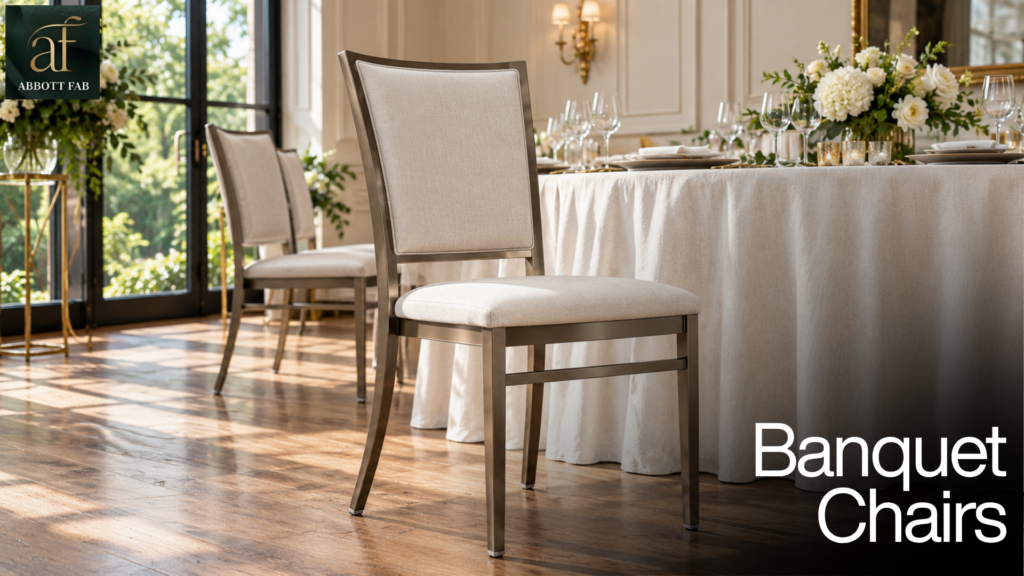
Banquet chairs. These take the heaviest, most frequent use and the most spills. Prioritise abrasion resistance in the heavy-duty band and an easy W or WS cleaning code. Durable polyester blends, quality microfibre, and faux leather or rexine all suit this role. Faux leather and rexine are especially practical where food and drink are served directly, because they wipe clean in seconds. Abbottfab produces rexine for furnishing and chair applications alongside dedicated chair and upholstery fabrics, which lets a venue match the material to each seating type from one supplier.
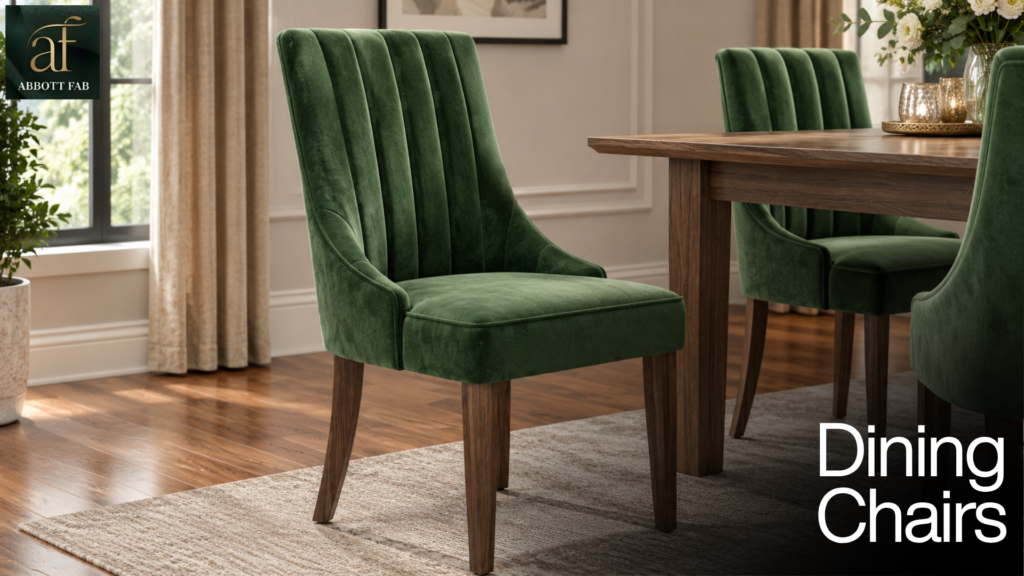
Dining chairs. Similar demands to banquet chairs, with spills as the main risk. Wipeable faux leather, rexine, or a tightly woven stain-resistant fabric keeps turnaround fast between services. Avoid delicate pile fabrics here, as food residue is difficult to lift from them.
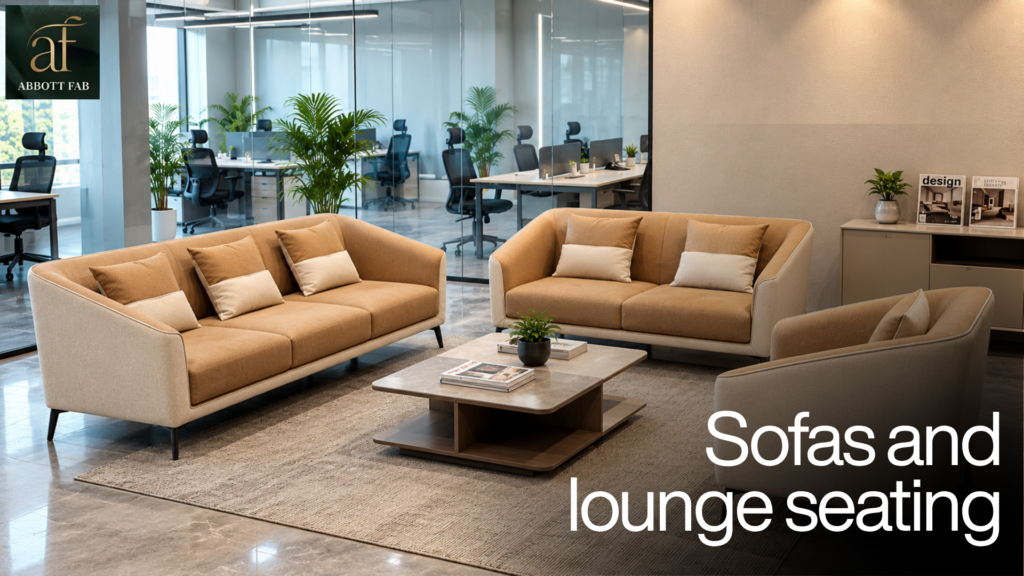
Sofas and lounge seating. These see slower, more relaxed use in pre-function and waiting areas. You can prioritise comfort and appearance more than on dining chairs, but still choose a contract-grade fabric, since guests settle in for longer and the surface gets more continuous contact. Durable woven fabrics, chenille, and performance textiles work well.
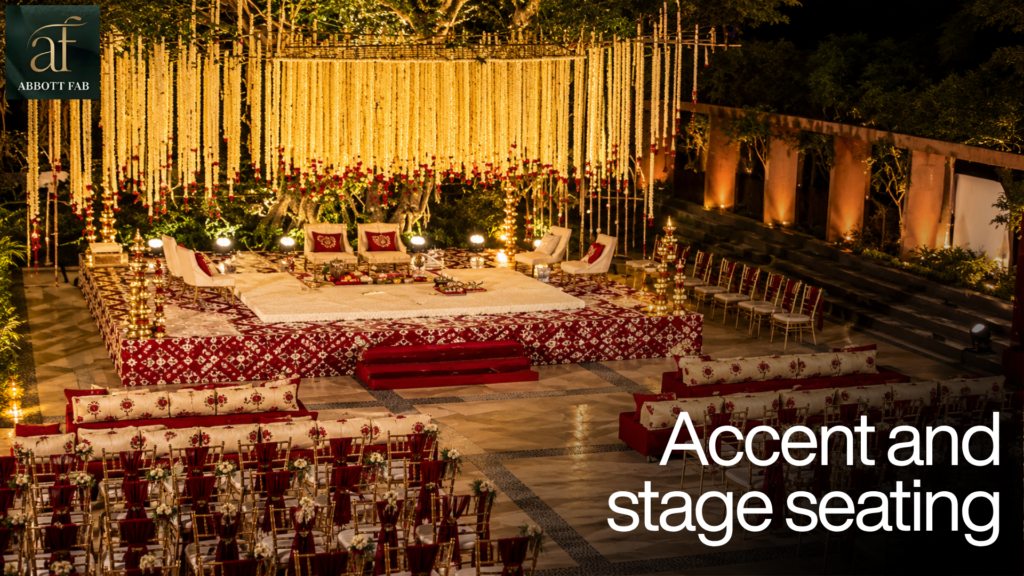
Accent and stage seating. Feature chairs, mandap seating, and photographed furniture can carry your most decorative choices, because they see the lightest use. Velvet and jacquard shine here, delivering the rich look that reads well on camera. Keep these fabrics away from the dining floor, where their cleaning limitations become a daily problem.
How to Balance Luxury, Durability, and Cleaning Requirements
Buyers often feel forced to choose between a fabric that looks premium and one that survives commercial use. In practice, the answer is rarely one fabric for the whole venue. It is the right fabric in the right zone.
Put your hardest-wearing, easiest-cleaning materials where the usage and the spills are, which is the dining and banquet floor. Put your most luxurious materials where they are seen and photographed but lightly used, which is accent seating, stage furniture, and lounge corners. This zoning gives you the premium look exactly where it earns its keep, without paying for it in constant cleaning and early replacement across the whole hall.
Where a single zone genuinely needs to look rich and take real use, performance fabrics are the bridge. Solution-dyed and engineered textiles are built to hold their appearance under heavy use, offering much of the look of a decorative fabric with cleanability closer to a contract one. They cost more upfront, but in a demanding zone they often pay for themselves by lasting longer and cleaning faster.
Colour and Texture Considerations for Different Wedding Themes
Colour and texture do more than set a mood. They affect how practical your seating is to run and how long it looks new.
On colour, mid-tones and muted shades hide everyday marks and minor stains far better than very pale or very dark extremes. Crisp white and ivory look elegant but show every smudge and often need covers or constant cleaning. Deep, solid darks can reveal dust, lint, and crushing. Patterned and textured fabrics, including jacquards, are forgiving because the design breaks up the appearance of small marks between deep cleans. If your venue hosts a wide range of wedding themes, a neutral base fabric paired with changeable covers, runners, and cushions gives you flexibility without re-upholstering for every palette.
On texture, remember that texture interacts with light and the camera. Velvet’s pile makes colours look deeper and richer under warm lighting, which is why it photographs so well on feature furniture. Flat woven fabrics read as cleaner and more uniform. Match colour retention to exposure too: seating near large windows benefits from solution-dyed fabrics with strong colour-fastness, so it does not fade unevenly over a season.
The practical rule is to let the base seating stay neutral and durable, and to carry the wedding theme through accessories you can swap. That protects your largest fabric investment from being locked to a single look.
Fire Safety and Compliance Checks for Banquet Hall Upholstery
For a commercial wedding or banquet venue, fire safety is a legal and life-safety obligation that can override aesthetic preferences entirely. Treat it as a filter you apply before you fall in love with a fabric.
In India, banquet halls and marriage halls are classified as assembly buildings, which the National Building Code of India (NBC) 2016 addresses in its fire and life-safety provisions. A Fire No Objection Certificate (NOC) from the local fire department is a standard requirement for assembly occupancies, and furnishings and decor in these spaces are expected to be flame-retardant. The NBC is applied through state and local building bye-laws, so your exact obligations depend on your municipality. Confirm them with your local authority rather than assuming a single national answer.
Whatever the standard, the practical steps are the same:
- Ask every supplier for fire-test documentation for the specific fabric, not a general brand claim.
- Keep that documentation on file for inspections and renewals.
- Check whether the rating applies to the fabric alone or to the fabric-and-foam composite, since the combination is what actually burns.
- Confirm your venue’s requirements with your local fire authority before you commit to a large order.
A fabric with no fire documentation is a risk you carry, both for your guests and for your licence. Make the paperwork a condition of purchase.
Budgeting and Long-Term Maintenance
Build your budget around total cost of ownership rather than the price on the invoice. Four numbers decide whether a fabric is genuinely affordable: the purchase price, the ongoing cleaning cost, the cost of repairs over the fabric’s life, and how often you have to replace it.
A low upfront price that comes with frequent professional cleaning and a two-year replacement cycle is often the most expensive option once you add it all up. A contract-grade fabric with a higher sticker price, an easy in-house cleaning routine, and a long replacement cycle frequently costs less per year in service. Run the comparison over three to five years, not over a single purchase.
Maintenance planning protects that investment. Vacuum seating regularly to stop grit from grinding into fibres, blot spills immediately rather than rubbing them, and clean strictly to the fabric’s code. Keep a small reserve of matching fabric from your original order, so you can re-cover a damaged seat instead of replacing a whole set and ending up with a visible colour mismatch. Where a frame is sound, but the cover is worn, re-upholstering is usually far cheaper than buying new furniture.
Common Mistakes Venue Owners Should Avoid
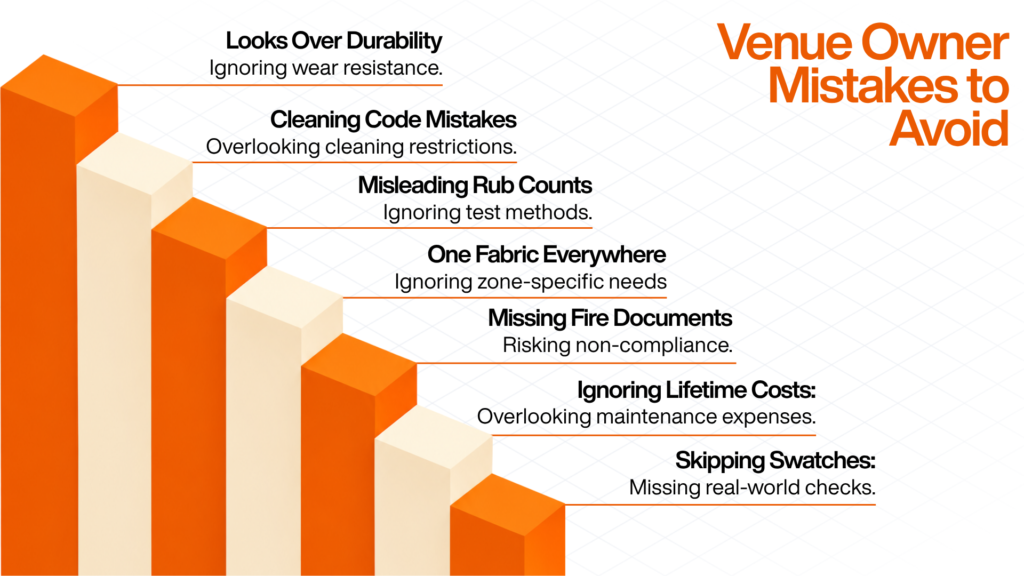
A few recurring errors cost venues the most, and all of them are avoidable.
- Buying on appearance alone. A fabric chosen for how it looks in the showroom, with no check on abrasion rating or cleaning code, is the most common and expensive mistake.
- Ignoring the cleaning code. Discovering after purchase that your dining seating is S-code or X-code, and cannot be spot-cleaned with water, creates a daily operational headache.
- Trusting a rub count with no test method. A “100,000 rubs” claim means little if you do not know whether it is Wyzenbeek double rubs or Martindale cycles, and very high counts do not reliably mean a longer life.
- Using one fabric for the whole venue. Buying a single material for dining chairs, lounge sofas, and feature seating overpays in some zones and underperforms in others.
- Skipping fire documentation. Ordering upholstery without fire-test paperwork leaves a compliance and safety gap that surfaces at the worst possible time, during an inspection or an incident.
- Judging cost by the invoice. Comparing only purchase prices and ignoring cleaning, repairs, and replacement frequency hides the fabric that is actually cheaper over time.
- Not ordering physical swatches. Choosing from a photo or a screen skips the tests that matter, including feel, cleanability, and how the colour behaves under your own lighting.
Conclusion
Choosing upholstery for a wedding venue or banquet hall is a specification exercise, not a shopping trip. The fabric that serves you best is the one whose abrasion rating, cleaning code, fire documentation, and whole-life cost match how each zone of your venue is actually used. Zone your furniture, put hard-wearing and easy-clean materials where the spills and turnover are, and save your most decorative fabrics for the feature seating that is seen more than it is used. Then confirm every candidate on paper, with physical swatches and test documentation, before you commit to a bulk order.
If you are sourcing fabric for a venue, work with a manufacturer that can supply both durable upholstery fabrics and wipe-clean rexine, and that can share the specifications you need to decide.
Abbottfab manufactures upholstery, chair, and sofa fabrics along with a wide rexine range for furnishing and seating, and you can request swatches and specifications to match the right material to each part of your venue.
For a wider view of fabric types and durability, their guide on how to choose upholstery fabric is a useful next read.
Frequently Asked Questions
There is no single best fabric, but the strongest candidates for banquet chairs in heavy use are durable polyester blends, quality microfibre, and faux leather or rexine. Look for abrasion resistance in the heavy-duty band, around 30,000 Wyzenbeek double rubs or 40,000 Martindale cycles, and an easy W or WS cleaning code. Faux leather and rexine are especially practical where food and drink are served directly, because they wipe clean in seconds.
For seating in frequent, heavy daily use, aim for the heavy-duty contract band of at least 30,000 double rubs on the Wyzenbeek scale, or 40,000 Martindale cycles. General contract fabrics start at 15,000 double rubs, which suits lighter-use zones but is usually too low for busy dining and banquet seating. Coated materials such as vinyl and faux leather for high-traffic public spaces are held to a higher 50,000 double-rub standard.
Commercial, or contract-grade, upholstery fabric is textile engineered for the heavier use of public and hospitality furniture rather than homes. It meets higher benchmarks for abrasion, colour-fastness, and often fire performance than residential fabric. For wedding venues, banquet halls, and other hospitality furniture, choosing a contract-grade fabric means the seating is built from the start for frequent turnover, repeated cleaning, and regular spills.
Yes. For dining and banquet chairs that face frequent spills, faux leather and rexine are among the most practical choices. They resist water and stains, wipe clean with a water-based cleaner, and turn around quickly between functions. The main trade-offs are that they can feel warmer and less breathable during long summer events, and that quality varies, so confirm the specific product’s durability and finish before ordering.
For event venues, the easiest-to-clean upholstery is usually faux leather or rexine, which wipes down with a damp cloth in seconds and resists water and stains. Among woven fabrics, tightly woven microfibre and solution-dyed polyester with a W or WS cleaning code are the most practical, because staff can treat spills on-site between functions. Keep delicate pile fabrics off the dining floor, where food residue is hard to lift.
They tell you how a fabric can be cleaned safely. W means use a water-based cleaner. S means use a solvent-based or dry cleaner only. WS means either water-based or solvent-based cleaners are safe. X means vacuum or professional cleaning only, with no liquid cleaners. For high-turnover wedding and banquet seating, W and WS fabrics are the most practical, because staff can treat spills on-site.
Velvet works well for the right seating. Its pile gives rich colour and photographs beautifully, which makes it ideal for accent chairs, stage furniture, and lounge corners that see light use. It is less suited to dining and banquet chairs, because the pile crushes and marks under pressure, and it is harder to clean, often carrying an S cleaning code. Reserve velvet for feature seating and choose wipeable wedding chair upholstery materials for the dining floor.
Banquet and marriage halls in India are treated as assembly buildings under the National Building Code of India 2016, and furnishings in these public spaces are expected to be flame-retardant. A Fire No Objection Certificate from the local fire department is a standard requirement for assembly occupancies. Exact obligations are set through state and local building bye-laws, so confirm them with your local fire authority and keep fire-test documentation for your fabrics on file.
Compare total cost of ownership over three to five years, not the purchase price alone. Add the cleaning cost, likely repairs, and how often you expect to replace the fabric to the upfront figure. A cheaper fabric that needs professional cleaning and early replacement often costs more over time than a contract-grade fabric with a higher initial price but a long service life and easy in-house cleaning.
Yes, always order physical swatches before a bulk purchase. Swatches let you test feel, run a quick cleaning check, and see how the colour and texture behave under your venue’s actual lighting, which a photo or screen cannot show. Pair the swatch with the written specification, including the abrasion rating, cleaning code, and fire documentation, so your final banquet seating fabric selection rests on evidence rather than appearance.