How to Choose Wholesale Rexine Suppliers in India: The Complete Buyer's Guide (2025)
Key Takeaways
- Rexine quality is determined by hidden variables: base fabric GSM, coating type, and surface treatment, not appearance alone.
- PVC and PU rexine are not interchangeable; choosing the wrong type for your application is one of the most expensive sourcing errors in bulk procurement.
- Always request a Technical Datasheet (TDS) and perform physical field tests before committing to any wholesale order.
- Batch consistency matters more than sample quality. Verify dye-lot controls and reorder guarantees before signing a purchase order.
- A supplier who cannot answer basic technical questions about their own product is a liability, not a partner.
What Is Rexine? A Technical Definition
Rexine is a coated synthetic fabric designed to replicate the appearance, texture, and feel of natural leather. It consists of a base textile, typically woven or knitted polyester, cotton, or a blend, layered with a synthetic coating of either PVC (polyvinyl chloride) or PU (polyurethane). The surface is then embossed with grain patterns to achieve a leather-like finish.
In the Indian market, the term “rexine” is used broadly and interchangeably with “leatherette,” “synthetic leather,” and “faux leather.” This loose terminology creates real confusion at the sourcing stage: two products called “rexine” can differ dramatically in construction, durability, and intended application.
For wholesale buyers, this ambiguity is a risk that needs to be managed before, not after, a purchase order is issued.
Why Wholesale Rexine Quality Varies So Dramatically
Walk through any textile hub in Delhi, Mumbai, or Surat, and you will hear the same claims from every vendor: premium quality, competitive pricing, massive stock, and fast dispatch. These assurances are easy to make and impossible to verify at a glance.
The reality is that rexine quality is shaped by several independent technical variables, none of which are visible to the naked eye:
| Variable | Effect on Performance |
|---|---|
| Base Fabric | Determines tensile strength, tear resistance, and structural integrity |
| Coating (PVC or PU) | Governs flexibility, thickness, and environmental durability |
| Surface Treatment | Affects UV resistance, abrasion performance, and stain repellency |
| Embossing Depth | Influences aesthetic finish and how the material handles tension during upholstery |
Two rolls of rexine from different suppliers can appear, feel, and even weigh the same and still perform entirely differently in the field. A lower-grade coating may begin to delaminate within a year. A poorly formulated PVC compound may crack during India’s summer heat. A weak base fabric will cause finished upholstery to sag under daily load.
When you are purchasing at wholesale volumes, these hidden differences are amplified across every unit of your finished product. A small compromise in material quality at the sourcing stage can generate high costs through product returns, warranty claims, and brand damage.
The solution is not to trust the supplier’s word. It is to know what to ask and how to test. This is the discipline this guide is built around, and the same discipline we apply on our own floor before a batch ships. Everything below is written so you can run it against any supplier, Abbott Fab included.
PVC vs. PU Rexine: Which One Do You Actually Need?
The single most critical question to answer before you contact any supplier is whether your application requires PVC or PU rexine. These materials have different physical properties and perform differently across climates, use cases, and durability requirements. Treating them as interchangeable is one of the most common and costly errors in wholesale procurement.
Material Comparison at a Glance
| Feature | PVC Rexine | PU Rexine |
|---|---|---|
| Texture & Feel | Stiffer, heavier, plastic-adjacent | Soft, supple, closer to real leather |
| Breathability | Low, can cause discomfort in skin-contact applications | Higher, significantly more comfortable over extended use |
| Durability | Excellent abrasion resistance | Superior flexibility and ageing characteristics |
| Temperature Sensitivity | Can stiffen in cold, crack under prolonged UV and heat | More resilient across temperature variation |
| Environmental Profile | Contains chlorine; faces growing regulatory scrutiny in export markets | Generally considered more environmentally benign |
| Cost | Lower | Higher |
| Best Applications | Economy furniture, commercial vehicle interiors, utility items | Premium upholstery, automotive interiors, fashion accessories |
When PVC Makes Sense
PVC rexine has dominated the Indian market for decades, and for good reason. It offers excellent abrasion resistance and a very low price point, making it well-suited for budget furniture, commercial transport seating, and economy-segment accessories. If the product is not in direct skin contact for extended periods and will not face extreme heat cycles, PVC is a reasonable and economical choice.
Its weakness is environmental: PVC stiffens in cold temperatures and becomes brittle under prolonged UV exposure. For outdoor furniture, automotive interiors in extreme climates, or export products bound for regions with strict material regulations, PVC’s limitations become operational risks.
When PU Is the Right Call
PU rexine commands a higher price because it genuinely performs better across the variables that matter for premium applications. It ages more gracefully, remains flexible in varying climates, and provides a noticeably more comfortable surface for seating that sees regular skin contact. If you are manufacturing for export markets with material compliance requirements (common in Europe and parts of Southeast Asia), PU is often not optional; it is a regulatory necessity.
How to Get a Clear Answer from a Supplier
When you make first contact with a potential wholesale supplier, ask two questions immediately:
- “Is this material PVC-based or PU-based?”
- “What is the base fabric composition?”
A credible supplier will answer both without hesitation. If you receive vague marketing language “high-quality synthetic leather,” “premium grade” in response to a direct technical question, treat it as a red flag. Evasion on basic specifications typically signals either a lack of product knowledge or a deliberate unwillingness to be held to a verifiable standard.
How to Evaluate Coating Thickness and Base Fabric Weight
Once you have confirmed the material type, you need to assess the physical construction of the rexine. Two metrics matter most: coating thickness and base fabric GSM (grams per square meter).
Why These Numbers Matter
Coating Thickness directly determines how the surface will perform over time: its resistance to scratching, peeling, and wear. However, thickness alone is not the right proxy for quality. A thick but poorly formulated coating will peel or crack faster than a thinner, well-engineered one. What you are evaluating is the combination of thickness and formulation quality.
Base Fabric GSM measures the weight and density of the textile layer beneath the coating. This is the structural backbone of the material. For standard upholstery applications, a GSM range of 180–280 is typical. Lower-weight fabrics may save cost in production but will cause long-term structural problems in finished goods: uneven stretching during upholstery, sagging under daily load, and premature delamination as the bond between the weak base and the coating fails under stress.
A common shortcut among lower-tier manufacturers is pairing a thick coating with a lightweight base fabric. This combination looks impressive on the surface and feels substantial in hand, but it is structurally unsound. The mismatch between coating density and fabric strength creates internal stress that will eventually manifest as cracking or peeling.
What to Request from Your Supplier
Ask for a Technical Datasheet (TDS) that explicitly states:
- Total material thickness (in millimetres or microns)
- Base fabric GSM
- Coating weight (to verify the density of the PVC or PU layer)
A supplier who cannot or will not provide this document is not operating at a standard that can support consistent large-scale supply. Reluctance to share basic specifications is not humility; it is a warning sign.
Physical Testing: How to Verify Quality Before You Commit

The Five-Test Field Protocol
| Test | What You Are Testing | Pass Criterion |
|---|---|---|
| FlexTest | Coating flexibility and curing quality | No white lines or cracks after folding firmly for 10 seconds |
| Scratch Test | Surface hardness and coating adhesion | No visible lifting under moderate fingernail pressure |
| Stretch Test | Base fabric integrity and tension recovery | Stretches with resistance; returns to shape without sagging |
| Water Test | Coating seal and porosity | Water beads on surface; no absorption or swelling |
| Climate (Flex) Test | Performance under temperature variation | Remains supple after 30 minutes in a refrigerator |
What Each Result Tells You
Flex Test: If a white line or crack appears immediately at the fold, the coating is brittle. This is typically caused by excessive filler content or improper curing during manufacture. This material will fail visibly within months of installation in furniture or automotive use.
Scratch Test: Superficial resistance is normal. Significant surface lifting at low pressure indicates an under-formulated coating that will deteriorate rapidly under the friction of daily use.
Stretch Test: Uneven stretching or permanent distortion after tension indicates an undersized base fabric. Finished products will lose their shape prematurely.
Water Test: Surface absorption means the coating is porous. This material is unsuitable for any application that involves moisture exposure, which, in practice, includes almost all seating.
Climate Test: This test is non-negotiable for automotive interiors, outdoor furniture, or products that will be shipped to cold climates. Low-grade PVC will crack at the fold immediately. Quality PU will remain flexible. The refrigerator eliminates the guesswork.
These five checks aren’t arbitrary; they’re the same internal pass/fail criteria we use before approving a batch for dispatch. If a supplier’s material can’t clear them, ours included, that’s the answer you need.
Run these tests on every new sample from every new supplier. The materials are inexpensive, and the tests take minutes; the alternative discovering a quality failure after a batch has been delivered and processed is far costlier.
Verifying Batch Consistency: The Problem Most Buyers Ignore
A flawless sample is the minimum bar, not the finish line. The most persistent quality challenge in wholesale rexine sourcing is not getting a bad sample; it is receiving a bulk shipment that does not match it.
Batch variation is a profit-killer because it creates downstream problems that are difficult to trace and expensive to fix:
| Consistency Issue | Operational Impact |
|---|---|
| Colour shift | Products from the same production run look mismatched; client rejection |
| Texture variation | Uneven surface across a single finished item, signalling poor craftsmanship |
| Coating disparity | Some sections wear or crack faster than others |
| Dimensional deviation | Inconsistent roll widths generate fabric waste and cutting errors |
Questions to Ask Before You Commit to a Supplier
Move past general assurances about “maintaining high quality.” Instead, ask for specific process documentation:
- Colour calibration: “Do you use a standardised colour measurement system, and can you provide batch documentation showing samples are checked against a reference standard?”
- Dye-lot control: “Do you provide a dye-lot number with every consignment?”
- Reorder guarantee: “If I reorder this exact material in six months, what is your tolerance on colour and texture variation from the current approved sample?”
- Dimensional accuracy: “What is your tolerance for roll width and length variation?” (Standard industry width in India is typically 54 inches / 137 cm; custom widths such as 60 or 72 inches require explicit verification.)
A supplier with genuine quality infrastructure will answer these questions with specifics. If you receive vague promises, their systems may not be capable of supporting the consistency your production requires.
Pro tip: For large-volume orders, insist on batch-retained samples. This means the supplier keeps a labelled swatch from the specific batch shipped to you. If a quality dispute arises, both parties can refer to the same physical reference point, which transforms a subjective disagreement into an objective comparison. It’s a habit we keep on our own shipments for exactly this reason: a labelled retain sample turns a dispute into a five-minute comparison instead of a week of back-and-forth.
How to Assess a Supplier's Industry Expertise
Rexine is a versatile material, but its performance requirements shift significantly by application. A supplier experienced in fashion accessories will often lack the technical knowledge required for automotive-grade interiors and vice versa.
Sourcing from a supplier who does not understand your specific application typically results in expensive trial and error
Industry-Specific Requirements
| Industry | Primary Concern | Key Technical Requirements |
|---|---|---|
| Furniture | Durability and comfort | High abrasion resistance, breathable coatings |
| Automotive | Environmental resistance | Thermal stability, UV resistance, flame retardancy |
| Fashion | Aesthetics and drape | Surface finish, embossing depth, weight and flexibility |
| Footwear | Mechanical strength | Tear resistance, flex fatigue, adhesive bonding compatibility |
How to Identify a Genuinely Expert Supplier
A supplier with real domain expertise does more than sell from a catalogue. They function as a technical consultant: advising on which grades work for high-contact seating, identifying which coating formulations withstand India’s temperature cycles, and recommending backing weights compatible with your cutting and stitching machinery.
Look for these markers during your conversations:
- Consultative answers: Can they explain why a specific grade suits your application, rather than defaulting to “it’s our best product”?
- Sector references: Do they supply other businesses in your industry with documented use cases?
- Long-term market presence: Longevity in a competitive market like Kirti Nagar is a reasonable signal of institutional knowledge. Suppliers who have been operating in the same hub since the early 1990s have, by definition, survived multiple market cycles and accumulated the kind of practical expertise that newer entrants cannot fake.
Silk is the most luxurious natural fibre lustrous, cool to the touch, and unmatched in drape. Silk cushions are genuinely beautiful but should be treated as decorative-only. UV light yellows and weakens the fibres, water can stain it, and abrasion damages it quickly. A Martindale rating below 10,000 is typical.
If you want the look of silk with real durability, consider a silk-blend or a high-end performance fabric with a satin finish.
Pros: Unmatched sheen and elegance, smooth hand-feel, prestige material
Cons: Low durability, UV-sensitive, expensive, dry clean only, water-spots easily
Best for: Formal bedrooms, display cushions, low-contact statement pieces
Maintenance: Dry clean only. Keep out of direct sun. Store flat or rolled.
Decor styles: Traditional, Hollywood Regency, formal classical, luxury maximalist
Stock Range and Reorder Reliability: What Most Buyers Underestimate
The initial purchase is the beginning of a supply relationship, not the conclusion. Long-term operational success depends on being able to reorder consistent, matching material on your schedule without quality surprises or price volatility.
The Case for Consolidating Your Supply Chain
Sourcing multiple grades and finishes from one reliable supplier provides two compounding advantages:
- Simplified procurement: Managing one supplier relationship, one invoicing process, and one quality benchmark is operationally cleaner than coordinating across multiple vendors.
- Reduced substitution risk: Suppliers with deep inventory are less likely to make unauthorised substitutions when a specific SKU runs low. In the Indian wholesale market, receiving an undisclosed “close substitute” is a real and common risk one that can ruin an entire production batch before anyone realises what happened.
Signs of Operational Maturity
When evaluating a supplier’s back-end operations, look for:
- Organised, labelled warehouse: Suggests systematic inventory management
- Real-time stock visibility: The ability to provide accurate availability information on specific grades and colours
- Transparent shortage protocols: A professional supplier will notify you about a stock gap before substituting never after
- Incoming QC process: Evidence of a documented inspection process for stock before it reaches the shelf
Ask directly: “If a specific item is out of stock, what is your protocol before shipping?” A supplier who prioritises your production schedule over a quick sale is a supplier worth building a long-term relationship with.
Understanding Wholesale Rexine Pricing in India
Wholesale rexine pricing is rarely as transparent as a quote sheet suggests. Material composition, quality control overhead, and logistics create significant variation in the true cost of two materials with identical per-metre prices.
| Component | What It Affects |
|---|---|
| Material specs | PVC vs. PU, coating thickness, base fabric GSM |
| QC processes | Whether the supplier conducts batch testing and documentation |
| Logistics | Freight, packaging, and handling costs |
| Taxation | GST applicability and invoicing structure |
What "Suspiciously Low" Pricing Actually Means
In the rexine market, manufacturing costs are relatively transparent across the supply chain. If a quote is meaningfully below market averages, the savings are almost always being generated by compromises in material construction: a thinner coating, a lighter base fabric, or a lower-grade PVC compound. These compromises will eventually fail in the hands of your customers.
Before finalising any procurement decision:
- Demand itemised specifications with your quote: material type, base GSM, total thickness, and finish. If a supplier refuses, the price is not the full story.
- Calculate total landed cost including freight and GST. A “cheap” supplier with unreliable delivery timelines may become your most expensive partner once delays and replacement orders are factored in.
- Understand the MOQ structure and the inventory carrying cost it creates for your business.
- Factor in the cost of failure: warranty claims, rework, and customer returns from low-grade material are a real operational cost that rarely appears on the original quote.
After-Sales Support: The Clearest Signal of Supplier Maturity
Even with rigorous vetting, issues can arise. A batch may show unexpected colour variance. A latent defect may only emerge once the material has been processed. How a supplier responds to these situations is the clearest indicator of the commercial relationship you can expect long-term.
What to Ask Before Placing Your First Bulk Order
Request a written explanation of their dispute resolution process, covering:
- Documentation requirements: What evidence do they need to process a quality claim? (photos, sample swatches, batch numbers)
- Response timeline: How long do they take to investigate and reply?
- Resolution options: Do they offer replacement material, store credit, or refunds?
- Responsibility scope: How do they distinguish between manufacturing defects and shipping damage?
Reading the Room
The way a supplier responds to these questions before a sale is highly predictive of how they will respond to a problem after one.
A professionally run supplier will answer these questions confidently and directly. They understand that how they handle a quality issue protects the long-term relationship and their reputation in a competitive market.
A supplier who deflects, offers vague assurances, or insists that responsibility transfers entirely to the buyer at the point of delivery is signalling a willingness to leave you to absorb the costs of their manufacturing failures. That is not a supplier risk; it is a business liability.
If a supplier does not have a written quality guarantee or clear terms of trade regarding returns, it often indicates they are a short-term trader rather than an invested manufacturing partner.
Sourcing in Delhi's Kirti Nagar Market: What You Need to Know
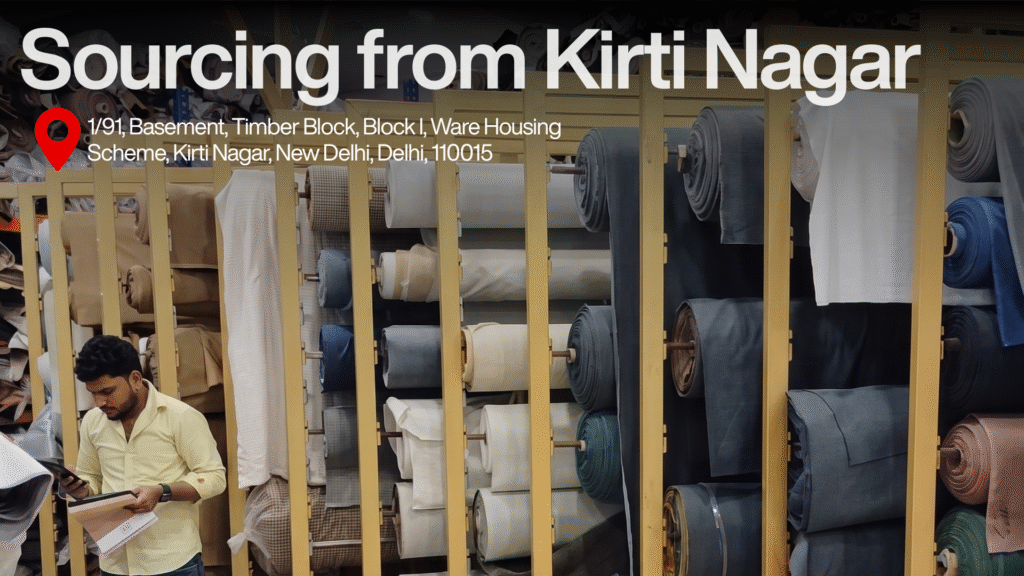
For buyers who can conduct in-person visits, Delhi’s Kirti Nagar is one of India’s most significant hubs for rexine, upholstery fabrics, and synthetic leather. The concentration of suppliers, wholesalers, and direct manufacturers within a compact area allows serious buyers to compare grades, prices, and service standards within a single visit.
The Trade-Offs of a High-Density Market
| Factor | Opportunity | Risk |
|---|---|---|
| Market density | Easy side-by-side comparison of grades and pricing | Difficult to distinguish manufacturers from middlemen |
| Competition | Keeps established suppliers accountable on quality | Market saturation incentivises shortcuts among less reputable sellers |
| Stock volume | Wide range of materials, colours, and finishes available | Inconsistent quality if the supplier lacks production controls |
Why Direct Manufacturers Outperform Traders
When sourcing at significant scale, direct manufacturers are consistently safer partners than intermediary traders. A middleman typically lacks visibility into the production chain, meaning they often cannot verify the specifications of what they are selling, let alone guarantee consistency across reorders.
Established manufacturers, particularly those with long, documented presence in hubs like Kirti Nagar, offer something that traders cannot replicate: institutional knowledge, direct production accountability, and a brand reputation they have real incentive to protect.
Run the criteria above against the market, and a short list of manufacturers emerges quickly. Abbott Fab, for instance, has operated from 1/91, Basement, Timber Market, Kirti Nagar, Delhi, since 1990 the kind of unbroken, single-location tenure that’s hard to fake and harder still for a newer or purely trading entity to match.
Strategy for Market Visits
- Ask directly whether the company owns production facilities or sources from a third party.
- Apply your physical tests on-site; do not accept verbal assurances in place of the crease, scratch, and stretch tests.
- Prioritise longevity: a business with a stable, long-standing address in a competitive market has earned its presence there.
Red Flags: Warning Signs That Should Stop a Deal
Experience in industrial textile procurement reveals consistent patterns that indicate a supplier is likely to create downstream problems. Treat any of the following as grounds for significant caution:
| Warning Sign | Why It Matters |
|---|---|
| Unable to provide technical data | Materials are not systematically tested; consistent supply is not possible |
| Sample-to-shipment mismatch | The most common bait-and-switch in wholesale leads to immediate production rejection |
| Opaque raw material sourcing | Rotating inputs based on spot-market pricing creates unpredictable quality variation |
| Pricing significantly below market | Signals compromise in material construction that will eventually manifest as product failure |
| Vague or absent after-sales terms | Indicates the supplier expects you to absorb the cost of their manufacturing errors |
| Defensive response to technical questions | A supplier who cannot answer basic questions about their product is not equipped to support a professional supply chain |
Never be reluctant to walk away from a deal if direct questions are met with evasion. Your goal is a reliable, transparent supply chain, not a one-time transaction.
The Complete Buyer's Evaluation Checklist
Use this checklist during supplier visits and negotiations. A professional supplier will engage with these questions openly; a problematic one will treat them as an inconvenience.
Technical & Material Specifications
- [ ] Have you received written confirmation of whether the material is PVC or PU?
- [ ] Can the supplier provide a TDS with base fabric GSM, coating thickness, and total thickness?
- [ ] Are you comparing prices based on identical specifications?
Sample Testing
- [ ] Have you received full-sized samples?
- [ ] Crease test: no white lines or cracking?
- [ ] Scratch test: no surface lifting under moderate pressure?
- [ ] Stretch test: stable tension and recovery?
- [ ] Water test: water beads without absorption?
- [ ] Climate test (automotive/outdoor use): remains supple after 30 minutes in a refrigerator?
Batch Consistency and Reliability
- [ ] Does the supplier provide dye-lot numbers with every consignment?
- [ ] Can they guarantee future batches will match the current approved sample?
- [ ] Is the warehouse organised, labelled, and inventory-tracked?
Supplier Expertise and Partnership Quality
- [ ] Can the supplier provide specific examples of their material in your industry?
- [ ] Is there a documented dispute resolution process?
- [ ] Did the supplier answer all technical questions without evasion or deflection?
Red Flag Audit
- [ ] Is pricing realistically aligned with market standards?
- [ ] Is the supplier transparent about raw material sourcing?
- [ ] Will they notify you of stock shortages before substituting?
Conclusion: Buy on Specification, Not on Price
The wholesale rexine market in India offers genuine value across every segment of the quality spectrum, but only for buyers who know exactly what they are purchasing. The difference between a supplier relationship that fuels growth and one that generates costly failures is almost always established before the first purchase order is signed.
The buyers who avoid expensive sourcing mistakes share a common discipline: they prioritise specification over price, test rigorously before committing to volume, and choose suppliers who treat transparency as a business value rather than an inconvenience.
The framework in this guide will not eliminate risk. But it will help you ask the right questions, interpret the answers accurately, and build the kind of supply chain that protects your finished product quality and your reputation with clients.
Frequently Asked Questions
Rexine is a coated synthetic fabric manufactured by applying a PVC or PU layer to a woven or knitted base textile. Unlike genuine leather, it is made from synthetic materials, which makes it significantly more affordable, easier to clean, and more consistent in texture. However, it varies widely in quality depending on the formulation of the coating and the weight of the base fabric.
PVC (polyvinyl chloride) rexine is stiffer, more abrasion-resistant, and less expensive. It is suited to high-utility applications where budget is a primary concern. PU (polyurethane) rexine is softer, more breathable, more flexible, and ages more gracefully. It is the preferred material for premium upholstery, automotive interiors, and fashion accessories. The two materials are not interchangeable; selecting the wrong type for your application is one of the most common sourcing errors in wholesale buying.
Premature delamination or cracking is almost always caused by one of two problems: a poorly formulated coating (caused by low-quality chemical compounds or improper curing during manufacture) or a structural mismatch between a dense coating and an undersized base fabric. Both failures become visible under environmental stress, particularly the heat and UV exposure common in Indian summers.
GSM stands for Grams per Square Meter, and it measures the weight and density of the base fabric beneath the synthetic coating. A higher GSM indicates a heavier, more structurally stable foundation. For standard upholstery applications, a GSM range of 180–280 is typical. Lower-weight fabrics reduce manufacturing costs but compromise the structural integrity of finished products.
Not reliably. Two materials can have nearly identical surface feel but dramatically different performance characteristics due to hidden variables: the chemical formulation of the coating, the GSM of the base fabric, and the curing process used in manufacture. Always request a Technical Datasheet and run physical field tests before making a volume commitment.
The crease test involves folding a rexine sample firmly and holding it for 10 seconds. If white lines or cracks appear at the fold, the coating is brittle, typically the result of excessive filler content or incomplete curing. This is one of the fastest ways to identify material that will fail in daily-use applications.
Batch-retained samples are labelled swatches kept by the supplier from the specific production batch shipped to you. If a quality dispute arises later, both parties can refer to the same physical reference point to determine whether the fault lies in manufacture or in handling and storage. For large-volume orders, insisting on this practice significantly simplifies quality dispute resolution.
Manufacturers have direct visibility into and control over their production process, material specifications, and quality protocols. A trader or middleman typically lacks this visibility, which makes it difficult to guarantee consistency across large or repeat orders, and limits their ability to troubleshoot quality issues when they arise.
Ask your supplier specifically about their dye-lot control system and colour calibration protocols. A professionally run supplier will provide a dye-lot number with every consignment and maintain reference samples that allow future batches to be matched to the approved standard. Without these systems, colour and texture variation across reorders is difficult to prevent or verify.
For small or low-risk orders, it may not be essential. For large-scale production where material consistency is critical, a site visit is strongly recommended. It allows you to verify the scale and organisation of the operation, observe inventory management practices, and confirm whether the supplier is a direct manufacturer or an intermediary, none of which is fully verifiable remotely.
The standard industry width in India is 54 inches (approximately 137 cm). Custom widths such as 60 or 72 inches are available from some suppliers but require explicit verification of dimensional consistency, as variation in roll width directly affects pattern cutting accuracy and fabric waste.
Investigate before you proceed. In the rexine market, manufacturing costs across the supply chain are relatively transparent. A significantly below-market quote almost always reflects a compromise in material construction: a thinner coating, a lower-grade PVC compound, or a lighter base fabric. Request full technical specifications alongside the quote, and run the physical tests on samples before committing to volume.