How to Maintain Rexine Furniture During the Festive Season

Key Takeaways
- How to maintain rexine furniture: dust weekly, wipe gently with a damp cloth and mild soap, dry it, and follow your care label.
- PVC, PU, textured, and light-coloured rexine need different care, so no single cleaning method suits every sofa.
- For spills, lift solids, blot without rubbing, and clean with mild lather straight away, because delays can leave permanent stains.
- Avoid abrasives, solvents, floor cleaners, bleach, and alcohol unless your maker approves them, and patch test any new cleaner first.
- Keep diyas, candles, incense, hot dishes, and room heaters well away from rexine; direct heat and flames can permanently melt its coating.
- Zari, sequins, metal clasps, keys, and pet claws can leave permanent scratches, so cover busy seats with a washable, colourfast throw.
- After the festivities, clean off body oils and food residue, check seams and armrests for cracks, and repair small damage while it’s still fixable.
During festive weeks, the living room sofa rarely gets a break. Guests stay longer, plates of mithai and namkeen land on cushions, diyas flicker nearby, and the same seats stay occupied from morning to midnight.
Rexine handles much of this well because its coated surface resists liquids and wipes clean. That coating is also the part that needs protecting, and the wrong cleaner or heavy scrubbing can damage it.
The short answer: to maintain rexine furniture during the festive season, dust it regularly, clean it with a soft cloth and mild soapy water, blot spills at once, avoid harsh chemicals and abrasives, and keep it away from heat and sharp edges. After the celebrations, give it a gentle full clean and check it for damage. Your furniture maker’s care instructions always take priority over general advice, including this guide.
How to Clean Rexine Furniture Before the Festive Season
Clean your rexine furniture a day or two before guests arrive: remove dust first, wipe with a barely damp cloth and mild soap, rinse off the residue, and pat the surface dry. The extra day gives seams and crevices time to dry fully.
Check your care label and material first
Rexine is the everyday Indian term for artificial leather. It began as the trade name of one brand and became a general word for artificial leather in several parts of the world (Speciality Fabrics Review). Most rexine is a textile base with a PVC or PU coating, and the two behave differently, as this guide to rexine types, grades, and uses explains.
Look for a care tag under the seat cushions, in the product manual, or on your invoice. Some upholstery materials carry a cleaning code, such as W for water-based cleaners or W-S for water- or solvent-based cleaners.
If there’s no label, ask the shop or upholsterer whether the rexine is PVC or PU and how they recommend cleaning it. Coated-fabric supplier Mayer Fabrics states that when a cleaner isn’t listed for one of its materials, that material hasn’t been tested with it. Apply the same logic at home.
How care differs by rexine type and finish
Rexine type or finish | What to know | Care adjustment |
PVC rexine | Highly water-resistant and comparatively stiff; relies on plasticisers for flexibility | Keep it out of prolonged direct sun and away from solvents and harsh chemicals |
PU rexine | Softer and more breathable; lower-grade PU can break down in heat and humidity | Keep it dry and ventilated; condition it only if your maker recommends a product |
Embossed or textured grain | Dirt settles into the grain | Use a soft brush with mild lather, never a hard-bristle brush |
White, cream, or beige | Ink and dye transfer may never fully come out | Use throws during gatherings and treat marks immediately |
Metallic or fancy finishes | Less durable under heavy use than standard grades | Patch test every cleaner and wipe with minimal pressure |
How to clean a rexine sofa at home, step by step
- Remove dust and debris. Use a vacuum with a soft brush attachment or a dry microfibre cloth. Pay attention to creases, folds, and the gaps between cushions, where dust tends to hide.
- Make a light lather. Add a few drops of mild, neutral soap to warm water and whisk it. Many makers, including HON, Musterring, and Rowico, recommend mild soap and water. Not all do: Warwick advises against detergent-based cleaners on its marine-grade faux leather, so check your label.
- Apply it to the cloth, not the sofa. Dip a microfibre cloth in the lather and wring it well. Toyota’s care guidance for synthetic leather seats also advises applying cleaners to the cloth rather than directly to the surface.
- Wipe one section at a time. Use light pressure. On textured rexine, a soft brush helps lift dirt from the grain. Don’t let water collect along seams or piping.
- Rinse off the soap. Go over each section with a second cloth dampened in clean water. Geiger notes that leftover cleaning residue can attract soil over time.
- Pat it dry. Use a soft, dry towel. German furniture maker Musterring advises patting synthetic leather dry and never rubbing it forcefully.
Clean armrests and headrests first
Armrests, headrests, and seat fronts collect the most sweat, hair oil, and body lotion. Musterring notes that sweat, lotions, and grease can damage synthetic leather if they aren’t removed. Start with these zones so the sofa enters the festive weeks on a clean base.
How to Remove Food and Drink Spills from Rexine Furniture
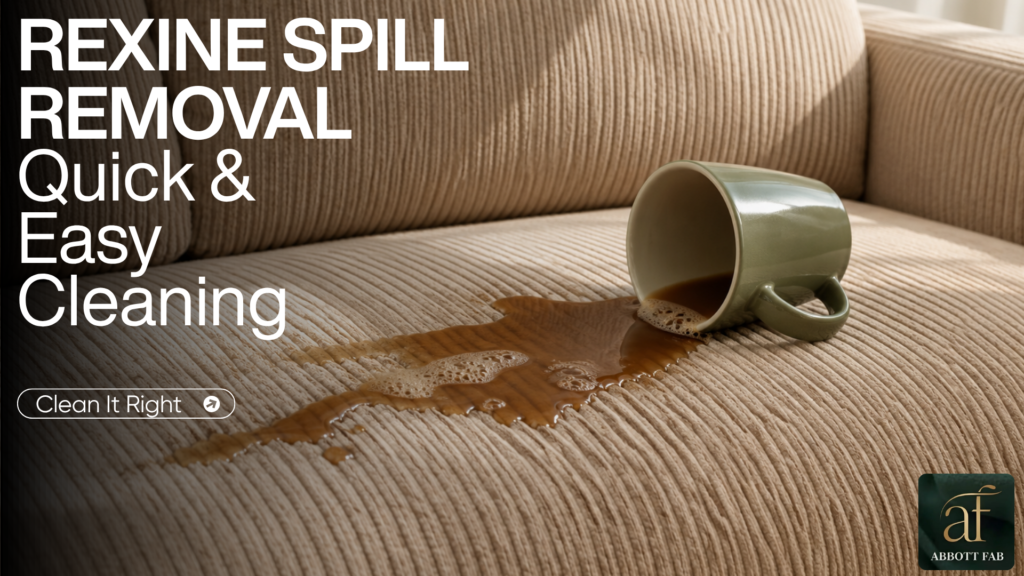
To remove a spill from rexine, lift off any solids, blot the liquid without rubbing, clean the remaining mark with mild soapy lather, rinse, and dry. Speed matters more than the cleaner you choose. HON warns that delays in cleaning can lead to permanent staining or damage to vinyl, and Wolf Gordon notes that food and drink left for long periods can cause lasting marks and surface cracks.
What to do the moment something spills
- Lift solids such as sweets, chutney, or crumbs with a spoon or a blunt plastic edge. Work from the edge of the mess toward the centre so it doesn’t spread.
- Blot liquids with an absorbent cloth or paper towel. Press down; don’t rub.
- Clean the remaining mark with a cloth dipped in mild soapy lather. Several light passes are gentler than one heavy application, as Geiger’s guidelines point out.
- Wipe with a clean damp cloth, then pat dry.
How to remove common festive stains from rexine
These methods suit sealed rexine surfaces. Where your furniture’s care instructions differ, follow them instead.
Festive stain | What to do | What to avoid |
Tea, coffee, cold drinks, sharbat | Blot at once, then clean with mild lather, rinse, and dry | Letting it dry before you deal with it |
Oily snacks, pakoras, ghee-rich sweets | Lift the residue, then clean with mild lather; repeat gently if needed | Kitchen degreasers and floor cleaners |
Curries, chutneys, and strongly coloured food | Scoop off solids, blot, and clean straight away, especially on light rexine | Rubbing, which spreads colour into the grain |
Sugar syrup from gulab jamun or jalebi | Wipe with warm, mildly soapy water, then rinse until no sticky film remains | Leaving a tacky layer that holds dust |
Diya oil | Blot immediately, then treat it like any grease mark | Wiping with a wet cloth first, which spreads it |
Candle or diya wax | Harden it with ice sealed in a plastic bag, then ease it off with a blunt plastic edge | The iron-and-paper trick or a hair dryer |
Ink, sketch pens, crayons | Clean straight away with mild soap on a soft cloth | Alcohol or nail polish remover, unless your care label approves them |
Colour transfer from new clothes or cushion covers | Treat immediately with mild soapy foam | Waiting, which gives the dye time to set |
Rowico advises protecting faux leather from grease, fried food, and food residue. The ice method for waxy or gummy residue appears in both Geiger’s guidelines and HON’s vinyl care instructions. Avoid heat on wax: it can melt rexine’s coating, as the heat section below explains.
On white, cream, or beige rexine, prevention matters more than cleanup. Wolf Gordon notes that ink, permanent marker, denim, and other textile dyes may be difficult or impossible to remove from light-coloured vinyl.
When to stop and get help
If two or three gentle attempts don’t shift a mark, stop. Toyota’s guidance warns that abrasive cleaning removes the protective top coat that helps synthetic leather resist stains and dye transfer. Check your manufacturer’s instructions or ask a professional upholstery cleaner before trying anything stronger.
Which Cleaning Products Should You Avoid on Rexine?
Avoid anything abrasive, solvent-based, or designed for hard surfaces, along with products made for genuine leather. Treat bleach and alcohol as off-limits unless your furniture maker specifically approves them for your material.
- Abrasive tools: scouring pads, steel wool, hard-bristle brushes, scouring powders, and paste cleaners. HON warns against abrasives and hard-bristle brushes on vinyl, Toyota rules out brushes and steel wool on synthetic leather seats, and Warwick excludes abrasive powders and paste cleaners.
- Solvents: acetone, nail polish remover, paint thinner, kerosene, and petrol, unless your care instructions name one for a specific stain. Musterring states that solvent-based cleaners can damage synthetic leather, and harsh chemicals can strip the plasticisers that keep PVC rexine flexible, leaving it brittle and prone to cracking.
- Hard-surface and alkaline cleaners: floor cleaners, bathroom sprays, glass cleaners, and household disinfectants. Musterring notes that hard-surface and alkaline cleaners can damage synthetic leather, even when they seem to work at first. Mayer Fabrics points out that most disinfectants are designed for hard surfaces such as ceramic and steel.
- Products for genuine leather: leather conditioners, oils, wax polish, shoe polish, and body lotion. Both Musterring and Rowico advise against leather care products on synthetic leather.
- Silicone sprays, steam, and hot-water extraction: Warwick warns against silicone-based cleaners and hot-water extraction machines on its faux leather. Keep steam away from rexine unless your manufacturer approves it.
Why cleaning advice for rexine often conflicts
Some online guides recommend rubbing alcohol for ink stains; others forbid it. Both can be correct, because they describe different materials.
HON’s vinyl care page shows this clearly. The same manufacturer approves isopropyl alcohol for stubborn stains on one vinyl line and says never to use alcohol-based cleaners on another. Mayer Fabrics’ lab-tested cleaner list for a single vinyl rates most disinfectants as safe but marks several as causing severe changes to colour or finish.
Some home furniture makers are stricter still. Rowico tells owners of its PU furniture not to use alcohol, and Abbottfab’s own rexine care guidance lists isopropyl alcohol and bleach among products never to use.
The practical rule: approval for one tested material doesn’t carry over to your sofa. If your care instructions don’t name a cleaner, don’t use it.
How to patch test a cleaner
Choose a hidden spot covered in the same rexine, such as the back of the sofa near the floor. Apply a small amount of the cleaner, leave it for a few minutes, wipe it off, and let the area dry.
Then check for fading, dulling, or other damage, following Wolf Gordon’s pre-test method. Stickiness or a change in texture is also a warning sign. If anything looks different, don’t use that cleaner.
How to Protect Rexine Furniture During Festive Gatherings

To protect rexine furniture during festive gatherings, keep food and heat at a distance, cover the busiest seats with a suitable throw, and watch for sharp or rough edges on clothes and accessories.
Plan the room before guests arrive
- Place side tables or trays within easy reach so plates and cups don’t rest on cushions or armrests.
- Keep a small spill kit near the seating: two microfibre cloths, paper towels, and a bowl of clean water. Rowico advises wiping liquid spills from faux leather immediately.
- Move rangoli making, card painting, and other craft activities away from the sofa, especially when children are using sketch pens or markers.
If you’re rearranging the living room for the festivities, decide where diyas, candles, and lights will sit before you finalise the layout. This room-by-room Diwali decor guide can help with the styling side.
Keep heat and flames at a safe distance
Diyas, candles, incense sticks, hot tea glasses, and serving dishes straight off the stove all bring heat close to the sofa during festivals. No grade of rexine resists direct heat, and hot utensils and open flames can permanently melt its coating.
Warwick recommends keeping its faux leather at least 30 cm from direct heat sources. Treat that as a minimum, keep open flames well beyond it, and never rest a lit diya on an armrest or backrest, even briefly.
Use throws, but choose them carefully
A washable cotton throw or slipcover on the busiest seats takes the brunt of crumbs, spills, and friction. Two precautions apply:
- Check new throws and cushion covers for colour bleed, especially on light rexine. Musterring notes that colourful cushions, blankets, and clothing can transfer colour onto synthetic leather. Rub a damp white cloth on a hidden corner of the cover; if colour comes off, keep it off the sofa.
- Don’t leave plastic sheets on for weeks. They can hold heat and moisture against the surface, and heat combined with humidity is what breaks down weaker PU coatings.
Choosing new covers for the season? This cushion fabric guide compares materials for comfort and durability.
Guard against scratches from clothing, accessories, and pets
Festive outfits often carry zari, sequins, beads, and metal hooks. Musterring warns that rough fabrics, clothing fasteners, and sharp edges can damage the protective surface of synthetic leather. Deep scratches through rexine’s coating can’t be removed by cleaning or polishing.
Put a throw on seats where guests in heavily embellished clothing are likely to sit. Keep handbags with metal studs or clasps off the cushions, and set out a bowl near the entrance for keys. If you have pets, trim their claws before the festivities and give them their own blanket or bed.
Spread the wear across seats
Discourage sitting on armrests and standing on seats, especially by children. Musterring notes that excessive stretching at stress points can damage synthetic leather. If your seat cushions are reversible, flip and rotate them between gatherings so no single seat takes all the wear.
How to Prevent Rexine from Cracking, Peeling, or Losing Its Finish
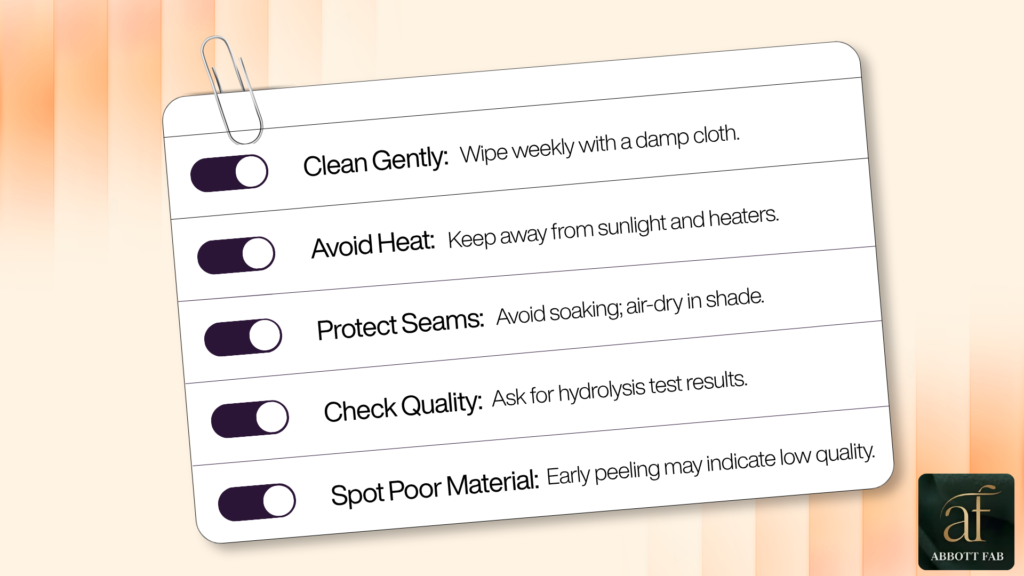
You can slow cracking and peeling, but you can’t prevent them entirely. How long rexine lasts depends heavily on its coating, base fabric, and grade. Good care protects what the material is capable of; it can’t add durability the material never had.
Clean regularly, but gently
Body oils, sweat, and food residue left on the surface contribute to breakdown over time. Warwick adds that a dirty surface encourages mildew growth. A weekly dust and damp wipe does more good than an occasional heavy scrub.
Limit sunlight and heat
Prolonged direct sun can fade rexine and crack PVC coatings. When you move furniture around for guests, avoid leaving the sofa in a sunny window spot for weeks, and draw the curtains during the harshest hours of the day.
The same caution applies once winter sets in and room heaters come out. Rowico advises against placing faux leather furniture near or against a heat source. Point heaters away from upholstery and follow the heater manufacturer’s clearance guidance.
Keep moisture away from seams
Rexine’s surface resists water, but stitched seams and needle holes can let moisture through to the padding underneath. Warwick advises against wetting faux leather excessively, especially around seam edges, and recommends drying it in shade, away from direct heat. Never use a hair dryer to speed things up.
Why PU rexine peels in hot, humid weather
In hot, humid conditions, PU made with inexpensive resin systems can break down prematurely. The coating cracks, peels, and separates from its backing (Mitchell Faux Leathers). Ventilation and dry surfaces help, but most of this resistance is decided when the material is made.
If you’re buying PU rexine for a new sofa or reupholstery, ask the supplier for hydrolysis test results. Mitchell names ISO 1419 (the “tropical test”) and ASTM D3690 as the accepted methods. It notes that residential upholstery is generally expected to survive at least three weeks in the ISO test chamber, and that test weeks don’t convert into years of real-world life.
When cracking points to the material, not your care
If your rexine cracked or peeled within a couple of years, the cause may be a thin coating or weak bonding rather than poor care. Abbottfab’s rexine guide notes that economy grades can start cracking and peeling within two to three years in high-friction conditions. Before your next purchase, these checks for testing rexine quality before buying can help you avoid weak material.
What to Do After the Festive Season
Once the last guests leave, give your rexine furniture a full but gentle clean, inspect it closely, and let it dry properly before returning to a normal routine.
- Clear the crevices: Remove loose cushions and vacuum the seams, corners, and gaps for crumbs, sweet residue, rangoli powder, and glitter.
- Inspect in good light: Check armrests, seat fronts, piping, seams, and corners for scratches, cracks, peeling, sticky patches, or colour transfer.
- Clean the whole surface: Use the mild soap method described earlier, spending extra time on armrests and headrests, where body oils build up after weeks of heavy use.
- Dry it properly: Pat the surface dry, then let it air-dry in a ventilated room, away from heaters and direct sun. Remove throws and covers so nothing sits on the surface while it’s still damp.
- Condition only if your maker recommends it: Rowico suggests a care product made for artificial leather two to four times a year. Abbottfab’s rexine guide suggests a synthetic leather conditioner for PU rexine every 6 to 12 months. If your care instructions don’t mention conditioning, skip it.
- Repair small damage early: Minor surface cracks and small punctures can often be fixed with PVC repair kits or colour-matched liquid compounds. Large areas of peeling usually mean the coating has failed. If you’ve reached that point, this sofa reupholstery guide covers costs, frame checks, and the material specs worth checking.
- Return to a simple routine: Dust and damp-wipe weekly, blot spills as they happen, and keep the furniture out of strong sun and away from heaters.
- Clear the crevices: Remove loose cushions and vacuum the seams, corners, and gaps for crumbs, sweet residue, rangoli powder, and glitter.
Common Rexine Furniture Care Mistakes to Avoid
Many avoidable problems start with well-meant cleaning habits. These are the ones worth breaking.
Mistake | Why it causes problems | Do this instead |
Using one online cleaning hack on every rexine sofa | A cleaner approved for one tested material can damage another | Follow your care label and patch test anything new |
Scrubbing harder when a stain won’t lift | Friction wears away the protective top coat | Stop after a few gentle attempts and get expert advice |
Choosing a floor or bathroom cleaner because it seems stronger | Hard-surface cleaners can harm synthetic leather over time | Stick to mild soap and water, or your maker’s approved cleaner |
Spraying cleaner straight onto the sofa | Liquid concentrates in one spot and runs into seams | Apply cleaner to the cloth first |
Removing wax with an iron or hair dryer | Heat can melt the coating | Harden the wax with sealed ice, then lift it off |
Treating rexine like real leather | Leather conditioners and oils aren’t made for synthetic coatings | Use only synthetic leather products your maker approves |
Drying the sofa next to a heater | Direct heat accelerates damage | Air-dry in a ventilated room, out of direct sun |
Leaving a plastic cover on for weeks | It holds heat and moisture against the surface | Use a breathable, washable throw |
Ignoring a small crack | Small damage is often repairable; widespread peeling usually isn’t | Repair it early with a suitable kit |
Three Habits That Keep Rexine Looking Good
Caring for rexine through the festive season comes down to three habits: clean gently, deal with spills quickly, and keep heat and sharp edges away. The cleaner you choose and how hard you scrub matter as much as how careful your guests are.
Before your first guests arrive, do three things. Find your sofa’s care instructions, or ask the seller whether the rexine is PVC or PU. Patch test the mild soap solution you plan to use. Then set up a small spill kit beside the seating, so the first spill gets blotted in seconds rather than minutes.
If your sofa is already past repair, or you’re choosing material for new upholstery, this comparison of fabric vs rexine sofas explains the trade-offs, and you can browse Abbottfab’s rexine range for furnishing options.
Frequently Asked Questions
Yes, with a damp cloth. A well-wrung cloth with mild soap is the standard way to clean most rexine, because its coated surface resists water. Don’t pour water on it or soak it, since seams and needle holes can let moisture into the padding. Dry the surface afterwards.
Not unless your furniture maker approves it. Musterring warns that floor and plastic cleaners can look effective at first but damage synthetic leather over time. Mayer Fabrics advises that any disinfectant residue on seating be rinsed off with clean water, because leftover chemicals can eventually discolour or degrade the surface.
Neither is a safe default. Musterring warns that alkaline and abrasive cleaners can damage synthetic leather, and baking soda is mildly alkaline and slightly gritty. Vinegar is acidic, and home remedies haven’t been tested on your sofa’s coating. Use either only if your care instructions list it.
No. Conditioners, oils, and polishes for genuine leather are made for natural hides, not synthetic coatings, and makers such as Musterring and Rowico advise against them. Some manufacturers recommend a care product designed specifically for synthetic leather, so use one only if your furniture maker suggests it.
A weekly dust and damp wipe suits most homes, with spills blotted as soon as they happen. During festive weeks, add a quick wipe of armrests and seat fronts after each large gathering, and a full gentle clean once the season ends.
Peeling means the coating is separating from its fabric base. Common causes include a thin or weakly bonded coating, prolonged heat or sun, harsh cleaners, and, in PU rexine, breakdown under heat and humidity. Cleaning can’t reverse it. Small areas can sometimes be patched, but widespread peeling usually calls for reupholstery.
Blot fresh oil with a dry cloth or paper towel, then wipe the mark with a cloth dipped in mild soapy lather and rinse with a clean damp cloth. Repeat with a few light passes rather than one hard scrub. Avoid kitchen degreasers and floor cleaners, and dry the area fully once the mark lifts.
Act quickly and start with mild soap on a soft cloth. Some makers, such as HON, approve diluted rubbing alcohol for ink on specific vinyl lines, while others, including Rowico for its PU furniture, rule out alcohol entirely. Use it only if your care label allows it, and patch test first. On light-coloured rexine, Wolf Gordon notes that ink may never come out fully.
Not unless your manufacturer approves it. Direct heat can permanently damage rexine’s coating, and Warwick rules out hot-water extraction machines on its faux leather. Geiger’s upholstery guidelines also note that heat can set stains. A damp microfibre cloth with mild soap is the safer option.
It can, especially when dirt builds up. Warwick notes that a dirty surface encourages mildew growth on its faux leather. Clean regularly, dry the surface fully after wiping, keep the room ventilated, and don’t leave damp throws or plastic covers on the sofa.