Cushion Fabric Guide: How to Choose the Right Material for Comfort & Style
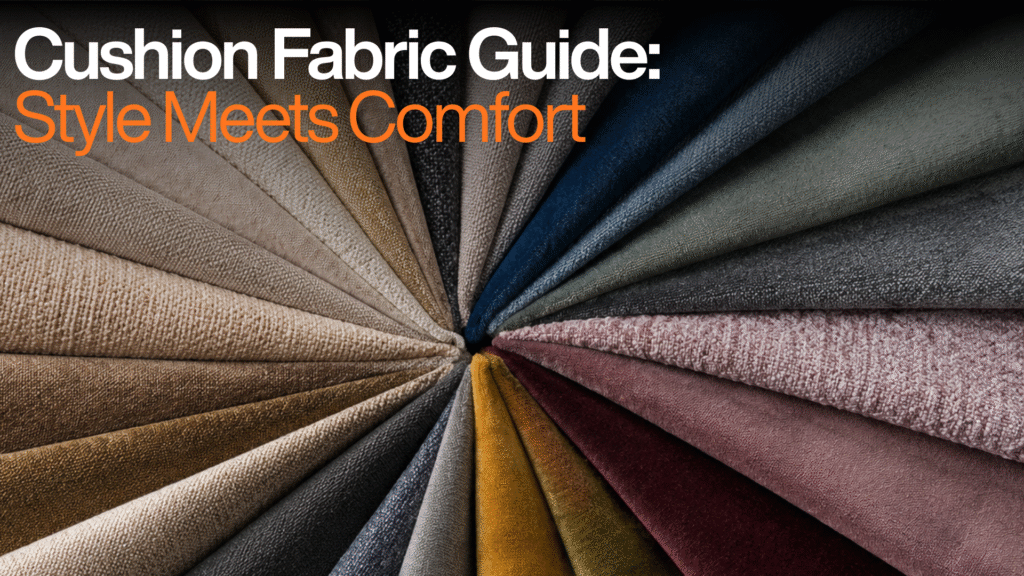
The fabric on your cushion does more work than almost any other surface in your home. It absorbs sunlight, body oils, food spills, pet claws, and the daily friction of being sat on, leaned on, and tossed across the room. Get the choice right, and your cushions stay beautiful for a decade. Get it wrong,, and you’ll see pilling, fading, and sagging within months.
This cushion fabric guide is built to prevent that second outcome. We’ll cover the ten most important cushion material types, how to read durability ratings, which fabrics survive kids and pets, what works outdoors versus indoors, and how to match fabric to room, budget, and aesthetic. Every recommendation here is grounded in textile properties weave structure, fibre composition, abrasion ratings rather than vague style talk.
By the end, you’ll know exactly how to choose cushion fabric that fits your life, not just your mood board.
Quick Answer: What Is the Best Fabric for Cushions?
The best fabric for cushions is performance polyester or microfiber for everyday indoor use, solution-dyed acrylic for outdoor cushions, and cotton or linen for low-traffic decorative pieces. Choose based on durability (Martindale 20,000+ rubs for daily use), maintenance needs, and the room’s traffic level. Velvet adds luxury, while wool and silk suit decorative-only settings.
Cushion Fabric Comparison Table
| Fabric Type | Softness | Durability | Maintenance | Best For |
|---|---|---|---|---|
| Cotton | High | Medium–High | Easy (machine wash) | Living rooms, kids’ rooms |
| Linen | High | Medium | Moderate (often dry clean) | Bedrooms, decorative cushions |
| Velvet | Very High | Medium–High | Moderate (brush, spot-clean) | Formal rooms, accent pieces |
| Polyester / Microfiber | High | Very High | Easy (machine wash) | Family rooms, pet households |
| Chenille | Very High | High | Moderate | Cozy living rooms, reading nooks |
| Faux Suede | Very High | High | Easy | Contemporary interiors |
| Wool | Very High | High | Low (dry clean) | Bedrooms, cool climates |
| Silk | Very High | Low | Low (dry clean only) | Decorative display only |
| Leather / Faux Leather | Medium | Very High | Easy (wipe clean) | Modern rooms, pet households |
| Canvas | Medium | Very High | Easy (scrub clean) | Outdoor, heavy-use areas |
| Solution-Dyed Acrylic | High | Very High | Easy | Premium outdoor cushions |
| Olefin (Polypropylene) | Medium | High | Easy | Budget outdoor cushions |
How to Read a Fabric's Durability Rating: The Martindale Test
Before we get into specific fabrics, you need one number on your radar: the Martindale rub count. It’s the international standard for measuring how much abrasion a fabric can withstand before it breaks down.
In the test, a swatch of fabric is rubbed in a circular motion under controlled pressure (typically 12 kPa, mimicking the weight of a person sitting). The machine counts cycles until the fabric pills, thins, or breaks. That final number is the durability rating.
Martindale rating guide
| Rub Count | Recommended Application |
|---|---|
| Under 10,000 | Decorative only accent cushions, headboards, drapery |
| 10,000 – 15,000 | Light domestic guest rooms, occasional seating |
| 15,000 – 25,000 | General domestic everyday living room cushions |
| 25,000 – 30,000 | Heavy domestic daily-use sofas in busy households |
| 30,000+ | Extra heavy duty homes with pets, children, or commercial settings |
Rule of thumb: If a salesperson can’t tell you the Martindale rating, treat the fabric as decorative-only until proven otherwise.
Cushion Material Types: A Complete Breakdown
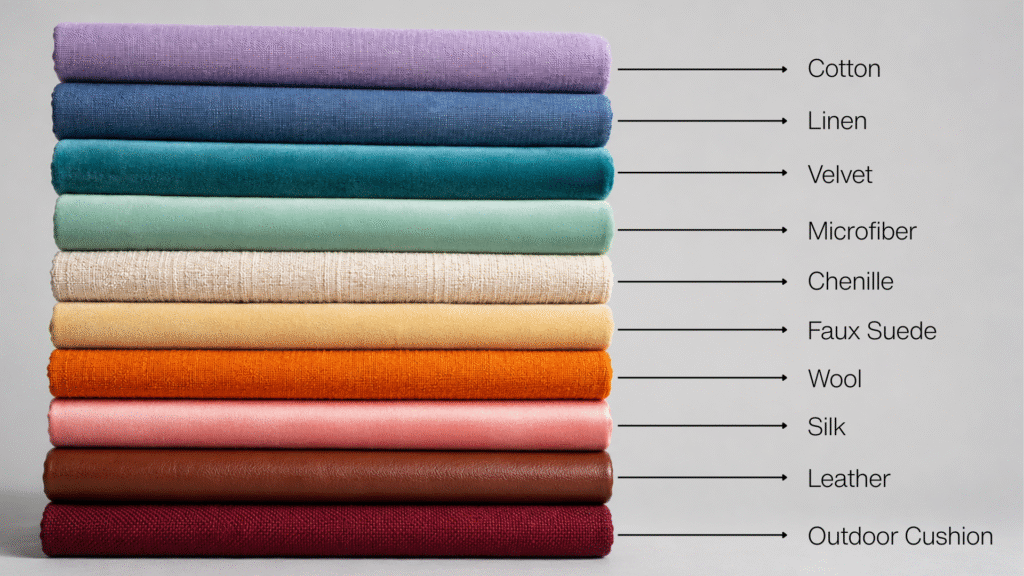
1. Cotton: The Everyday Workhorse
Cotton is the default cushion fabric for a reason. It’s a natural fibre that breathes well, feels soft against skin, takes dye beautifully, and is generally machine washable. Tightly woven cotton (think duck canvas or sateen) with a stain-resistant finish can comfortably handle daily living room use.
The catch is that untreated cotton stains easily and can fade in direct sun. Weave quality matters enormously a loose plain weave will pill far faster than a tight twill.
Pros: Breathable, soft, hypoallergenic, washable, affordable, takes prints well
Cons: Stains without treatment, fades in UV, can shrink if washed hot
Best for: Living rooms, children’s bedrooms, casual interiors, hot climates
Maintenance: Cool gentle wash, line dry in shade. Apply fabric protector for high-traffic use. Decor styles: Farmhouse, coastal, Scandinavian, transitional, eclectic
2. Linen: Relaxed Elegance with Real Substance
Linen is woven from flax fibres and has a distinctive textured, slightly nubby surface that softens with every wash. It’s exceptionally breathable, naturally moisture-wicking (it can absorb up to 20% of its weight in moisture before feeling damp), and resists mildew and pilling.
Linen wrinkles there’s no avoiding it which is part of its lived-in charm but also why it’s better suited to decorative cushions than hard-used seat cushions. It tends to soften with age and use, which is unusual for a cushion fabric.
Pros: Breathable, naturally textured, mildew-resistant, gets softer over time, eco-friendly
Cons: Wrinkles readily, can shrink, often requires dry cleaning, mid-range durability
Best for: Bedroom cushions, decorative arrangements, sunrooms, coastal interiors Maintenance: Hand wash or dry clean. Iron on the reverse while slightly damp if you need a crisper look.
Decor styles: Scandinavian, Japandi, farmhouse, modern coastal, French country
Cotton vs linen cushions which wins?
Cotton is more durable and easier to wash, making it the better everyday choice. Linen has a more refined texture and natural drape, making it ideal for decorative cushions and bedrooms. For high-traffic seating, choose cotton. For style-forward accent pieces, choose linen.
3. Velvet: Luxury You Can Feel
Velvet’s signature pile catches light like no other fabric, creating depth and drama. Modern velvet cushion covers are typically made from cotton, polyester, or a cotton-polyester blend rather than silk. Performance velvet a polyester-based version with added stain resistance is the practical choice for living rooms, while cotton velvet feels softer underfoot but stains more readily.
The two main downsides are crushing (heavy items flatten the pile permanently) and dust attraction. Both are manageable with regular brushing and a soft-attachment vacuum.
Pros: Rich appearance, exceptional colour depth, soft hand-feel, performance versions are durable
Cons: Pile flattens under pressure, attracts pet hair, shows water marks
Best for: Formal living rooms, primary bedrooms, accent chairs, statement cushions Maintenance: Brush gently in the direction of the pile. Blot never rub spills immediately. Steam to lift crushed areas.
Decor styles: Art Deco, maximalist, traditional, modern glam, mid-century modern
4. Polyester & Microfiber: The Practical Performers
Polyester is the most versatile synthetic in modern upholstery, and microfiber (a finer-filament version) takes its strengths further. Both are durable, colourfast, resistant to stretching, and typically washable. Modern performance polyester is engineered with stain-repellent and water-repellent finishes that make it ideal for families.
Microfiber, in particular, has a soft suede-like hand-feel that makes it surprisingly comfortable for a synthetic. The global furniture performance fabric market reflects this shift it was valued at around USD 1.8 billion in 2023 and is projected to roughly double by 2032 as more households prioritise easy-care textiles.
Pros: Highly durable, stain-resistant, fade-resistant, affordable, machine washable, huge colour range
Cons: Less breathable than natural fibres, can develop static, lower-grade versions can feel synthetic
Best for: Family living rooms, kids’ rooms, pet-friendly homes, rentals, sunrooms
Maintenance: Machine wash cool, tumble dry low. Most performance versions tolerate weekly washing.
Decor styles: Modern, contemporary, transitional, mid-century, casual
5. Chenille: Soft Texture That Wears Well
Chenille is woven from yarns that have short fibres protruding from the core, creating a velvety, almost caterpillar-like texture (chenille is French for caterpillar). It feels plush, looks expensive, and is more durable than its softness suggests most modern chenille is made from polyester or cotton-polyester blends.
Chenille works particularly well for cushions you actually want to lean into. It has more substance than velvet and more visual texture than microfiber, hitting a sweet spot for cozy interiors.
Pros: Very soft, visually textured, holds up to daily use, hides minor wear
Cons: Can snag on sharp objects, pet claws can pull yarns, harder to clean than smooth weaves
Best for: Cozy living rooms, reading nooks, family rooms, transitional spaces
Maintenance: Vacuum weekly with a brush attachment. Spot-clean spills; check label before machine washing.
Decor styles: Transitional, modern farmhouse, contemporary cozy, traditional
6. Faux Suede: Sophistication Without the Upkeep
Faux suede (microfiber suede) replicates the napped texture of genuine suede using polyester microfiber. It’s significantly more durable than the real thing, generally washable, more stain-resistant, and far more affordable. Genuine suede looks beautiful but requires professional cleaning and is impractical for most cushion applications.
At Abbott Fab, faux suede upholstery is one of our most-requested fabrics because it delivers the tactile richness of suede without the maintenance headaches.
Pros: Soft napped surface, durable, washable, stain-resistant, cruelty-free
Cons: Can show water marks if cleaned incorrectly, shows nap direction
Best for: Living rooms, bedrooms, modern interiors, pet households
Maintenance: Vacuum regularly. Spot-clean with a damp cloth in the direction of the nap. Most are machine washable on gentle.
Decor styles: Mid-century modern, contemporary, modern rustic, transitional
7. Wool: Naturally Resilient Comfort
Wool is the most underrated cushion fabric. It’s hypoallergenic, naturally flame-retardant, and the crimp in each fibre gives it spring-back resilience that helps cushions hold their shape over years. Wool also has natural temperature regulation, which is why it feels warm in winter and surprisingly cool in summer.
The trade-off is cleaning most wool cushion covers require dry cleaning to avoid shrinkage and felting. That makes it impractical for kids’ rooms but excellent for low-traffic adult spaces.
Pros: Hypoallergenic, flame-retardant, shape-retentive, naturally insulating, durable
Cons: Dry-clean only, more expensive, can attract moths if stored improperly
Best for: Bedrooms, reading nooks, formal sitting rooms, cool climates
Maintenance: Dry clean. Air outdoors periodically. Store with cedar in off-seasons.
Decor styles: Scandinavian, rustic, traditional, Nordic, Japandi
8. Silk: The Pure Statement Fabric
Silk is the most luxurious natural fibre lustrous, cool to the touch, and unmatched in drape. Silk cushions are genuinely beautiful but should be treated as decorative-only. UV light yellows and weakens the fibres, water can stain it, and abrasion damages it quickly. A Martindale rating below 10,000 is typical.
If you want the look of silk with real durability, consider a silk-blend or a high-end performance fabric with a satin finish.
Pros: Unmatched sheen and elegance, smooth hand-feel, prestige material
Cons: Low durability, UV-sensitive, expensive, dry clean only, water-spots easily
Best for: Formal bedrooms, display cushions, low-contact statement pieces
Maintenance: Dry clean only. Keep out of direct sun. Store flat or rolled.
Decor styles: Traditional, Hollywood Regency, formal classical, luxury maximalist
9. Leather & Faux Leather Sleek and Easy to Clean
Leather isn’t typical for cushion covers, but it works beautifully on accent cushions and is increasingly popular in modern interiors. Genuine leather develops a patina over years of use and is extraordinarily durable. Faux leather (polyurethane or PVC-based) offers a similar look at a fraction of the cost and is fully wipe-clean a major win for households with kids or pets.
The downsides are that leather can feel cold in winter and warm/sticky in summer, and lower-grade faux leather can crack or peel over time. Look for bonded leather or bicast leather for budget-conscious projects and full-grain leather for heirloom-quality pieces.
Pros: Wipe-clean, extremely durable (real leather), stylish, ages well, hypoallergenic
Cons: Temperature-sensitive, can crack (cheap faux), expensive (real), shows scratches
Best for: Modern living rooms, masculine interiors, pet households, accent cushions Maintenance: Wipe with damp cloth. Condition real leather every 6–12 months. Avoid harsh cleaners.
Decor styles: Industrial, modern, mid-century, masculine, urban loft
10. Outdoor Cushion Fabric: Canvas, Solution-Dyed Acrylic & Olefin
Outdoor fabric is its own category because indoor textiles simply can’t survive UV, humidity, and temperature swings. Three materials dominate the outdoor cushion fabric market.
Canvas is a heavy, tightly woven cotton or cotton-blend fabric that’s tough, water-resistant, and easy to scrub clean. It’s the budget-friendly outdoor option and works well in covered patios where direct sun and rain are limited.
Solution-dyed acrylic (Sunbrella is the best-known brand) is the gold standard. The dye is added to the fibre while it’s still in liquid form, meaning the colour goes all the way through rather than sitting on the surface. This makes it virtually fade-proof, mildew-resistant, and exceptionally durable. It’s pricier, but a single set can last 10+ years in full sun.
Olefin (polypropylene) is a synthetic fibre that resists moisture, mildew, and fading at a more accessible price point than acrylic. It dries quickly and is easy to clean, though it’s slightly less soft than the alternatives.
For outdoor cushions, prioritise in this order: solution-dyed acrylic (premium), olefin (mid-range), canvas (budget or covered settings).
| Outdoor Fabric | UV Resistance | Mildew Resistance | Softness |
|---|---|---|---|
| Canvas | Moderate | Moderate | Medium |
| Olefin | High | High | Medium |
| Solution-Dyed Acrylic | Excellent | Excellent | High |
11. Sustainable & Eco-Friendly Cushion Fabrics
Sustainability is increasingly central to fabric selection, and it doesn’t have to mean compromising on performance.
Organic cotton (grown without synthetic pesticides) performs identically to conventional cotton. Recycled polyester (made from post-consumer plastic, including water bottles) matches virgin polyester for durability while diverting waste from landfills.
Hemp and bamboo are emerging as durable, low-impact alternatives with naturally antimicrobial properties.
If sustainability matters to you, look for certifications: GOTS for organic cotton, OEKO-TEX Standard 100 for chemical safety, GRS (Global Recycled Standard) for recycled content, and bluesign for end-to-end environmental compliance.
How to Choose the Right Cushion Fabric: A Decision Framework
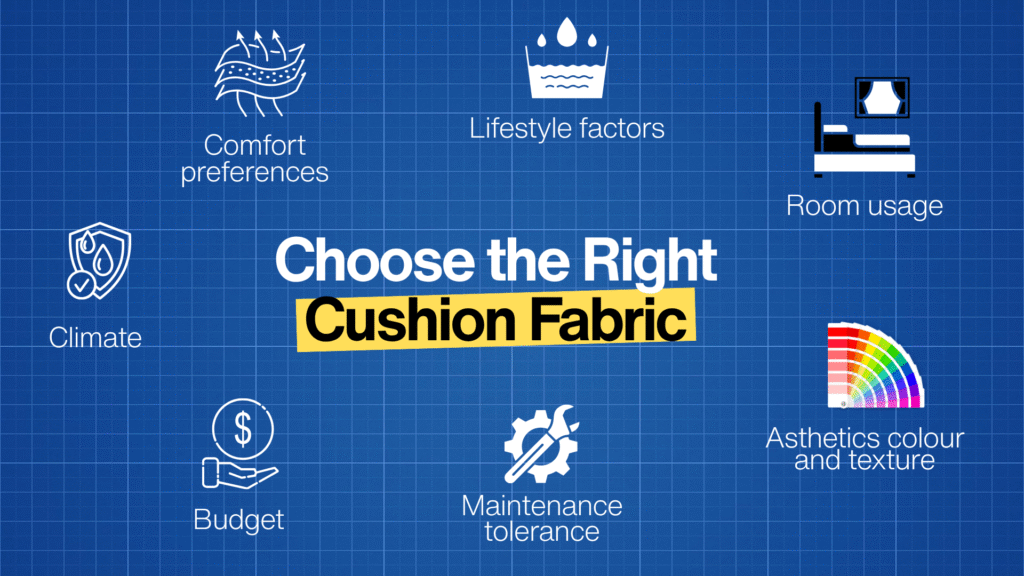
There’s no single “best” fabric only the best fabric for your situation. Run any candidate through these seven filters before buying.
- Room usage: A daily-use sofa needs a Martindale rating of 20,000+. A guest bedroom decorative cushion can get away with 10,000. Match durability to traffic.
- Lifestyle factors: Pets, kids, and home cooks should default to washable synthetics performance polyester, microfiber, or faux suede. Spills happen; choose fabric that recovers.
- Comfort preferences: Hot sleeper? Choose breathable natural fibres like cotton and linen. Prefer plush? Velvet, chenille, and microfiber win on hand-feel.
- Climate: Humid climates need mildew-resistant fabrics (linen, olefin, acrylic). Hot climates favour breathable cotton and linen. Cold climates benefit from wool and velvet.
- Budget: Polyester and cotton deliver the most performance per dollar. Wool, silk, and full-grain leather sit at the premium end. Performance fabrics are mid-range and usually offer the best long-term value.
- Maintenance tolerance: If you won’t dry-clean cushions, skip wool and silk. If you want toss-in-the-washer simplicity, stick to cotton, polyester, microfiber, or canvas.
- Asthetics colour and texture: Light colours show stains; dark colours show pet hair and lint. Smooth weaves read modern; textured weaves (linen, chenille, velvet) read cozy or traditional. Match the visual weight of the fabric to the room’s style.
How to Choose the Right Cushion Fabric: A Decision Framework
Best for everyday use: Performance polyester or tightly woven cotton with a stain-resistant finish. Both deliver durability, washability, and a wide style range at sensible prices.
Best for luxury interiors: Cotton velvet, silk-blend, or wool. These read expensive at a glance and add tactile depth. Use them in lower-traffic rooms.
Best for pet owners: Faux suede, microfiber, or leather. Tight weaves don’t trap hair, claws don’t snag, and most spills wipe off. Avoid bouclé, loose linen, and silk.
Best for outdoor cushions: Solution-dyed acrylic for premium settings; olefin for mid-range; canvas for covered patios. All three resist UV, moisture, and mildew.
Best budget-friendly option: Cotton-polyester blend or standard polyester. You get decent durability and easy care without a designer price tag.
Best hypoallergenic option: 100% cotton or wool. Both naturally resist dust mites and bacteria. Confirm the fabric hasn’t been treated with harsh chemical finishes if sensitivities are severe.
Best for kids’ rooms: Heavy-duty cotton, performance polyester, or microfiber. All are washable and can survive snacks, juice, and craft projects.
Best for formal bedrooms: Linen, silk, or velvet used decoratively. Stack on the bed during the day; tuck away at night.
Cushion Fabric Buying Checklist
Before you click “add to cart” or sign off on an upholstery order, run through this list:
- ✅ Confirmed the Martindale rub count is appropriate for the room’s traffic level
- ✅ Checked the cleaning code (W, S, WS, or X) and confirmed it matches your willingness to maintain it
- ✅ Verified colourfastness and UV rating if the cushion will sit near a window
- ✅ Considered whether the fabric needs a stain-resistant treatment
- ✅ Matched fibre composition to climate (breathable for hot, insulating for cold)
- ✅ Ordered a swatch and tested it in your actual lighting
- ✅ Confirmed the width (typically 54–60 inches for cushion-grade fabric) fits your project
- ✅ Checked whether the price is per yard or per metre, and includes any pattern repeat
- ✅ Asked about indoor vs outdoor rating if it’s a borderline application
- ✅ Read return and remnant policies before committing to bulk yardage
Common Mistakes to Avoid
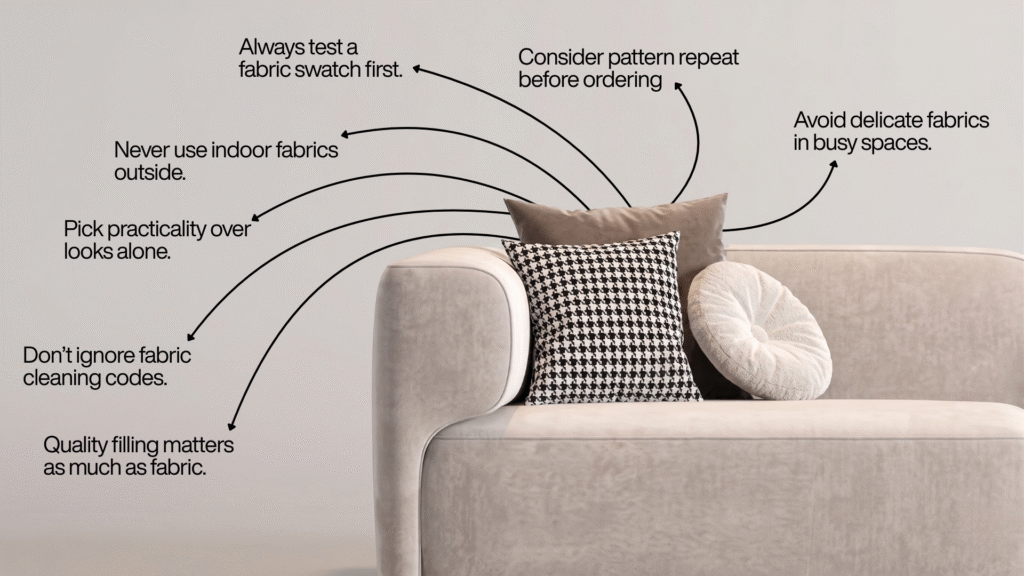
- Choosing delicate fabrics for high-traffic areas. Silk and loose linen look gorgeous on a Pinterest board and disastrous on a family room sofa six months in. Match durability to actual use.
- Ignoring cleaning codes. A “W” label means water-safe cleaners. “S” means solvent only. “X” means vacuum only no liquids at all. Buying an “X” fabric for a kids’ room is a slow-motion mistake.
- Prioritising looks over practicality. A fabric you love but won’t maintain becomes a fabric you resent. Be honest about how much upkeep you’ll actually do.
- Using indoor fabrics outdoors. Standard cotton fades in weeks of direct sun. Indoor polyester can mildew when wet. Outdoor environments require purpose-built fabrics full stop.
- Skipping the swatch. Colours shift dramatically under different lighting. A swatch costs almost nothing and prevents expensive disappointment.
- Underestimating pattern repeat. Patterned fabrics require extra yardage to align across cushions. Always factor in the repeat when ordering.
- Forgetting about the fill. The fabric is only half the cushion. A premium fabric over a low-density foam or cheap polyfill insert will sag fast.
How to Decode a Fabric Care Label
The tiny symbols on your fabric label tell you exactly how to maintain it. Here’s the cheat sheet:
- W: Water-based cleaners are safe
- S: Solvent-based (dry) cleaners only; no water
- WS or SW: Either water or solvent cleaners work
- X: Vacuum only; no liquid cleaners of any kind
- Composition: Lists fibres by percentage (e.g., “60% polyester, 40% cotton”)
- Martindale: Look for 20,000+ for everyday seating
- Width: Usually 54–60 inches for cushion-grade fabric
- Pattern repeat: Horizontal and vertical distance before the pattern repeats
Final Thoughts: Match the Fabric to Your Life
There’s no universal “best” cushion fabric only the best fabric for your specific room, lifestyle, and aesthetic. Velvet creates magic in a formal bedroom and a maintenance nightmare in a toddler’s playroom. Linen brings elegance to a coastal sunroom and disappointment to a heavy-use sofa. Context is everything.
Use this guide as your decision framework. Identify the room’s traffic level, your willingness to maintain the fabric, and the visual language of the space. Then choose the textile that hits all three not just the one that looks best in the showroom photograph.
At Abbott Fab, we manufacture a full range of upholstery and cushion fabrics including premium suede, performance velvet, blackout sofa fabric, and high-grade upholstery leather engineered for real-world durability. Whether you’re styling a single accent cushion or specifying fabric for a large project, we’re here to help you choose well the first time.
Ready to explore? Browse the Abbott Fab fabric collection and order swatches before you commit.
Cushion Fabric FAQs
Solution-dyed acrylic (for outdoors) and high-performance microfiber or leather (for indoors) are the most durable cushion fabrics. For everyday indoor use, look for a Martindale rub count of 30,000 or higher. These fabrics resist abrasion, fading, and staining better than natural alternatives.
Microfiber, performance polyester, and faux leather are the easiest cushion fabrics to clean. Most can be machine washed or wiped down with a damp cloth, and they resist stains thanks to engineered finishes. For outdoor cushions, solution-dyed acrylic is similarly low-maintenance.
Cotton is more durable, easier to wash, and better for everyday cushions. Linen has a more refined texture, naturally resists mildew, and softens with age making it ideal for bedrooms and decorative cushions. For high-traffic seating, choose cotton; for style-led accents, choose linen.
Performance velvet (typically polyester-based) is suitable for everyday use, including living rooms and family seating. Traditional silk or cotton velvet is better reserved for lower-traffic or decorative settings, as the pile can crush under heavy daily wear and stains more easily.
Solution-dyed acrylic, such as Sunbrella, is the best fabric for outdoor cushions. Because the colour is built into the fibre, it resists UV fading, mildew, and moisture for years. Olefin offers a more affordable alternative, and canvas works well for covered outdoor spaces.
Tightly woven synthetics like microfiber, faux suede, and performance polyester work best in homes with pets. They resist hair embedding, claws don’t easily snag the weave, and most spills wipe clean. Leather is also excellent. Avoid bouclé, loose linen, and silk
Check the Martindale rub count on the product specification. For everyday living room cushions, aim for 20,000–30,000 cycles. Homes with pets or children should target 30,000+. Anything below 10,000 should be used decoratively only.
No. Cotton, polyester, and microfiber covers are typically machine washable, but silk, wool, and quality linen often require dry cleaning to prevent shrinkage or fibre damage. Always check the care label code “W” means water-safe, “S” means solvent only, “X” means vacuum only.
Often yes. Recycled polyester performs almost identically to virgin polyester. Organic cotton matches conventional cotton in durability. Hemp can outperform standard cotton in tensile strength. Sustainable fabrics no longer require a performance trade-off when sourced from quality manufacturers.
Pingback: How to Maintain Rexine Furniture: Festive Season Care Guide