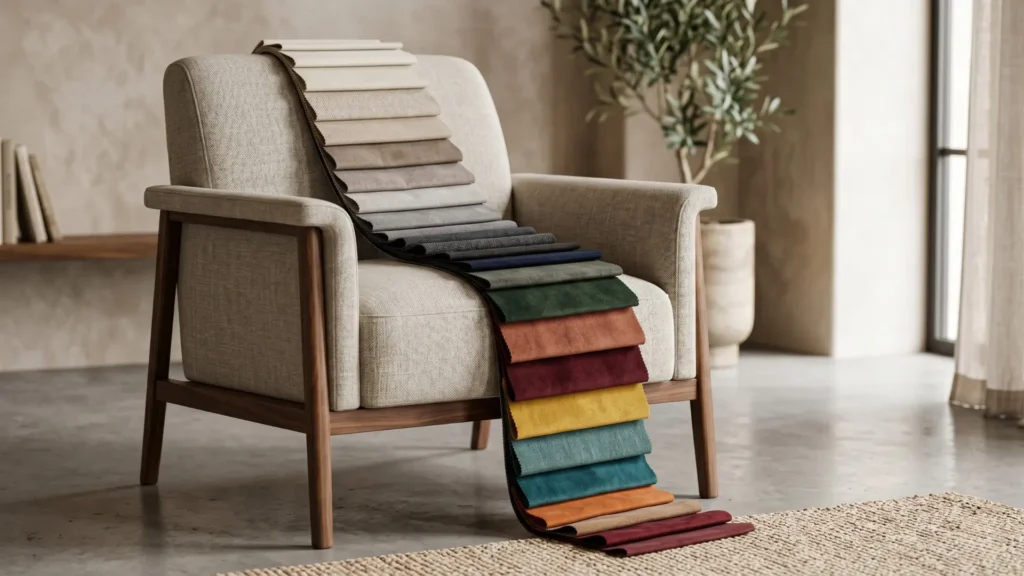
The Complete Sofa Fabric Guide (2026): How to Choose the Best Upholstery
The Complete Sofa Fabric Guide (2026): How to Choose the Best Upholstery Table of Contents Key Takeaways: How to Choose the Right Sofa Fabric Identify your primary stressor: kids, pets, sunlight, humidity, or heavy guests. Set a Martindale floor: 20,000+ rubs for a home sofa; 30,000+ if it faces daily punishment. Match fibre to climate: cotton or linen blends for hot/humid regions; performance polyester for monsoon-prone areas; velvet only in climate-controlled rooms. Ignore the “grade” label on price tags; it reflects cost-to-manufacturer, not quality-to-you. Request a swatch. Rub it, spill water on it, sit on it in your actual room, with the lighting. No swatch, no sale. Sofa Fabric Trends: What’s New in Upholstery for 2026? Here’s a scenario most furniture buyers recognise: you walk into a showroom, fall in love with a sofa’s silhouette, and never once flip the seat cushion to read the fabric composition tag. Three monsoons later, the upholstery has pilled, faded near the window, and developed a permanent outline of your Sunday-afternoon nap. The sofa frame is fine. The foam is fine. It’s the fabric that failed. In 2026, the upholstery landscape is materially different from even two years ago. Performance fabrics, engineered textiles that resist stains, repel liquids, and withstand serious abrasion, have moved from niche family-friendly options to the baseline expectation across price points. Sustainability certifications now influence sourcing decisions at the mill level, with recycled polyester and PFC-free stain treatments replacing older chemical finishes. And trend-wise, the industry has shifted toward warm, earth-connected neutrals (sand, mushroom, terracotta) while cool grey, once ubiquitous, is being treated as dated and clinical. But the fundamentals still trip people up. Most buyers confuse fabric grade with fabric quality. They don’t know what a Martindale rub count measures, actually, or why a 100,000-rub rating isn’t twice as good as a 50,000-rub rating. They pick velvet for a Chennai living room or pure linen for a household with two Labradors. This guide is built to prevent those mistakes. What Are the Different Types of Sofa Fabrics? Every sofa fabric on the market falls into one of three categories: natural fibre, synthetic fibre, or a blend. The “best” choice depends on how you live, where you live, and what you’re willing to do (or not do) to maintain it. Here’s what each fabric actually delivers in practice. What Are the Different Types of Sofa Fabrics? Cotton is the best sofa fabric for Indian households because it breathes exceptionally well in heat, feels cool against skin, and takes dye beautifully. Pure cotton wrinkles and stains easily, so the real workhorse is a cotton-polyester blend (typically 60/40 or 70/30). The polyester component adds wrinkle resistance and colour retention without sacrificing much breathability. Martindale scores for quality cotton blends typically range from 15,000 to 30,000 rubs. Linen & Linen Blends: Best for Humid Climates Linen is the sophisticate’s choice: it has a natural slub texture that hides dust well and gets softer with age. It’s naturally mildew-resistant, making it a strong option for humid coastal cities. The catch? Pure linen wrinkles dramatically and shrinks when washed in hot water. A linen-cotton or linen-viscose blend solves most of these issues. Linen also weakens under prolonged UV exposure, so keep it away from south-facing windows. Ideal for formal living rooms with moderate traffic. Velvet & Performance Velvet: Best for Luxury Velvet is back in force for 2026, but the category has splintered. Traditional cotton velvet breathes reasonably well and develops a lived-in patina. Polyester velvet traps heat, avoiding it in hot climates. Performance velvet (a newer category using solution-dyed synthetic fibres) offers stain resistance and easy cleaning while retaining the signature sheen of velvet. Velvet is a dust magnet and shows “tracking” marks where the pile direction changes, which some love and others find maddening. Martindale scores for performance velvets can exceed 50,000 rubs. Polyester & Microfibre: Best for Stain Resistance Polyester is the industry’s workhorse: fade, moisture, and mildew-resistant, and colourfast in direct sunlight. Microfibre, essentially ultra-fine polyester woven tightly, is one of the most stain-resistant fabrics available and works well in humid climates because it wicks moisture and dries quickly. The downside is breathability: polyester can feel warm against skin in peak summer, especially in non-air-conditioned rooms. Solution-dyed polyester (where colour is embedded in the fibre itself, not applied on top) offers the best fade resistance in the category. Leather & Faux Leather: Best for Longevity Genuine leather breathes better than most people assume and develops character over time. But it requires conditioning (especially in dry climates) and becomes uncomfortably sticky in heat without air conditioning. Today’s premium faux leather has closed much of the quality gap. It handles humidity and temperature swings better than real leather and requires almost no maintenance. In India specifically, high-quality vegan leather is increasingly popular for its resilience in monsoon conditions. Neither is technically a “fabric,” but both compete in the same buyer decision. Bouclé, Chenille & Corduroy: Best for Textured Style These textured fabrics are defining the 2026 upholstery aesthetic. Bouclé (looped yarn) adds tactile depth and hides minor wear; contemporary versions favour tighter, subtler loops than the oversized textures of 2023–24. Chenille delivers a plush, velvety hand-feel with good stain resistance. Corduroy wider-wale versions in particular have re-emerged as a design-led choice that balances nostalgia with warmth. All three disguise dust, pet hair, and everyday use better than flat-weave fabrics, making them practical despite looking luxurious. How to Measure Sofa Fabric Durability: The Martindale Rub Test What is a Good Martindale Score for a Sofa? The Martindale test is the international standard for measuring how well a fabric resists abrasion. A machine rubs a disc of worsted wool against a stretched fabric sample in a figure-eight (Lissajous curve) motion under constant pressure of 12 kPa. The test counts cycles until the fabric shows visible distress, pilling, yarn breakage, or a noticeable change in surface appearance. That cycle count becomes the fabric’s Martindale rating. The test is simple to understand: higher numbers mean more